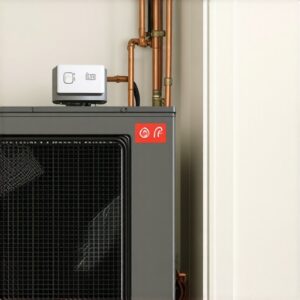
My old mentor used to scream, ‘You can’t cool what you can’t touch!’ This is why airflow matters more than horsepower, and it is why a thermostat that is off by just two degrees can turn a high-efficiency furnace into a gas-guzzling paperweight. He’d stand there in a dusty basement, pointing a crooked finger at an old mercury bulb, telling me that if the brain of the system is lying to the contactor, the whole house suffers. In thirty years of crawling through crawlspaces and sweating out my body weight in attics, I have seen more ‘broken’ units that were actually just victims of a poorly calibrated thermostat than I care to count. People think WiFi thermostat integration is just about changing the temp from their phone while they are on the couch, but if that sensor isn’t calibrated to the actual thermal reality of your living room, you are just burning money. We are talking about the difference between a system that hums and one that short-cycles itself into an early grave.
The Forensic Diagnosis: Why Your Digital Brain is Lying
When we talk about calibration, we are looking at the thermistor—the little electronic component that translates heat into a digital signal. In the cold climates of the Northeast or Chicago, where boiler repair services and furnace ignition repair are the bread and butter of our winters, a thermostat that thinks it is 70°F when it is actually 68°F is a disaster. That two-degree delta is the difference between your heat exchanger staying warm or hitting the dew point and corroding from the inside out.
“The most expensive equipment in the world cannot overcome a bad duct system.” – Industry Axiom
This axiom applies to controls too. If you’ve got a draft behind the wall plate where the Sparky pulled the thermostat wire, that ‘smart’ thermostat is reading the temperature of your wall cavity, not your bedroom. This leads to the unit running too long, or worse, shutting off before the latent heat has been managed. In the North, we fight the polar vortex; if your biomass boiler services are top-notch but your thermostat is reading high, your pipes are at risk of a freeze-up when that mercury drops below zero.
The Psychrometric Reality of Sensor Placement
Let’s use some thermodynamic zooming here. Your thermostat doesn’t just measure ‘hot’ or ‘cold.’ It is attempting to gauge the average kinetic energy of the air molecules in its immediate vicinity. If you’ve installed it near a kitchen where the stove is cranking, or in the path of a drafty window, you are feeding it bad data. This is where occupancy sensor installation comes into play. By using remote sensors, we can average the temp across multiple rooms, ensuring that the WiFi thermostat integration actually serves the occupants and not just the hallway. For those of us dealing with Energy Star heating certification, precision is not a luxury; it is a requirement. If your sensor is off, your system won’t meet the efficiency curves it was designed for, and you’ll be calling for top-hvac-repair-strategies-to-extend-your-systems-life sooner than you think.
The Step-by-Step Calibration Protocol
To fix this, you don’t need a degree in physics, just a high-quality digital thermometer and some patience. First, tape your thermometer right next to the thermostat. Give it 15 minutes to stabilize. If the numbers don’t match, you need to dive into the ‘Advanced’ or ‘Installer’ settings of your WiFi unit. Most modern brands allow for an ‘Offset’ or ‘Calibration’ adjustment. You can usually nudge the reading up or down by up to 5 degrees. While you are in there, check for predictive maintenance alerts. If your system is throwing codes because it’s struggling to reach the setpoint, calibration might reveal that your MERV filter upgrades have increased static pressure so much that the air isn’t even reaching the sensor properly. This is the stuff a ‘Sales Tech’ won’t tell you while they are trying to push a $15k replacement. They’d rather sell you a new compressor than spend ten minutes adjusting an offset. If you’re looking for real solutions, check out heating-service-hacks-for-comfort-and-savings-in-2025.
Airflow, Static Pressure, and the Thermostat Connection
We need to talk about the ‘Pookie’—that mastic sealant we use to keep the ‘Juice’ (refrigerant) and air where they belong. If your return air is leaking, it pulls unconditioned air into the system, which can trick the thermostat into thinking the house is warmer or cooler than it is. This is especially true when using heat recovery ventilators (HRVs). These units are great for fresh air, but if they aren’t balanced, they create pressure imbalances that mess with your thermostat’s accuracy.
“The temperature of the air is only one component of comfort; the movement of air and the moisture content are equally critical.” – ASHRAE Standards
When you calibrate, you are essentially aligning the digital brain with the physical reality of the air’s enthalpy. It’s about more than just a number; it’s about making sure your portable heater safety checks are unnecessary because your central system is actually doing its job. For more on the technical side of these setups, see ultimate-guide-to-ac-installation-expert-tips-for-2025-success.
The Long-Term Play: Maintenance and Accuracy
Precision calibration is a moving target. As your house settles or as you perform MERV filter upgrades, the airflow patterns change. Every time I’m out for a furnace ignition repair or a boiler repair services call, I check the thermostat offset. Dust inside the unit can insulate the sensor, making it sluggish. Clean it with a puff of air—never chemicals. If you are struggling with a system that feels ‘off,’ it might be time for a professional to look at the whole picture. Don’t be fooled by the ‘scam tune-up’ where they just spray some water on the coils and leave. You want a tech who understands efficient-hvac-repairs-the-blueprint-for-cooler-summers-and-warmer-winters and knows how to use predictive maintenance alerts to catch a failing capacitor before it kills your compressor. Comfort isn’t magic; it’s physics, and physics starts with an accurate measurement. If you’re ready to get your system dialed in properly, contact-us for a real technician, not a salesman in a clean uniform.