The Forensic Diagnosis: Decoding the Ghost in Your Wall
You’re laying there at 3:00 AM in the middle of a November cold snap, and the house is dead quiet except for that rhythmic, maddening tick-tick-tick coming from the hallway. To a homeowner, it sounds like a countdown. To a tech who has spent thirty years crawling through spider-infested crawlspaces and diagnosing equipment by the smell of the singed dust, that noise is a mechanical diary. I’ve seen it a thousand times: a wall furnace struggling to breathe, or worse, a system that’s been neglected until the metal itself is crying for help. Most folks think a furnace is just a box that burns gas, but it’s actually a complex dance of thermodynamics and metallurgy. If you’re hearing clicking, you’re hearing a failure in the sequence of operations or a physical protest from the heat exchanger.
“The efficiency of a combustion appliance is directly related to the integrity of its heat exchanger.” – ASHRAE Standard 103
The Physics of the Click: Why Metal Screams
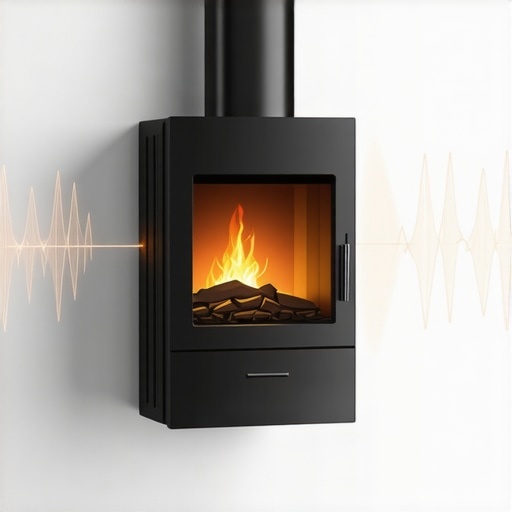
My old mentor used to scream at me, “You can’t heat what you can’t reach!” He wasn’t talking about the room; he was talking about the airflow across the heat exchanger. When a wall furnace clicks, it’s usually one of two things: thermal expansion or an ignition failure. Let’s talk about the physics. As the burner ignites, the internal temperature of the heat exchanger jumps from 65°F to over 140°F in seconds. Metal expands when it gets hot—that’s basic science. But if the unit wasn’t installed with enough clearance, or if the mounting brackets are too tight, that expanding metal rubs against the cabinet. That’s your clicking. It’s the sound of the furnace literally trying to grow inside a skin that’s too small. This is where a tin knocker with no pride in his work leaves you with a lifetime of noise because he didn’t leave room for the metal to breathe.
However, if the clicking happens before the heat kicks on, you’re looking at a sequence of operations failure. Modern wall units often use an electronic ignition. If the sensor doesn’t detect a flame, the gas valve will click open and shut repeatedly as it tries to prove the flame. This is a safety feature, but it’s also a sign that your modulating furnace repair needs are urgent. You’re essentially hearing the system’s brain trying to prevent a house fire. If you ignore this, you’re not just risking a cold night; you’re risking a cracked heat exchanger. When that metal gets stressed enough, it fractures. That’s when the conversation shifts from a simple fix to a mandatory carbon monoxide detector installation for your own safety.
The Mechanical Anatomy: Capacitors, Solenoids, and the Sparky’s Nightmare
Inside that wall unit, there’s a symphony of parts that have to work in perfect synchronization. You’ve got the gas valve, the thermocouple (on older units), or the flame sensor (on newer ones). If you’re hearing a rapid-fire clicking, it’s often the solenoid in the gas valve. It’s trying to hold the ‘gas’ (we call it juice in the field, though usually that’s for refrigerant) but the voltage is dropping. Maybe a sparky (electrician) didn’t wire the low-voltage transformer correctly, or the control board is frying. If you’re dealing with furnace repair myths debunked by industry experts, you’ll know that “just hitting it” doesn’t fix a sticking solenoid.
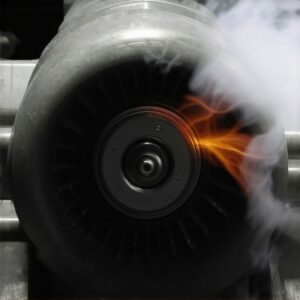
Then there’s the blower motor. If you have a forced-air wall furnace, that clicking could be a failing bearing. I’ve walked into houses where the customer thought they had a ghost, but it was just a squirrel-cage blower with a loose set screw. When that fan starts to wobble, it creates a rhythmic clicking that resonates through the entire wall. It’s not just annoying; it’s inefficient. Every click is energy wasted and heat that isn’t reaching your living room. This is why heating service innovations transforming 2025 climate control are focusing so heavily on brushless DC motors that eliminate these mechanical failure points.
AI-Driven Optimization: The Future of the Wall Heater
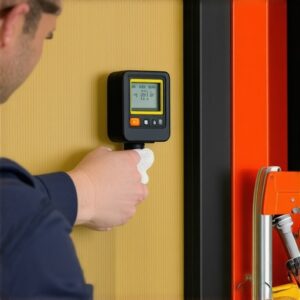
We’re moving into an era where your furnace shouldn’t just click; it should talk to you. With AI-driven HVAC optimization, we can now install sensors that monitor the vibration of the unit. If the “tick” starts, the system logs it and sends an alert to your phone via remote thermostat access. Imagine knowing your furnace is going to fail three days before it actually does because the AI detected a change in the thermal expansion signature. We’re integrating geofencing temperature control so the wall furnace isn’t cycling like crazy when you aren’t home, which reduces the wear and tear that leads to those clicking sounds in the first place. You can even set up voice control setup Alexa Google to check the status of your system. “Alexa, is my furnace short-cycling?” is a question that saves you a $400 emergency call-out fee on a Sunday.
“Proper vent sizing is critical to ensure that combustion products are safely exhausted from the building.” – ACCA Manual D
The Math: When to Patch and When to Pitch
I hate sales techs. Those guys who walk in with a shiny clipboard and tell you that a $50 fix requires a $12,000 AC installation or new furnace. But here is the cold, hard truth: wall furnaces have a lifespan. If your unit is over 15 years old and the clicking is coming from a cracked heat exchanger, the repair is a trap. Replacing a heat exchanger on an old wall unit is like putting a new engine in a car with no transmission. You’re better off looking at a ductless mini-split installation. They are whisper-quiet, incredibly efficient, and they don’t have the thermal expansion noise of a big metal box in your wall. If you’re sticking with gas, ensure you have a humidifier installation nearby to keep the air from getting too dry, which can actually make those expansion noises louder as the wood in your walls shrinks and grows.
Preventive Maintenance vs. The Scam Tune-Up
Most “tune-ups” are just a guy with a rag wiping off the dust. A real tech is going to check the manifold pressure. If the gas pressure is too high, the furnace burns too hot, causing extreme expansion and clicking. They’ll also check the venting. If the flue is blocked, the heat backs up, the high-limit switch trips, and you get—you guessed it—a clicking sound as the switch resets. If you want to stop the noise, stop the neglect. Clean your filters, check your vents, and don’t let a tin knocker use cheap tape instead of “Pookie” (mastic) on your transition pieces. Proper sealing prevents the vibrations that turn a small click into a house-wide rattle.