The Sound of a Dying Heat Cycle: Why Most Homeowners Are Blind to Their Own System
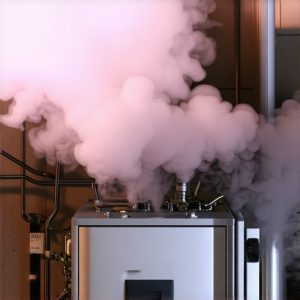
It is 3 AM in the middle of a January cold snap, and the silence in the house is deafening. You do not hear the familiar thrum of the furnace or the whistle of air through the registers. You hear the clicking of a thermostat that is begging for heat that isn’t coming. My old mentor, a grizzled tin knocker who could smell a cracked heat exchanger from the driveway, used to scream at me, ‘You can’t heat what you can’t touch!’ He wasn’t talking about the radiator; he was talking about the physics of heat transfer and the flow of air. If the air doesn’t move, or the flame doesn’t stay lit, your expensive furnace is just a very heavy, very cold box of sheet metal. Most people think a maintenance plan is just a guy coming out to swap a cheap pleated filter and spray some canned air. They are dead wrong. A real premium plan is a forensic investigation into the thermodynamic health of your home.
“Maintenance is not an expense; it is the systematic preservation of mechanical integrity and operational safety.” – ACCA Standard 4
The Anatomy of a Heating Crisis: The Forensic Diagnosis
When I crack open a furnace cabinet, I am looking at a mechanical body. Most homeowners focus on the big stuff—the blower motor or the heat exchanger—but the real gremlins live in the smaller, high-cycle components. Let’s talk about the furnace flame sensor cleaning. This little rod of stainless steel is the only thing standing between you and a furnace that shuts down every sixty seconds. It works on the principle of flame rectification; it uses the ionized particles in the fire to complete an electrical circuit. If it gets a microscopic coating of carbon or oxidation, the signal fails. A premium maintenance plan doesn’t just ‘check’ it; we pull it and polish it. It is the difference between a system that runs and one that leaves you calling for 24/7 heating emergency response at triple the labor rate.
The Brain and the Lungs: Control Boards and Inducers
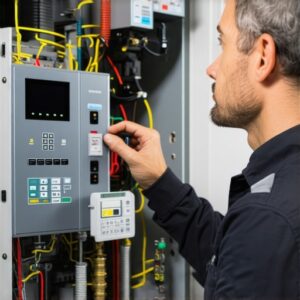
Then we have the control board diagnostics. This is the ‘brain’ of your HVAC system. It handles the timing, the safety limits, and the communication between your thermostat and the hardware. Modern boards are sensitive to voltage spikes and moisture. During a premium visit, we check for ‘ghost codes’—error signals the board recorded but didn’t trigger a full shutdown for yet. We also look at the draft inducer motor repair needs. The inducer is the ‘lungs.’ It clears the combustion gases out of the heat exchanger so the burners can fire safely. If that motor has a failing bearing, it’ll screech like a banshee before it dies. Catching it during a scheduled visit means you aren’t dealing with emergency heating repair when the temperature is dropping into the single digits.
Thermodynamic Zooming: Latent Heat and IAQ
In a Northern climate, we aren’t just fighting the cold; we are fighting the dry, stagnant air of a sealed envelope. This is where IAQ improvement services and dehumidification services (or humidification in the winter) come into play. When we talk about IAQ, we are looking at the micron-level filtration and the biological growth on the evaporator coil. If your coil is plugged with ‘pookie’ (that’s the mastic we use to seal ducts) or dust, your static pressure skyrockets. High static pressure is the silent killer of blowers. It’s like trying to run a marathon while breathing through a cocktail straw. Proper preventative HVAC repair tips always start with airflow. If the airflow is restricted, the heat exchanger overheats, the limit switch trips, and eventually, the metal cracks.
“Ventilation systems shall be designed to provide a minimum outdoor air intake rate to maintain acceptable indoor air quality.” – ASHRAE Standard 62.1
The Hydronic Edge: When Water Replaces Air
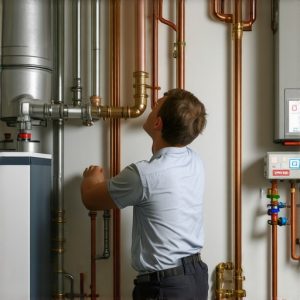
For those with hydronic heating systems, the maintenance game changes entirely. We aren’t just checking filters; we are checking water chemistry, expansion tanks, and relay services. A hydronic system is a closed-loop pressure vessel. If the pH of that water gets too acidic, it starts eating your copper piping from the inside out. We check the circulator pumps and ensure the zones are balancing correctly. If one room is a sauna and the other is a walk-in freezer, you don’t need a bigger boiler; you need a technician who understands fluid dynamics. This is often where furnace repair myths get debunked—most ‘broken’ systems are actually just out-of-balance systems.
Repair vs. Replace: The $7,500 Question
I get asked every day: ‘Should I fix this old beast or dump $8,000 into a new one?’ If you are facing a $500 HVAC repair on a 12-year-old unit, and your technician hasn’t checked the heat exchanger for cracks, you’re being hustled. But if the heat exchanger is solid and the ‘juice’ (refrigerant) levels are fine, a new control board or a draft inducer is a smart investment to buy another five years. However, if you are constantly calling for urgent furnace repair, you are just throwing good money after bad. A premium maintenance plan gives you the data—the combustion analysis, the static pressure readings, and the amp draws—to make that decision before the unit fails on Christmas Eve.
The Truth About ‘Sales Techs’ and Real Maintenance
I despise ‘Sales Techs.’ You know the type—they spend five minutes at your furnace and forty-five minutes at your kitchen table with a colorful brochure. A real tech has dirty hands because he was actually cleaning the flame sensor and checking the capacitor’s microfarads. They look at the relay services to ensure your sequencer isn’t sticking. They check the HVAC repair strategies that actually extend life, not just the ones that generate a commission. Real maintenance is about keeping the ‘gas’ in the lines and the ‘sparky’ (electrician) work up to code. It’s about ensuring that when you hit that thermostat, the physics of heat transfer work in your favor, every single time.