You ever wake up at 3 AM to the sound of… nothing? No hum of the blower, no click of the contactor, just the heavy, oppressive silence of a house losing its fight against a -10°F polar vortex. In my thirty years of crawling through fiberglass-filled attics and balancing on icy rooftops, I’ve learned that the sound of silence is the most expensive sound in the world. People think a maintenance plan is just a guy with a rag and a can of coil cleaner. They’re wrong. A real maintenance plan is a forensic investigation into the thermodynamic health of your home. My old mentor, a grizzly guy who’d been in the trade since the R-12 days, used to bark at me, ‘You can’t cool what you can’t touch, and you can’t heat what you can’t move!’ This is why airflow matters more than horsepower. If your technician isn’t obsessed with static pressure, they aren’t doing maintenance; they’re doing a drive-by.
The Mechanical Anatomy of a Maintenance Visit
When I step into a mechanical room, I’m looking at the system like a doctor looks at a heart. I start with the electrical guts. I’m not just looking for loose wires; I’m checking the microfarads on your run capacitor. A capacitor is like a battery that gives your compressor the ‘kick’ it needs to start. If it’s rated for 45 mfd and it’s reading 38, your compressor is drawing more amps, running hotter, and eating its own lifespan. That’s why priority service memberships aren’t just about skipping the line in July; they’re about ensuring that $20 part doesn’t turn into a $3,000 compressor burnout that smells like a mix of vinegar and regret. For those with inverter-driven compressors, the stakes are even higher. These systems use complex control boards to modulate speed, and a simple voltage spike can fry a board that costs more than a used car. We check the ‘juice’ (refrigerant) levels not by ‘topping it off’—which is a scam since it’s a sealed system—but by measuring subcooling and superheat to ensure the system is tuned for the current load.
“The most expensive equipment in the world cannot overcome a bad duct system.” – Industry Axiom
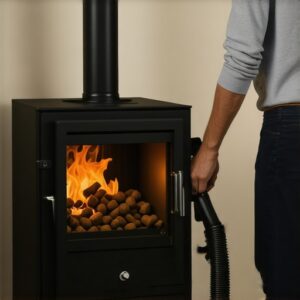
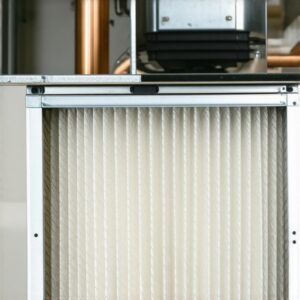
In our northern climate, we’re dealing with the brutal reality of sensible heat. We aren’t just worried about comfort; we’re worried about cracked heat exchangers leaking carbon monoxide. Part of a real plan includes a combustion analysis. I’ve seen multi-family heating upgrades where the venting was so restricted the furnaces were literally choking on their own exhaust. If your tech isn’t using a calibrated analyzer to check for CO parts-per-million, they’re failing you. We also look at baseboard heater repair and hydronic integrity. For homeowners with luxury additions like radiant floor heating installation, maintenance involves checking the manifolds and testing the glycol concentration. You don’t want your floors to become a giant ice cube because the antifreeze broke down. The same goes for snow melt systems installation; we test those sensors in October, not when there’s six inches of powder on the driveway. [IMAGE] Proper preventative HVAC repair tips for year-round efficiency always start with the filter, but they end with the heat exchanger.
The Thermodynamic Logic of Cold Climate Heat Pumps
We’re seeing a massive shift toward cold climate heat pumps and heat pump installation even in the snow belt. These aren’t your grandfather’s units that gave up at 40°F. Modern inverter-driven compressors can pull heat out of thin air at -15°F. But here’s the rub: they require surgical precision during maintenance. We have to ensure the defrost cycles are calibrated perfectly. If the sensor is off by a few degrees, the outdoor coil turns into a block of ice, and the ‘Sparky’ (electrician) who wired your backup heat strips will be the only one making money when your electric bill hits $800. We also integrate geofencing temperature control into these plans. It’s not just a fancy thermostat; it’s about managing the ‘recovery time’ of the house. If you let a heat pump-driven house drop 10 degrees while you’re at work, it might take six hours to catch up, whereas a gas furnace could do it in forty minutes. Knowing these heating service innovations transforming 2025 climate control is what separates a Master Tech from a ‘parts changer.’
Warehouse Heating and Commercial Scale Maintenance
For my commercial clients, warehouse heating solutions require a different breed of maintenance. We’re dealing with high-intensity infrared heaters or massive rooftop units (RTUs). The ‘Tin Knockers’ (duct guys) have to ensure the static pressure is balanced across thousands of square feet. A maintenance plan here covers belt tension, bearing lubrication (the screech of a dry bearing is the sound of an impending $5,000 motor replacement), and gas pressure regulation. If you’re a property manager, multi-family heating upgrades often include centralized boilers or distributed VRF systems. Without a plan, you’re just waiting for a Christmas Day catastrophe. We debunk a lot of furnace repair myths debunked by industry experts during these visits, specifically the idea that ‘if it’s running, it’s fine.’ A furnace can ‘run’ at 60% efficiency while sending 40% of your money up the flue pipe.
“The technician shall verify the airflow across the cooling coil is within the manufacturer’s specified range, typically 350 to 450 CFM per ton of cooling capacity.” – ACCA Manual S
Repair vs. Replace: The Forensic Math
Eventually, every unit reaches the end of its life. During a maintenance visit, we use the ‘Rule of 5,000.’ You multiply the age of the unit by the repair cost. If it’s over $5,000, it’s time to look at heat pump installation or a new high-efficiency furnace. But I won’t sell you a unit just because I’m tired of fixing yours. I’ll show you the ‘Pookie’ (mastic) failing on your plenums or the pitted contactors that look like they’ve been through a war. Maintenance is about giving you the data to make that choice before the unit dies in a blizzard. If you’re wondering how to identify when furnace repair is urgent and why, the answer is usually found in the flame sensor or the draft inducer motor assembly. A professional plan catches these before they fail.
The 2025 Regulatory Cliff
You need to know that 2025 is the year everything changes. R-410A refrigerant is being phased out for A2L refrigerants like R-454B. These are ‘mildly flammable,’ which sounds scary but just means we need more sensors and better training. Maintenance plans now have to include testing these new leak detection sensors. If you buy a cheap unit now without a solid maintenance agreement, you might find yourself with an orphan system that nobody knows how to service in three years. This is why we focus on efficient hvac repairs the blueprint for cooler summers and warmer winters through constant education. Don’t fall for the ‘Sales Tech’ scam where they find a ‘crack’ that doesn’t exist. Ask for the combustion analysis printout. Ask to see the microfarad reading on the meter. A real pro will be happy to show you. Comfort isn’t magic; it’s physics. And physics doesn’t take a day off, so neither should your maintenance.