The Sound of a Dying System: Why Your Blower Motor is Screaming for Help
Listen closely. That high-pitched wail coming from your mechanical closet isn’t just an annoyance; it is the death rattle of your HVAC system’s lungs. After thirty years of dragging my tool bag through crawlspaces and over scorching rooftops, I have learned one absolute truth: airflow is the lifeblood of comfort, and the blower motor is the heart. When that heart starts to fail, the entire system enters a state of mechanical cardiac arrest. Most homeowners ignore the squeak until the house is 85 degrees inside and the smell of ozone fills the hallways. By then, you are not just looking at a simple fix; you are looking at a full-blown emergency.
I remember following a ‘Sales Tech’—one of those guys who spends more time polishing his hair than his manifold gauges—out to a job in the middle of a February freeze. He had quoted a young couple $15,000 for a total system replacement because the furnace was ‘shot.’ I walked in, heard that familiar, rhythmic chirping, and pulled the blower assembly. It wasn’t ‘shot.’ The motor was fine, but the run capacitor had leaked its guts and the squirrel cage was so choked with pet hair it looked like a literal rodent. A quick capacitor replacement service and a thorough cleaning saved them $14,800. This is why I hate the sales-first culture in this industry. It’s about physics, not commissions.
“Equipment shall be sized to the local design temperatures and the internal loads of the structure… but no amount of capacity can overcome a restricted blower or undersized return.” – ACCA Manual S (Simplified)
The Forensic Diagnosis: Anatomy of a Blower Motor Failure
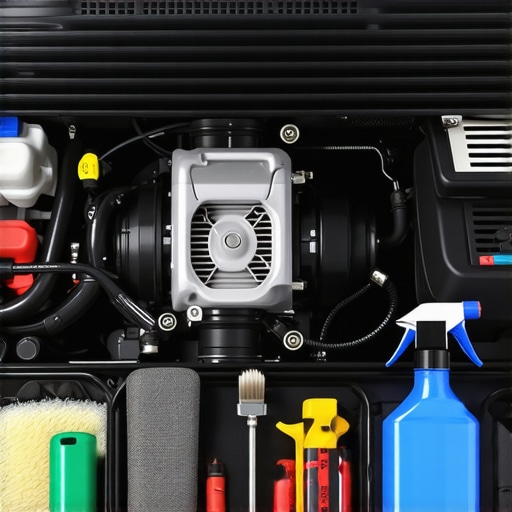
To understand why your motor is squealing, you have to understand the mechanical anatomy at play. In a standard furnace or air handler, you have the motor, the blower wheel (the squirrel cage), and the housing. In older systems, you have a belt-drive setup; in modern high-efficiency units, you likely have a Direct Drive ECM (Electronically Commutated Motor). The squeak usually comes from one of three places: dry bearings, a slipping belt, or a failing capacitor causing the motor to struggle under load.
When we talk about modulating furnace repair, the stakes are higher. These motors don’t just turn on and off; they ramp up and down based on the heating demand. If the bearings start to bind, the ECM controller tries to compensate by pulling more amperage, which eventually fries the sensitive electronics on the back of the motor. It’s a cascading failure. If you are dealing with a restaurant kitchen exhaust repair, the problem is compounded by grease. Grease isn’t just a fire hazard; it acts as a weight on the blades, throwing the motor out of balance and destroying the shaft seals. You can’t just spray some WD-40 on it and call it a day. You need a deep emergency heating repair mindset to tackle these issues before they cook the windings.
Thermodynamic Zooming: How Airflow Governs Heat Exchange
Physics doesn’t care about your thermostat settings. If the blower motor isn’t moving enough CFM (Cubic Feet per Minute), the heat exchange process fails. In the winter, low airflow causes the heat exchanger to overheat. This is where heat exchanger cleaning and inspection become critical. When a motor lags, the heat exchanger stays too hot for too long, leading to metal fatigue and, eventually, cracks that can leak carbon monoxide into your home. This is why chimney liner installation and proper venting are non-negotiable for safety. In the summer, if that motor doesn’t push air across the evaporator coil, the ‘juice’ (refrigerant) doesn’t have enough heat to pick up. The coil temperature drops below the dew point and then below freezing, turning your unit into a giant block of ice. This is sensible heat vs. latent heat in action. You aren’t just cooling the air; you are removing the moisture. No airflow means no dehumidification, and that’s how you end up with a ‘cold swamp’ feeling inside your house.
“The blower assembly must provide the required airflow against the external static pressure of the duct system to ensure proper thermal transfer.” – ASHRAE Standard 62.1
The Climate Context: From Polar Vortex to Arid Summers
Depending on where you live, the ‘squeak’ means different things. In cold climates, a failing draft inducer motor repair is often mistaken for a main blower issue. The inducer is the small motor that clears the heat exchanger of combustion gases before the main fire starts. If that little guy squeaks, the furnace won’t even light. It’s a safety lockout. In these regions, warranty service plans are worth their weight in gold because the constant cycling during a sub-zero week puts immense stress on motor start-windings.
Conversely, if you are running swamp cooler maintenance in a dry climate, the motor is fighting a different enemy: mineral buildup. Evaporative coolers rely on a pump and a motor to pull air through wet pads. If the motor bearings aren’t lubricated, the high humidity inside the cabinet will seize them faster than a ‘Sparky’ (electrician) can pull a fuse. Whether it is a modulating furnace repair or a basic swamp cooler, the physics of motor torque and resistance remains the same. You need the right capacitor replacement services to ensure the motor has the ‘oomph’ to start under load, especially when the static pressure is high from a dirty filter.
The Blower Motor Maintenance Checklist
- Inspect the Run Capacitor: If the top is bulged or there is oil leaking, it’s done. A weak cap makes the motor run hot and slow, leading to that ‘sour’ smell of burning insulation.
- Clean the Squirrel Cage: Even 1/16th of an inch of dust on the blades can reduce airflow by 20%. Use a brush and vacuum; don’t just blow it back into the ducts.
- Check the Static Pressure: Use a manometer to see if your ductwork is strangling the motor. Most ‘bad motors’ are actually just victims of bad ‘Tin Knockers’ (duct installers) who undersized the return air.
- Lubricate (If Applicable): Most modern motors are permanently sealed, but if you see oil ports, two drops of SAE 20 non-detergent oil can stop a squeak before it becomes a seizure.
- Verify App-Controlled Settings: If you have app-controlled heating systems, check the blower speed settings in the installer menu. Sometimes a software glitch can set the CFM too low for the tonnage of the unit.
The Math: Repair vs. Replace
When I’m looking at a squeaking motor, I tell homeowners to look at the ‘Rule of 5,000.’ Multiply the age of the unit by the repair cost. If it’s over $5,000, start shopping for a new one. However, if your heat exchanger is clean and your ‘Pookie’ (mastic) is still sealing the ducts well, a motor swap is usually the smart move. Don’t let a sales tech talk you into a $12,000 install because of a $600 motor. For more on this, check out furnace repair myths debunked by industry experts. We’re in an era where app-controlled heating systems make diagnosis easier, but they don’t replace the need for a technician who knows how to use a multimeter and a flashlight. If you want to keep your system breathing, stop ignoring the noise. A squeak is a warning; silence is a crisis. Keep your coils clean, your filters fresh, and your bearings lubed. Your wallet will thank you when the next heat wave or polar vortex hits. For more long-term strategies, see our guide on top HVAC repair strategies to extend your system’s life.