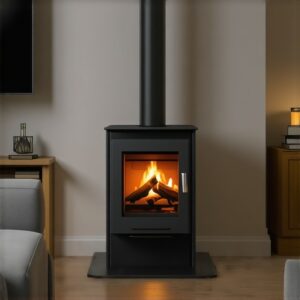
The Sound of a Sucking Vacuum: Why Your Living Room Smells Like a Campfire
You strike a match, the kindling catches, and for a second, everything is perfect. Then you crack the door to toss in a split of oak, and suddenly, your living room is a gray haze of hickory smoke. You’re coughing, your wife is yelling, and the smoke detector is chirping that annoying rhythmic warning. Most homeowners blame the stove or the wood. They think it’s ‘green’ or the chimney is ‘clogged.’ As a guy who’s spent thirty years crawling through joists and measuring static pressure in freezing crawlspaces, I’m here to tell you: it’s rarely the stove. It’s the house. You’re living inside a giant straw, and the atmosphere is winning the tug-of-war.
“Infiltration is the uncontrolled inward leakage of air through cracks and crevices in the building envelope, driven by pressure differences.” – ASHRAE Fundamentals Handbook
My old mentor, a grizzly veteran who could smell a cracked heat exchanger from the driveway, used to scream at me, ‘You can’t move air you can’t touch, and you can’t exhaust air you don’t replace!’ This is the foundational law of the Airflow Manifesto. In the northern climates where we deal with deep freezes, we’ve spent forty years making houses ‘tight.’ We spray foam every crack, we slap on triple-pane windows, and we stuff attic insulation for heating efficiency until the rafters are groaning. But we forgot one thing: combustion requires air. If your house is a sealed box, that wood stove is going to fight the house for oxygen, and the house—with its powerful kitchen vents and bathroom fans—is going to win every time.
The Physics of the ‘Smoky Door’ Syndrome
When you open that stove door, you’re breaking the seal of the combustion chamber. If your home is under negative pressure, the air outside wants to get in. The easiest path? Down your chimney. This is called backdrafting. It happens because of the ‘Stack Effect.’ Warm air rises and escapes through the top of your house (usually through poor attic insulation for heating or leaky recessed lights). This creates a vacuum at the bottom of the house. When you open that stove door, the house literally sucks the smoke out of the firebox to try and neutralize that vacuum. It’s not magic; it’s thermodynamics. You need a HVAC load calculation service not just for your furnace, but to understand the air exchange of the entire building envelope.
“The most expensive equipment in the world cannot overcome a bad duct system or an unbalanced pressure environment.” – Industry Axiom
If you’re dealing with this, you might also notice your furnace struggling. I’ve seen wiring repair for heating systems where the real issue was just the blower motor working triple-time against a house that couldn’t breathe. People call for thermocouple replacement or pilot light relighting because their gas fireplace or furnace keeps snuffing out. They don’t realize the negative pressure is literally pulling the flame away from the sensor. It’s like trying to light a candle in a wind tunnel.
The Garage and the Pool: Where Pressure Goes to Die
I recently walked into a job where the owner was complaining about his garage heater installation. He said the unit would run for five minutes and then ‘poof’—the flame would roll out. I took one look at his workshop. He’d sealed it up like a submarine. No makeup air. When that heater kicked on, it burned up the available oxygen in minutes, created a vacuum, and the exhaust had nowhere to go but back into the room. I had to explain that even a pool heater repair often comes down to the same thing: venting and pressure. If the heat exchanger can’t breathe, it’s going to soot up, smell acidic like a compressor burnout, and eventually fail. This is why predictive maintenance alerts are becoming standard; they monitor these pressure drops before your house fills with CO.
The Humidity Connection and Your Comfort
Airflow isn’t just about smoke; it’s about the ‘feel’ of the air. In cold climates, a tight house with a wood stove gets bone-dry. The stove eats the humidity. That’s why humidifier installation is the secret weapon for wood-stove owners. If you don’t balance the moisture, the wood furniture cracks, and your skin feels like parchment. But you have to be careful. Adding a humidifier to a system with bad ductwork is a recipe for mold. You need a tin knocker who knows how to size the bypass correctly. I’ve seen ‘Sales Techs’ (the guys who care more about their commission than your CFM) sell a $15,000 system when the client just needed a 20-cent piece of Pookie (mastic) to seal a return leak and a proper fresh air intake. Check out choosing the right HVAC fixes to avoid these predatory tactics.
The Solution: Restoring the Balance
How do we fix the smoke? First, stop the house from being a vacuum. Before you open the stove door, turn off the kitchen range hood and the bathroom fans. Better yet, crack a window near the stove just an inch. You’ll feel the air rush IN. That’s the ‘juice’ the fire needs. Long-term, you need a dedicated combustion air intake. If your furnace is acting up too, don’t just search for capacitor replacement services and hope for the best. You need to look at the whole system. A failing capacitor is often just the symptom of a motor overheating because it’s fighting high static pressure. Understanding when furnace repair is urgent can save you from a total system collapse in the middle of a February freeze.
Why Maintenance is Non-Negotiable
Whether it’s pilot light relighting on an old boiler or checking the sensors on a new high-efficiency unit, maintenance isn’t a suggestion. I’ve seen heat exchangers cracked because a homeowner never changed their filter, causing the metal to fatigue from overheating. That’s a death sentence for the unit and a safety risk for the family. Using preventative HVAC repair tips is the difference between a system that lasts 25 years and one that dies at 10. Don’t be the person who calls me on Christmas Eve because their ‘Sparky’ neighbor tried to bypass a limit switch. Physics doesn’t care about your holiday plans. If you want to dive deeper into the technical side, read up on efficient HVAC repairs to see how we balance these loads. In the end, comfort isn’t about the brand of the box outside; it’s about the invisible dance of air moving through your halls. If the dance is off, the smoke stays in. If the dance is right, you’ll be toastier than a marshmallow on a summer night.”