My old mentor used to scream, ‘You can’t cool what you can’t touch, and you can’t control what you don’t measure!’ We were standing in a drafty mechanical room in mid-January, staring at a boiler that had short-cycled itself into an early grave because the thermostat was mounted right next to a toaster oven. He was right. Comfort isn’t just about throwing btu’s at a room; it’s about the physics of thermal mass and the precision of the logic gate. Now, thirty years later, we’ve moved from mechanical mercury switches to geofencing and WiFi thermostat integration. But the physics haven’t changed, even if the ‘tin knockers’ and ‘sparkies’ have to be computer programmers just to get a dual fuel heat pump system to stage correctly. If you’re trying to manage a household with four different schedules and four different smartphones, you’re not just looking for a gadget; you’re looking for a way to prevent your high-efficiency furnace installation from tearing itself apart through constant hunting.
The Logic of the Geofence: Why Your System is Stressed
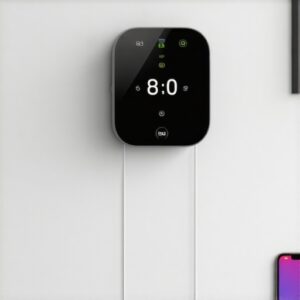
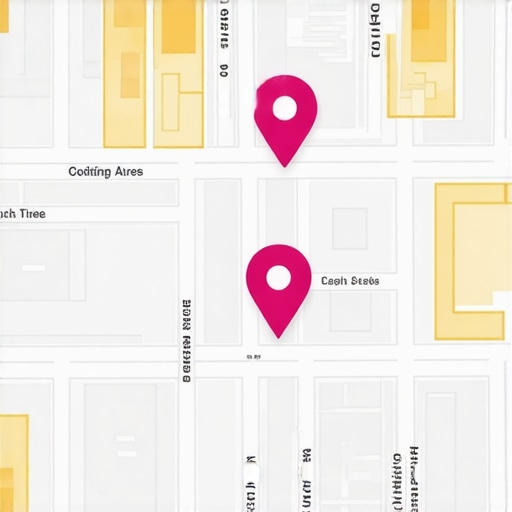
Geofencing isn’t magic; it’s just a virtual perimeter. When the last smartphone leaves the ‘fence,’ the system shifts to an ‘away’ setpoint. When the first one enters, it starts the recovery. But here is where the ‘sales techs’ won’t tell you the truth: if you have a high-efficiency furnace installation or a heat pump installation in a northern climate, rapid cycling is the enemy. Every time that inducer motor spins up or the compressor ramps, you’re putting wear on the components. In a multi-resident household, if ‘Resident A’ leaves for work but ‘Resident B’ stays home to work from a home office, the geofencing logic must be robust enough to recognize the remaining occupancy. This is where WiFi thermostat integration gets complicated. You need a platform that supports multiple ‘seats’ or users, ensuring the system doesn’t drop into economy mode while someone is still in the shower.
“The most expensive equipment in the world cannot overcome a bad duct system or an improperly configured control logic.” – Industry Axiom
When I’m out on a call for boiler maintenance services or checking a church heating systems setup, I often see ‘smart’ thermostats that are actually making the system dumber. In a church, for instance, the thermal mass is so high that geofencing is useless; you need to lead the recovery by four hours just to move the needle. In your home, if you have attic insulation for heating that’s up to R-60, your house will hold heat like a thermos. If you’re poorly insulated, the geofencing will cause the system to fight a losing battle against the ‘polar vortex’ every time you run to the grocery store. We call this ‘hunting,’ where the thermostat is constantly chasing a setpoint it can’t maintain because the envelope is too leaky.
The Dual Fuel Advantage and Climate Control
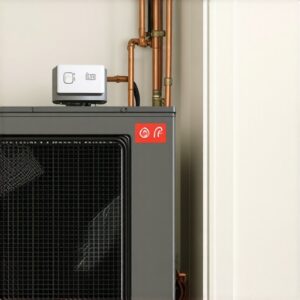
In our northern zones, we deal with the ‘Balance Point.’ That’s the outdoor temperature where a heat pump can no longer keep up with the heat loss of the house. By using dual fuel heat pump systems, we pair an electric air source heat pump with a gas furnace. The WiFi thermostat integration manages this handoff. When the geofencing tells the system you’re coming home, the logic engine checks the outdoor ambient temp. If it’s 15°F, it skips the heat pump and fires the ‘gas’ (refrigerant) isn’t the primary mover here; it’s the burners. This prevents the heat pump from running for three hours just to raise the temp two degrees. If your tech didn’t explain this, they were probably just a ‘sales tech’ trying to hit a quota.
Safety is the other side of the coin. During any high-efficiency furnace installation, I insist on carbon monoxide detector installation that talks to the thermostat. If that heat exchanger cracks—and they do, eventually, because of the acidic condensate—you want a system that doesn’t just beep, but shuts down the burners and ramps the blower to dilute the air. That’s the difference between a DIY job and a professional integration. It’s about more than just ‘saving juice’; it’s about life safety.
Managing Multiple Schedules Without Killing Your Compressor
The trick to geofencing with multiple residents is ‘radius tuning.’ If your fence is too small, the system doesn’t have time to recover before you walk through the door. If it’s too large, you’re heating an empty house. For those with priority service memberships, we usually spend an hour just calibrating these ‘soft’ settings. We look at the ‘Suction Line’ (making sure it’s beer-can cold in summer or properly pressurized in winter) and then we look at the data logs. Are we short-cycling? Is the ‘Pookie’ (mastic) on the ducts holding, or are we losing all our conditioned air to the crawlspace? You can read more about these strategies in our top HVAC repair strategies to extend your system’s life. If your system is hunting because the geofencing is confused by four different iPhones, your electricity bill will look like a car payment.
“Proper thermal zoning and control integration are required to maintain ASHRAE 55 standards for human thermal comfort.” – ASHRAE Standards
The Reality of Warranty and Maintenance
Most homeowners don’t realize that improper thermostat configuration can actually void certain parts of your warranty if it leads to excessive compressor starts. That’s why warranty service plans are vital. A pro will check the ‘cycles per hour’ (CPH) in the installer setup menu. If your geofencing is triggering a start every 15 minutes because ‘Resident C’ keeps driving in and out of the neighborhood, we need to add a delay. We’ve covered similar myths in our guide on furnace repair myths debunked by industry experts. Don’t let a poorly programmed app destroy a $10,000 investment. Whether it’s a church heating system or a small bungalow, the logic must match the load. If you’re seeing a ‘Check System’ light after installing a new WiFi stat, you might need to check your urgent furnace repair indicators before the ‘gas’ stops flowing for good.