You wake up in January, the outside air is a brutal 10°F, and the second your bare feet hit the hardwood, it feels like you’ve stepped onto a slab of dry ice. Most homeowners immediately crank the thermostat, but as a guy who has spent thirty years dragging my flashlight through spider-webbed crawl spaces, I can tell you: your furnace isn’t the problem. My old mentor, a grizzly veteran who smelled perpetually of 3-in-1 oil and stale coffee, used to scream at me, ‘You can’t heat what the ground is stealing! It doesn’t matter if you have a hundred-thousand BTU dragon in the basement; if you can’t touch the air, you can’t condition the air.’ This is the fundamental physics of the cold sink, and it’s why your ‘ice-cube floors’ are actually an airflow and thermodynamics failure, not a furnace capacity issue.
The Physics of the Thermal Bridge
In the trade, we talk about sensible heat—that’s the temperature you see on the dial. But in a crawl space, we’re fighting a losing battle against the earth itself. The ground stays a constant 50-55°F. Your subfloor, separated from that cold dirt by nothing but a few joists and maybe some sagging fiberglass batts, becomes a massive thermal bridge. Heat naturally migrates to cold. While you’re paying for ‘juice’ to heat your living room, that energy is being sucked through the floorboards into the dark void below. This is where heating service hacks become essential; you have to stop thinking about the house as a box and start thinking about it as a pressure vessel.
“The most expensive equipment in the world cannot overcome a bad duct system or an unconditioned building envelope.” – Industry Axiom
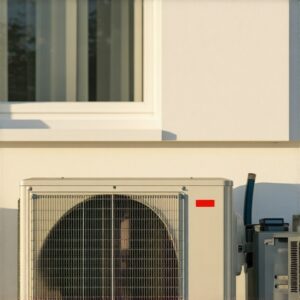
When we look at crawl space heating solutions, we aren’t just talking about shoving a space heater under the house. We’re talking about encapsulation and dedicated conditioning. If that crawl space is vented to the outside (the old-school way that needs to die), you’re essentially trying to heat the entire neighborhood. Modern building science, and the ASHRAE Standards we live by, suggests that a ‘conditioned’ crawl space—one that is sealed and treated as part of the home’s thermal envelope—is the only way to get those floors warm. This often involves ductless mini-split installation to provide a small, controlled amount of sensible heat to that lower zone, preventing the floor from becoming a heat-thief.
Boilers, Radiators, and the Radiant Truth
For homes with hydronic systems, the solution is often found in the mechanical room. If you’re looking at radiator replacement or upgrading hotel boiler services for a larger property, you have to consider the ‘loop.’ Radiant floor heating is the gold standard for warm feet because it reverses the traditional convective loop. Instead of hot air blowing from a ceiling register and immediately rising, the heat starts at the floor. In many older Northeast homes, we see wood burning stove installation as a primary heat source, but these often leave ‘cold pockets’ because they lack the distribution power of a boiler. Proper HVAC maintenance plans should include a check of your boiler’s circulation pumps to ensure that ‘beer can cold’ return lines aren’t indicative of a massive heat loss in the crawl space runs.
The Airflow Manifesto: Why Vents are the Enemy
Here’s the thing that gets me about ‘Sales Techs.’ They’ll see a cold room and try to sell you a bigger furnace. That’s a scam. Usually, the issue is static pressure. If your commercial furnace repair technician doesn’t own a manometer, fire them. If the return air isn’t pulled correctly from the floor level, you get a ‘stratification layer’ where your head is at 72°F and your feet are at 62°F. We use ‘Pookie’ (mastic) to seal every joint in the crawl space ductwork because even a pinhole leak in a supply run down there is like bleeding money into the dirt. When a tin knocker builds a proper return air drop, they are ensuring the cold air is pulled off the floor, allowing the warm air to actually settle where you live.
“Design of the distribution system shall be based on the calculated heat loss and heat gain of the space to be conditioned.” – ACCA Manual J
If you’re dealing with a particularly stubborn cold floor, WiFi thermostat integration and app-controlled heating systems can help, but only if they are used to manage multiple zones. Modern systems allow us to place sensors at floor level, triggering a ductless mini-split installation or a secondary heat stage when the floor temp drops below a certain threshold. This is far more efficient than just hammering the main furnace. Many homeowners don’t realize that financing for heat pump installs often covers these multi-zone configurations, which are designed specifically to solve the ‘frozen floor’ syndrome in North/Cold climates.
The 2025 Regulatory Cliff and Efficiency
As we move into 2025, the industry is shifting away from R-410A to A2L refrigerants like R-454B. This makes preventative HVAC repair tips more critical than ever. New systems are going to be more expensive due to the advanced sensors required for these mildly flammable gases. If you are struggling with cold floors now, it is the time to look at warranty service plans and HVAC maintenance plans to keep your current heat exchanger from cracking. A cracked heat exchanger is a ‘death-sentence’ repair, often leading to carbon monoxide risks that a simple WiFi thermostat integration won’t catch until it’s too late. Check out these furnace repair myths to see why ‘more power’ isn’t always the answer.
The Solution Stack: From Wood Stoves to Mini-Splits
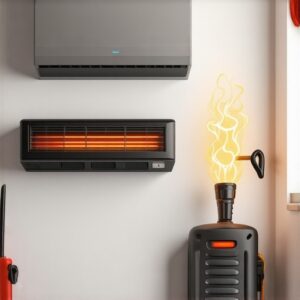
If you want warm floors, you need a multi-pronged attack. First, stop the infiltration. That means sealing the crawl space. Second, consider wood burning stove installation for supplemental dry heat, but pair it with a fan system to move that air. Third, look into ductless mini-split installation for the specific rooms that feel like ice boxes. For larger buildings, ensure your hotel boiler services are optimized for low-temp operation if you’re using radiant loops. Finally, don’t ignore the importance of commercial furnace repair standards even in a residential setting. High-static blowers and proper duct sizing are the only ways to win the war against the ground. Don’t let a ‘Sales Tech’ talk you into a unit that’s too big; it will just ‘short cycle,’ meaning it turns off before the floors ever have a chance to warm up. Comfort is physics, not magic. You can find more on this in our ultimate guide to HVAC success.
{“@context”:”https://schema.org”,”@type”:”HowTo”,”name”:”How to Fix Cold Floors via Crawl Space Conditioning”,”step”:[{“@type”:”HowToStep”,”text”:”Seal all external crawl space vents to prevent cold air infiltration.”},{“@type”:”HowToStep”,”text”:”Apply Pookie (mastic) to all ductwork joints to prevent sensible heat loss.”},{“@type”:”HowToStep”,”text”:”Install a vapor barrier on the ground to reduce latent heat (humidity) issues.”},{“@type”:”HowToStep”,”text”:”Consider a ductless mini-split or a dedicated supply vent to keep the crawl space temp above 60 degrees.”}],”totalTime”:”P2D”}