The Lie of the Digital Display
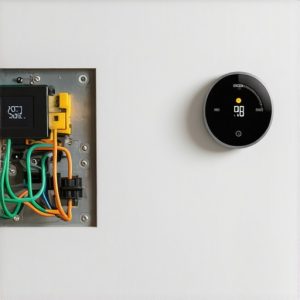
You’re staring at that backlit screen in the hallway, wondering why the master bedroom feels like a meat locker while the den is an oven. You think it’s a programming issue. Most ‘Sales Techs’ will tell you that you need a brand-new $15,000 variable-speed unit to fix it. They’re lying. They want the commission; I want the Static Pressure to be correct. My old mentor used to scream, ‘You can’t cool what you can’t touch, and you can’t heat what you can’t move!’ This is why airflow matters more than horsepower. If your ductwork was designed by a ‘Tin Knocker’ who was in a hurry, no amount of thermostat fiddling will fix the underlying physics of a poorly balanced system. Programming a multi-zone system isn’t about picking numbers; it’s about managing the Delta-T across your heat exchanger without tripping the high-limit switch. When we talk about heating service hacks for comfort and savings in 2025, we are talking about fluid dynamics, not just ‘smart’ gadgets.
“The most expensive equipment in the world cannot overcome a bad duct system.” – Industry Axiom
In the frozen North, where we deal with sensible heat and the brutal reality of a polar vortex, your thermostat is the conductor of a very complex mechanical orchestra. When you program a multi-zone system, you are actually commanding a Zoning Board to modulate dampers. If those dampers aren’t sealed with ‘Pookie’ (mastic) and the static pressure climbs too high because you closed off three out of four zones, you’re going to cook your blower motor or crack your heat exchanger. [image placeholder] This is where Thermodynamic Zooming comes in. We don’t just ‘turn on the furnace.’ We initiate a sequence: the inducer motor draws a vacuum, the pressure switch closes, the igniter glows, and the gas valve opens. If you’re dealing with furnace repair myths debunked by industry experts, you know that a dirty thermocouple or a failing flame sensor is often misdiagnosed as a ‘bad board’ by a kid who just graduated from a six-week tech school.
The Anatomy of Zoning: Static Pressure and Dampers
A multi-zone system works by using motorized dampers to choke off airflow to specific parts of the house. But here’s the kicker: that air has to go somewhere. If your system doesn’t have a Barometric Bypass Damper, you’re essentially strangling your furnace. This leads to short-cycling. When the furnace short-cycles, it never reaches steady-state efficiency. You’re losing money every time that furnace ignition repair becomes necessary because the igniter is being used three times more often than it should be. If you’re on a propane system, this is even more critical. Propane conversion services require precise manifold pressure adjustments—usually 10 to 11 inches of water column—and if your zoning causes the heat exchanger to overheat, that propane is just burning money without heating your bones.
The Brain of the System: Programming for Occupancy
Modern occupancy sensor installation has changed the game, but only if you understand the ‘Recovery Time.’ In cold climates, letting a zone drop to 55°F while you’re at work sounds smart, but the sensible heat stored in your drywall and furniture is lost. Your furnace then has to work in ‘high stage’ for hours to recover, often leading to refrigerant leak detection issues in the summer or stressed heat exchangers in the winter. Instead, use a 3-degree ‘setback.’ For multi-zone systems, ensure your ‘Master Zone’ (usually the living area) is the primary driver for the HVAC maintenance plans schedule. If you have a steam humidifier integrated into the system, remember that it only works when the blower is moving air. If you program your zones to be ‘Off,’ your house becomes a desert, leading to cracked wood floors and static shocks that could jump-start a truck.
“Standard 62.1-2022: Ventilation for Acceptable Indoor Air Quality requires consistent exchange rates regardless of thermal load.” – ASHRAE Standards
If you’re noticing a sour, acidic smell when the heat kicks on, you might have a bypass humidifier repair need where the water has sat stagnant, or worse, a secondary heat exchanger leak. And don’t get me started on heat recovery ventilators (HRV). In the North, an HRV is the only thing keeping your air from becoming toxic during the winter. It uses the outgoing warm air to pre-heat the incoming fresh air—physics at its finest. But if your multi-zone thermostat isn’t wired to interlock with the HRV, you’re just dumping raw, 0°F air into one zone while the other is trying to maintain 72°F. It’s a mechanical tug-of-war where your wallet is the rope. Regular top hvac repair strategies to extend your systems life always include checking the ‘Brain’ (the thermostat) and the ‘Heart’ (the furnace) as one unit.
When the Logic Fails: Troubleshooting Common Glitches
Sometimes the thermocouple replacement isn’t the fix. If your multi-zone system is ‘hunting’ (constantly opening and closing dampers), check your ‘C-wire.’ Many DIYers try to install smart thermostats without a common wire, leading to ‘power stealing’ that confuses the zoning board. This results in the furnace firing up, then immediately shutting down because the board thinks the limit switch is open. It’s not magic; it’s just low-voltage electricity being interrupted. If you’ve been searching for heating service near you because your zones aren’t responding, look at the damper motors first. They are the ‘grunts’ of the system, and they fail more than the ‘Sparky’ (electrician) would like to admit. In the end, comfort is about the movement of molecules. Respect the airflow, keep your static pressure low, and stop trusting the ‘Sales Tech’ who hasn’t even looked at your ductwork before quoting you a ‘system replacement.’ Physics doesn’t lie, even if the guy in the clean uniform does.
{“@context”: “https://schema.org”, “@type”: “HowTo”, “name”: “How to Program a Multi-Zone Thermostat”, “step”: [{“@type”: “HowToStep”, “text”: “Identify the Master Zone and set the primary baseline temperature.”}, {“@type”: “HowToStep”, “text”: “Adjust secondary zones with no more than a 3-degree variance to prevent high static pressure.”}, {“@type”: “HowToStep”, “text”: “Configure occupancy sensors to trigger ‘Home’ mode 30 minutes before arrival.”}, {“@type”: “HowToStep”, “text”: “Verify damper operation by cycling each zone individually and checking airflow at the registers.”}]}