The sound of a winter disaster doesn’t start with a bang. It starts with the absolute silence of a dead furnace at 3 AM while you are three states away enjoying a holiday. By the time you get home, that silence has been replaced by the roar of water spraying from a fractured copper elbow in the crawlspace. As an HVAC tech who has spent thirty winters crawling through frozen mud to patch up systems that should have never failed, I can tell you: comfort is physics, but protection is data. In the North, we don’t just fight the cold; we fight the thermodynamic inevitability of heat loss. When the mercury drops below zero in places like Chicago or the Northeast, your home becomes a heat exchanger working in reverse, and if your hydronic heating systems lose their prime, the expansion of freezing water will tear steel asunder.
The Physics of the Freeze: Why Your House is a Heat Sink
My old mentor, a guy who could smell a gas leak from the curb, used to scream at me, ‘You can’t cool what you can’t touch, and you can’t heat what you can’t hold!’ He was obsessed with the idea that airflow and thermal mass are the only things standing between a cozy living room and a literal ice box. This is why attic insulation for heating is the first line of defense. Without proper R-value in the overhead, the stack effect pulls the heat you just paid for right out of the roof, leaving the slab and the ‘wet’ walls cold enough to reach the triple point of water. I followed a ‘Sales Tech’ once who tried to sell a whole new boiler to a guy because his pipes froze; the reality was the HVAC load calculation services were never done, and the house had a massive bypass leak in the attic that was sucking the heat out faster than the BTU input could keep up. Understanding how to choose the right HVAC fixes starts with knowing your home’s envelope.
“The most expensive equipment in the world cannot overcome a bad duct system or a thermal envelope that leaks like a sieve.” – Industry Axiom
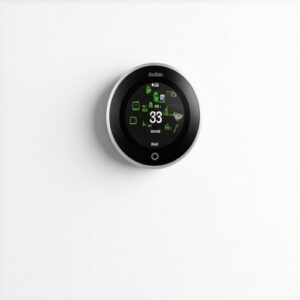
In a cold climate, we aren’t just dealing with ‘sensible heat’ (the temperature you feel). We are dealing with the latent energy of the water inside your pipes. When you travel, you likely drop the thermostat to 55°F to save a few bucks on the ‘juice.’ But if your zoning system installation isn’t calibrated correctly, a ‘dead zone’ in a far corner of the house might actually be sitting at 34°F. That is where the danger lies. A modern thermostat installation with app-control doesn’t just let you change the temp; it acts as a remote forensic sensor, giving you real-time telemetry on whether your system is actually keeping up with the heat loss.
Thermodynamic Zooming: How App-Control Saves the Slab
Let’s talk about radiant floor heating installation. It is the gold standard for comfort, but it’s a high-stakes game in the winter. If the circulator pump on a hydronic system fails while you’re in Florida, the thermal mass of the floor will hold heat for a while, but eventually, the water in those PEX lines will hit the dew point and then the freezing point. App-controlled systems now integrate with the boiler’s logic. If the system detects a ‘no-heat’ call or if the temperature in a specific zone drops below a safety threshold despite the ‘Sparky’ (electrician) having wired the limits correctly, you get a notification on your phone. This is the ‘Forensic Diagnosis’ in action. You aren’t guessing if the house is cold; you are seeing the failure in the delta-T (temperature difference) before the copper splits.
Using industrial heater services techniques in a residential setting, we now look at energy recovery ventilators (ERVs) to manage the air exchange. In a tight, well-insulated home, you need fresh air, but you can’t afford to dump all your sensible heat outside. An ERV cross-exchanges the outgoing warm air with incoming cold air, pre-heating it. When you are away, your app can throttle the ERV to a minimum, preserving the internal heat while still preventing the ‘stale house’ smell. It’s all about the math of the HVAC load calculation services. If you don’t know the load, you’re just guessing with the gas valve.
The Anatomy of a Modern Heating Strategy
If you are looking for efficient HVAC repairs, you have to look at the system as a single organism. The hot water heater repair you ignored last summer? That’s part of the same thermal loop if you have a combined system. The whole-home humidifiers that keep your hardwood floors from shrinking? They need to be monitored too. If the humidity drops too low because the heat is running constantly to fight a polar vortex, the air becomes ‘sharper’ and loses its ability to hold heat effectively. A smart thermostat allows you to balance the humidifier and the furnace from a beach chair.
“Design for the 1% outdoor design temperature. If you don’t, the physics of heat transfer will eventually find the weakest link in your mechanical chain.” – ACCA Manual J Standards
I’ve seen guys use ‘Pookie’ (mastic) to seal up a duct thinking it would fix a freezing room, but if the zoning system installation doesn’t have a bypass damper, you’re just building up static pressure and blowing out the blower motor. When you are traveling, a blown blower motor is a death sentence for your plumbing. That is why I tell people that thermostat installation is more than just two screws in the drywall; it is about setting up high/low alerts that go straight to your phone. If your furnace hits a ‘lockout’ due to a flame sensor issue (the most common ‘no-heat’ call in history), you need to know it before the thermal lag of the house disappears.
Beyond the App: Physical Maintenance Matters
You can have the most expensive app in the world, but if your air filter is clogged with three years of dog hair, the high-limit switch will trip, and the ‘gas’ (refrigerant or fuel) won’t matter because the system will shut down to prevent the heat exchanger from cracking. This is where preventative HVAC repair tips come into play. Before you leave for the winter, you need to ensure the condensate drain isn’t clogged. In high-efficiency furnaces (90%+ AFUE), the system produces water as a byproduct of combustion. If that drain line freezes because it was routed poorly by a ‘Tin Knocker’ who was in a hurry, the water backs up into the furnace and shuts the whole thing down. No app can clear a frozen drain line, but the app will tell you the house is dropping to 45°F so you can call a pro before the pipes go.
For those with a hydronic heating systems, ensure your glycol levels are checked. Glycol is basically antifreeze for your house. If the power goes out, the app might go dark, but the glycol will keep the water from expanding and shattering your baseboards. It’s the backup to the tech. When we talk about heating service innovations for 2025, we are talking about this marriage of chemistry and connectivity. If you’re unsure about your system’s readiness, you should contact us for a full system audit. Don’t be the person who finds out their ‘Away’ mode was actually a ‘Freeze’ mode because the logic wasn’t programmed correctly.
Conclusion: Physics Doesn’t Take Vacations
The transition to smart home technology isn’t about being lazy; it’s about being a better steward of the thermal engine that is your home. Whether it’s radiant floor heating installation or a standard forced-air furnace, the goal is the same: maintain a temperature above the dew point and keep the water flowing. If you understand the HVAC load calculation services and the importance of attic insulation for heating, you’re already ahead of 95% of homeowners. The app is just the interface for the physics. Protect your investment, monitor your sensors, and never trust a ‘Sales Tech’ who doesn’t own a manometer. Your pipes will thank you.