The Physics of Timing: Why Your Mentor Was Right About Thermal Inertia
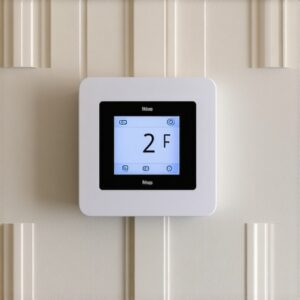
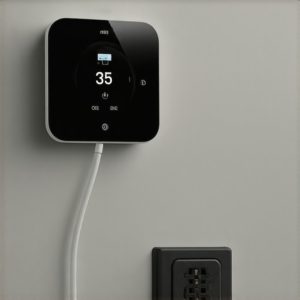
My old mentor, a guy who could smell a burnt contactor from the driveway and had the scarred knuckles to prove three decades in the trade, used to scream, ‘You can’t cool what you can’t touch, and you can’t heat what isn’t moving!’ He was obsessed with the idea that airflow was the only thing standing between a comfortable homeowner and a $10,000 mistake. Back then, we didn’t have geofencing or predictive maintenance alerts; we had a mercury bulb on the wall and a prayer. But his lesson remains the foundation of everything I do. When we talk about thermostat installation today, we aren’t just mounting a plastic box; we are managing the thermal inertia of a structure. Geofencing—the tech that ensures your house is warm the second you park the car—is the logical conclusion of that old-school physics. It’s about prepping the heat exchanger or the cold climate heat pumps before the load hits, rather than playing catch-up while the ‘sparky’ checks the breakers.
“The most expensive equipment in the world cannot overcome a bad duct system.” – Industry Axiom
The 2025 Regulatory Cliff: R-454B and the Death of R-410A
We are standing at a massive crossroads in this industry. If you haven’t heard about the R-454B refrigerant transition services, you’re about to get a very expensive wake-up call. The EPA is phasing out R-410A, the ‘juice’ we’ve used for twenty years, in favor of A2L refrigerants. These are ‘mildly flammable,’ which sounds terrifying to a homeowner but just means we’ve had to rethink every safety sensor in the cabinet. This isn’t just a simple swap; it changes the way we handle 24/7 heating emergency response. If you’re still running an old unit that’s leaking gas, ‘topping it off’ is becoming a luxury of the past. You need to understand that 2025 marks a hard line in the sand for equipment standards. For those in the North, where the cold climate heat pumps are finally becoming viable alternatives to gas, this transition is even more critical. You can’t just slap a new coil on an old tin knocker’s ductwork and expect it to handle the higher pressures and different flow rates of R-454B. It’s why heating service innovations transforming 2025 climate control are so focused on compatibility and sensor integration.
The Anatomy of a Cold-Climate Breakdown
In a Northern winter, the ‘sound of silence’ isn’t a song—it’s a nightmare. It usually starts with the furnace ignition repair call at 3 AM. You hear that click-click-click of the igniter trying to find gas, but the flame never catches. Maybe it’s a dirty flame sensor, or maybe it’s a cracked heat exchanger leaking carbon monoxide. When the wind is howling at -10°F, your home loses sensible heat faster than a leaky bucket loses water. This is where whole-home humidifiers become more than a comfort feature; they are a structural necessity. Dry air at 70°F feels like 65°F because of evaporative cooling on your skin. By adding moisture, we allow the thermostat to stay lower while you feel warmer. If you’re struggling with an old boiler, a radiator replacement might be the only way to restore the BTU output needed to fight off a polar vortex. Many homeowners fall for furnace repair myths debunked by industry experts, thinking they just need more ‘gas’ when their real issue is a restricted suction line or a blower motor that’s drawing too many amps because the static pressure is through the roof.
The Geofencing Logic: Efficiency vs. Convenience
Geofencing works by creating a virtual perimeter around your home. When your smartphone crosses that line, the thermostat installation you paid for finally earns its keep by signaling the system to ramp up. But here is the technical catch: if you have an oversized system, it will ‘short cycle.’ It blasts the house with heat, shuts off, and leaves the air stratified—hot at the ceiling, freezing at the floor. A master tech knows that for geofencing to actually save money, the system must be sized correctly according to ACCA Manual J.
“Properly sized equipment shall be determined by a heat loss/gain calculation… oversizing is the primary cause of humidity imbalance.” – ACCA Manual J Standards
This is especially true for ventless gas heater services and modern heat pumps. We want long, steady run times to move the air and filter it. Short bursts of heat are the enemy of efficiency. This is why predictive maintenance alerts are so vital; they tell us if the system is struggling to reach the setpoint before you even realize the house is cold. If you’re looking for a furnace tune-up services provider, don’t just look for someone to vacuum the floor. Look for someone who checks the ‘pookie’ (mastic) on the plenum and measures the temperature drop across the coil.
Why Most ‘Sales Techs’ Are Failing You
I’ve followed behind countless ‘sales techs’ who tried to quote a $15,000 full replacement when the customer just had a bird’s nest in their vent pipe. It’s disgusting. A real technician understands the forensic diagnosis. We look at the contactor for pitting, we check the capacitor’s microfarads, and we look at the heat exchanger for any signs of ‘flame rollout.’ If you’re being pushed into a new install without a discussion on R-454B refrigerant transition services or a static pressure test, you’re being sold, not serviced. Real comfort comes from understanding that predictive maintenance alerts are there to prevent the 24/7 heating emergency response call in the first place. Whether it’s a simple radiator replacement or a complex cold climate heat pump install, the physics of the house—the ‘envelope’—dictates the equipment, not the other way around. Don’t let a salesman talk you into a 5-ton unit for a 3-ton house just because it’s ‘stronger.’ It’ll turn your home into a cold, damp swamp in the summer and a short-cycling disaster in the winter. For more on the right way to do things, check out ultimate guide to ac installation expert tips for 2025 success and ensure your ‘tin knocker’ knows their math.