The Sound of Silence in a Zero-Degree Gale
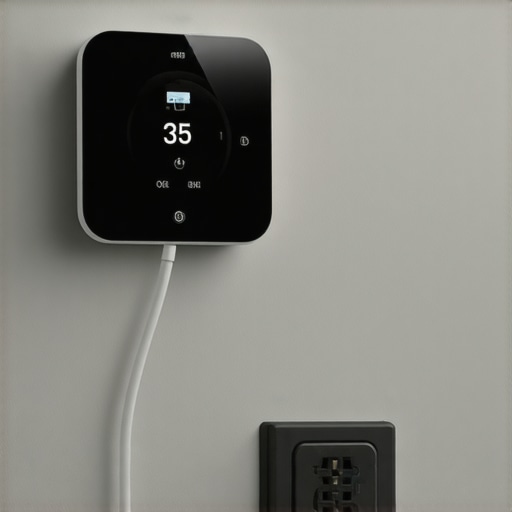
There is a specific kind of silence that wakes a technician up at 3 AM. It isn’t the quiet of a sleeping house; it is the heavy, expectant silence of a furnace that has quit in the middle of a Northern winter. You walk over to that sleek, glass-faced smart thermostat, expecting to see the glow of your heating schedule, and instead, you’re met with a blank screen or a cynical little blinking text: ‘No Power.’ Most homeowners assume the thermostat is broken. They go to the big-box store, buy a new one, wire it up, and—surprise—it stays dead. That’s because the thermostat isn’t the problem; it’s the messenger. As a guy who has spent three decades chasing electrons through frozen crawlspaces, I can tell you that a ‘no power’ message is the ghost of a mechanical failure deeper in the gut of your system.
The Physics Lesson: Why Airflow is King
My old mentor, a man we called ‘Iron Lung’ because he could sniff out a cracked heat exchanger from the driveway, used to scream at me, ‘You can’t move heat if you can’t touch it!’ He was obsessed with the Thermodynamic Zooming of a system. See, your smart thermostat isn’t just a switch; it’s a computer that needs a constant 24-volt diet. When your furnace or boiler hits a safety limit, it kills the power to the ‘R’ terminal to prevent the house from burning down or flooding with carbon monoxide. If your airflow is restricted because of a ‘Tin Knocker’ who undersized your returns or a filter that looks like a wool sweater, the heat exchanger overheats. The high-limit switch trips, breaks the circuit, and your thermostat goes dark. You don’t need a new thermostat; you need to understand choosing the right HVAC fixes before you start swapping parts.
“The most expensive equipment in the world cannot overcome a bad duct system. Static pressure is the silent killer of efficiency and component longevity.” – Industry Axiom
The Forensic Diagnosis: Why the Juice Stops Flowing
When I’m called out for a ‘No Power’ error, I follow the anatomy of the circuit. First, we check the ‘Sparky’ work—did the electrician or the last ‘Sales Tech’ actually wire the C-wire (Common wire) correctly? Smart thermostats are power-hungry. Older 2-wire boiler systems or shop heaters often lack a C-wire, forcing the thermostat to ‘power steal’ from the heat circuit. This works until the load becomes too high or the ambient temperature drops, causing the internal battery to fail. For those in the North dealing with heating service hacks for comfort and savings in 2025, adding a plug-in transformer or a C-wire adapter is the first step in stabilization. But if the power was there and now it’s gone, we’re looking at a blown 3-amp or 5-amp fuse on the Integrated Furnace Control (IFC) board. Why did it blow? Usually, it’s a shorted contactor coil or a wire rubbed raw against the cabinet—what we call a ‘rub-through’—that sends the voltage to ground. It’s sensory work; you look for the scorched marks on the board and the smell of ozone.
The Condensate Trap: A Summer and Winter Villain
In high-efficiency 90%+ furnaces or AI-driven HVAC optimization systems, water is a byproduct of combustion. If the condensate drain line is clogged with ‘slime’ or if the pump fails, the float switch will break the low-voltage circuit. It’s a safety feature. If that water backs up, it ruins the heat exchanger or floods the ‘Pookie’ (mastic) sealed plenum. The thermostat loses power because the system is literally trying to save itself from drowning. I’ve seen homeowners spend thousands on commercial furnace repair when all they needed was a shop-vac and a shot of vinegar down the drain line. This is why preventative HVAC repair tips for year-round efficiency are not just suggestions; they are the difference between a functional system and a ‘No Power’ emergency on a Saturday night.
“All HVAC systems shall be installed such that condensate is disposed of in a manner that does not cause nuisance or damage to the building.” – ASHRAE Standard 62.1
The 2025 Regulatory Cliff: R-454B and Smart Logic
We are entering the era of the A2L transition. As we move to R-454B refrigerant transition services, your smart building management systems are going to get even more complex. These new refrigerants are ‘mildly flammable,’ which means the new equipment will have leak sensors tied directly into the control logic. If a sensor detects ‘gas’ (refrigerant) in the coil, it will shut down the system faster than a heartbeat. Your smart thermostat will show ‘No Power’ or a specific ‘Critical System Fault.’ This is where the ‘Sales Techs’ thrive—they’ll try to sell you a $15,000 unit because of a ‘bad board’ when it might just be a calibration issue with the new AI-driven HVAC optimization sensors. If you’re looking at ultimate guide to ac installation expert tips for 2025 success, ensure your installer understands the nuances of radiant floor heating installation and propane conversion services, especially how they interface with modern smart hubs.
The Math: Repair vs. Replace
If your board is fried and your compressor sounds like a bag of gravel, it might be time to pull the plug. With financing for heat pump installs becoming more accessible, replacing an old R-22 or early R-410A system makes more sense than dumping $1,200 into a 20-year-old IFC board and a transformer. But if the system is under 10 years old, that ‘No Power’ error is likely a $200-$400 fix. Whether it’s a pool heater repair, boiler maintenance services, or a shop heater service, the logic remains the same: check the safeties, verify the airflow, and don’t let a ‘Sales Tech’ talk you into a new system over a blown fuse. Real comfort is physics, not magic. It’s about managing latent heat and ensuring the ‘Suction Line’ stays ‘beer can cold’ in the summer and the flame rollout stays where it belongs in the winter. If you’re still seeing that blank screen, it’s time to stop looking at the wall and start looking at the furnace. Check your filters, clear your drains, and if you’re still stuck, contact us before you start cutting wires.