You hear that? That rhythmic clank-clank-clank echoing through the floorboards at 3 AM? That’s not a ghost; it’s the sound of a hydronic heating system trying to wake up from its slumber. If you live in a house built when people still rode horses to work, you probably have cast iron radiators. And if you’re reading this, you’re likely frustrated because you turned the thermostat up forty-five minutes ago and you’re still wearing a parka in your living room. As a tech who has spent thirty years chasing BTUs through iron pipes and copper fins, I’m here to tell you that your radiators aren’t broken—they’re just obeying the laws of thermodynamics. But that doesn’t mean you have to suffer in silence or cold.
The Physics Lesson: Why Iron is a Heavy Battery
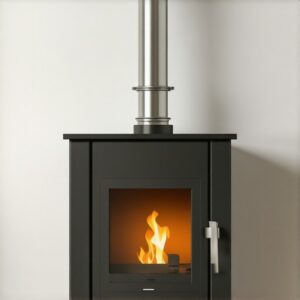
My old mentor, a man who smelled exclusively of pipe dope and stale coffee, used to scream at me whenever I complained about a slow boiler: ‘You can’t heat what you can’t touch, and you can’t move what you haven’t mastered!’ This is why airflow matters in a furnace, but in your home, it’s all about thermal mass. Cast iron is essentially a giant thermal battery. Unlike a modern forced-air system where a gas furnace repair or a furnace tune-up gets hot air moving in minutes, a hydronic system has to overcome the ‘specific heat capacity’ of the iron itself. You have to heat hundreds of pounds of metal before that metal can even think about heating the air. [IMAGE_PLACEHOLDER_1] This is sensible heat in action. The water inside—your ‘juice’—has to transfer energy to the iron, and that iron has to reach a delta-T (temperature difference) high enough to start a convection current. It’s slow because it’s dense, but that density is also why the house stays warm long after the boiler shuts off.
“Hydronic systems must be designed to account for the significant thermal lag inherent in high-mass radiation to ensure occupant comfort and system efficiency.” – ASHRAE Handbook—HVAC Systems and Equipment
The Forensic Diagnosis: Why Your Radiators Are Slower Than They Should Be
If your system has gone from ‘leisurely’ to ‘glacial,’ we need to look at the mechanical anatomy. In my decades on the job, I’ve seen homeowners get quoted $20,000 for a new system when they just had an air-bound loop. If air is trapped in the top of that radiator, the hot water can’t reach the metal. It’s like trying to run a car without oil; the medium isn’t there to do the work. This is where hydronic heating systems often fail. We also have to talk about sludge. Over fifty years, the inside of those pipes develops a layer of iron oxide—black mud. This mud acts as an insulator, preventing the heat in the water from reaching the iron. If you haven’t had a professional combustion analysis or a system flush, you’re burning money. I’ve followed ‘Sales Techs’ who try to sell a whole new modulating furnace when the existing boiler just needed the circulator pump’s capacitor replaced or a good cleaning. It’s a scam, and it’s why I tell people to check their furnace repair myths before signing a contract.
Modern Solutions for Antique Iron
So, what do we do? We don’t rip out the radiators. Modern modulating furnace repair and high-efficiency boiler technology have changed the game. By using outdoor reset controls, the boiler ‘guesses’ how hot the water needs to be based on the temp outside. This keeps the radiators at a steady simmer rather than a frantic boil, which actually improves comfort. If you’re looking for IAQ improvement services, remember that radiators don’t blow dust around like forced air, but they do dry out the air. Integrating dehumidification services (or humidification in the winter) is key to making that radiant heat feel ‘right.’ For those who want the latest tech, a voice control setup Alexa Google can be integrated into modern hydronic controllers, allowing you to pre-heat the house before you even leave work. This mitigates the lag time. I also highly recommend predictive maintenance alerts. These sensors can tell me if your system’s static pressure is dropping or if the pump is drawing too many amps before you wake up to a frozen pipe. It’s the difference between a $150 furnace tune-up services visit and a $2,000 emergency midnight call.
“The most expensive equipment in the world cannot overcome a bad distribution system, whether it be ducts or pipes.” – Industry Axiom
The Maintenance Manifesto
Don’t let a ‘Sparky’ or a ‘Tin Knocker’ tell you that radiators are obsolete. They are the gold standard of comfort if maintained. Sign up for HVAC maintenance plans that specifically include hydronic checks. We look for ‘Pookie’ (mastic) leaks in the basement insulation and ensure your expansion tank isn’t waterlogged. If you’re struggling with heat distribution, you might need to look at heating service hacks for 2025 to optimize your flow. Remember, a gas furnace repair is one thing, but a boiler is a different beast that requires a technician who understands the ‘smell’ of a healthy flame and the ‘sound’ of a clear pipe. Keep your coils clean, your air bled, and your combustion dialed in. That’s how you survive a North-zone winter without breaking the bank.