The Anatomy of a Midnight Nuisance
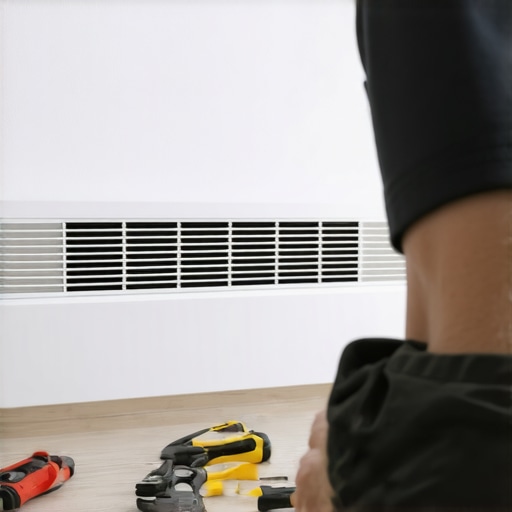
Look, if you are looking for a glossy sales brochure or a ‘top ten list’ written by an AI, you are in the wrong place. I have spent 30 years in crawlspaces and boiler rooms, and I can tell you that a noisy baseboard heater is not just an annoyance; it is a diagnostic symptom. You are lying in bed, and suddenly it sounds like a tap-dancing skeleton is working its way across your floorboards. That clicking, popping, and occasional groaning? That is the sound of thermal expansion—the physics of heat fighting against your home’s structure. If you are dealing with this, you probably live in the North where the ‘Polar Vortex’ is more than just a weather report; it is a way of life. When that outdoor ambient drops to 10°F, your heating system works overtime, and that is when the noises start.
The Physics Lesson: Why It Clicks
My old mentor, a guy who had been a ‘Tin Knocker’ since the Eisenhower administration, used to scream at me, ‘You can’t heat what you can’t flow!’ He was usually talking about air, but the principle applies to hydronic systems too. In a hydronic baseboard system, you have hot water—sometimes at 180°F—traveling through a copper pipe. Copper has a high coefficient of thermal expansion. When that hot water hits the cold metal, the pipe literally grows. If that pipe is bound up against a wooden joist or a metal bracket, it can’t slide smoothly. It sticks, builds up tension, and then pops forward. That is your clicking sound.
“The most expensive equipment in the world cannot overcome a bad duct system—or in this case, a poorly piped hydronic loop.” – Industry Axiom
Before you call for urgent furnace repair, you need to understand that this is often a mechanical friction issue, not a ‘broken’ heater. However, if you ignore it, that constant rubbing can actually wear a pinhole leak into the copper pipe over a decade or two. I’ve seen it happen in old church heating systems where the runs are so long that the expansion is massive.
The Forensic Diagnosis: Stopping the Pop
When I walk into a house for a diagnostic, I don’t just start replacing parts like a ‘Sales Tech’ looking for a commission. I look at the hangers. Most baseboard heaters have metal fins that sit on plastic glides. Over the years, these glides crack, fall off, or get covered in dust and ‘Pookie’ (mastic) left behind by some hack. Without those glides, it’s metal-on-metal. To fix this, you need to shut down the zone, let it cool, and inspect the hangers. If the plastic glides are missing, you can actually use pieces of a plastic milk jug or specialized Teflon strips to create a slippery surface for the pipe to move on. This is one of those heating service hacks that saves you a $300 service call.
Air Pockets and the ‘Gurgle’
If the sound isn’t clicking but rather a gurgling or ‘rushing water’ noise, you don’t have a friction problem; you have an air problem. This is common in new construction heating design where the installer didn’t properly purge the loops. Air gets trapped at the high points. Because air is compressible and water isn’t, those bubbles create turbulence. Not only is it noisy, but it’s inefficient. Air is an insulator. If there is a giant air pocket in your baseboard, that room is going to stay cold while your boiler burns ‘juice’ (fuel) like crazy. You need to find the bleeder valve—usually at the end of the run—and let the air out until you get a steady stream of water. If your system keeps getting air, you might have a failing expansion tank or a ‘Sparky’ (electrician) might have wired your circulator pump to run at the wrong speed.
“Standard 611-2024 requires that hydronic systems be designed to prevent air entrapment and allow for the thermal expansion of all piping components without noise or structural damage.” – ASHRAE Standards
When to Pull the Plug: Repair vs. Replace
Sometimes the noise isn’t just a click; it’s a metallic ‘clank’ that indicates the system was installed too tightly. If the copper pipes are jammed through holes in the floorboards with zero clearance, the only real fix is to enlarge those holes. This is why furnace repair myths often lead people to buy new units when the issue is actually the ‘bones’ of the house. If you are looking at a system that is 40 years old, leaking at the elbows, and scaled up with calcium, it might be time for a two-stage furnace installation or a modern hydronic upgrade. Modern systems are much quieter because they use variable-speed pumps that ramp up slowly, reducing the ‘thermal shock’ to the pipes.
Beyond the Baseboard: Whole-Home Synergy
In the North, we also deal with the dry air of winter. I always tell my clients that if they are fixing their heating, they should look into whole-home humidifiers. Properly humidified air ‘holds’ heat better, meaning your baseboards don’t have to cycle as hard, which in turn reduces the expansion noises. It’s all connected. Whether it’s restaurant kitchen exhaust repair or a simple pilot light relighting, every part of the ‘Thermodynamic Zoom’ matters. Don’t let a ‘Sales Tech’ talk you into a warranty service plan that doesn’t cover the actual piping; they usually only cover the ‘box’ (the boiler or furnace), leaving you high and dry when the pipes start screaming.
If you have checked the glides and bled the air and the noise persists, it’s time to call in a pro who knows the difference between a ‘heat exchanger’ and a ‘capacitor.’ Don’t settle for a guy who just wants to sell you a new unit. You want a tech who understands the physics of the North. For more on keeping your system running right, check out our preventative repair tips or contact us for a real diagnosis. Comfort is physics, not magic.