The Ghost in the Ductwork: Why Your Master Bedroom is a Freezer
My old mentor used to scream at me in the middle of a cramped, spider-infested crawlspace, ‘You can’t heat what you can’t touch!’ Back then, I thought he was just being a cranky old Tin Knocker, but thirty years of chasing temperature swings has proven him right. You see, when a homeowner calls me complaining that their master bedroom is five degrees colder than the rest of the house, they usually expect me to tell them they need a whole new system. That’s what a ‘Sales Tech’—those guys in the crisp white shirts who wouldn’t know a manifold gauge from a toaster—would do. They’ll look at a ten-year-old unit and quote you $15,000 for a high-efficiency furnace installation before they even pull out a thermometer. But comfort isn’t about horsepower; it’s about physics. If your master bedroom is cold, it’s not because the furnace is ‘weak’; it’s because the airflow is being strangled somewhere in the dark corners of your home.
“The most expensive equipment in the world cannot overcome a bad duct system.” – Industry Axiom
The Physics of the ‘Cold Room’ Syndrome
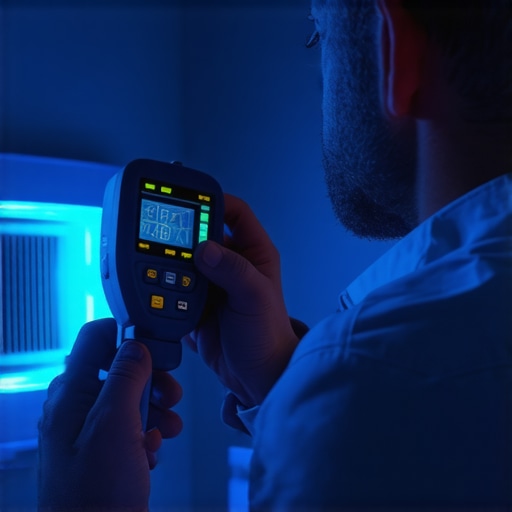
In the North, where the wind-chill bites through a Carhartt jacket, we deal with sensible heat and the brutal reality of the stack effect. When we talk about variable speed furnace services, we aren’t just talking about a fancy motor. We are talking about the ability to maintain a constant CFM (Cubic Feet per Minute) against the resistance of your ducts. This resistance is called Total External Static Pressure (TESP). Think of it like blood pressure for your house. If the TESP is too high, the air simply won’t make the long journey to the master suite, which is almost always the furthest run from the plenum. Using a dual-port manometer and a Pitot tube, I don’t guess—I measure. I’ve seen master bedrooms where the register was only putting out 40 CFM when the Manual J calculation called for 120. No amount of ‘turning up the thermostat’ fixes that; it just wastes gas and cooks your heat exchanger.
The Forensic Diagnosis: Tracking the Heat Thief
Before you consider radiant floor heating installation or a secondary pellet stove repair, you have to look at the envelope. Often, the master bedroom sits over a garage or has three exterior walls. This is where attic insulation for heating becomes a mechanical component, not just fluff in the ceiling. If your insulation is thin, the ‘Delta T’ (temperature difference) across your ceiling is so high that the air coming out of the vent is losing its heat before it even hits your face. I’ve walked into houses where the ‘Sparky’ had cut a massive hole for a recessed light and never sealed it, creating a vacuum that sucked the warm air straight into the attic. We call this the ‘chimney effect,’ and it’s why chimney liner installation and proper venting are critical for more than just safety—they’re about pressure balance.
The Myth of Closing Vents
One of the biggest furnace repair myths debunked by industry experts is that closing vents in unused rooms pushes more air to the master bedroom. It’s a lie. Your blower motor is designed to move a specific volume of air. When you close registers, you increase the static pressure, which causes the blower to work harder, heat up, and eventually fail. In a variable speed furnace, the motor will ramp up to fight that pressure, consuming more electricity and making the unit sound like a jet engine, but the air still won’t get to that cold bedroom because the duct itself is undersized or leaking ‘juice’ into the crawlspace. Instead of closing vents, we look at relay services and predictive maintenance alerts to ensure the system is modulating correctly.
“Proper air distribution is essential for maintaining thermal comfort and indoor air quality.” – ASHRAE Standard 55
Thermodynamic Zooming: Steam, Radiant, and Beyond
In older homes in the Northeast, we aren’t always dealing with forced air. If you have a steam boiler repair situation, the cold room is usually a victim of a clogged air vent on the radiator. Steam is lazy; it follows the path of least resistance. If that little nickel-plated valve isn’t ‘breathing,’ the steam stays in the basement while you shiver upstairs. For those with luxury setups, pool heater repair and radiant floor heating installation often share the same hydronic logic. If the manifold isn’t balanced, one loop gets all the hot water and the master bedroom loop stays lukewarm. It’s all about flow—whether it’s air, steam, or water. This is why heating service innovations transforming 2025 climate control focus so heavily on smart sensors that detect these flow imbalances before you even feel the chill.
The Blueprint for a Warm Winter
If you’re tired of wearing a parka to bed, stop looking at the thermostat and start looking at the ductwork. Check your ‘Pookie’ (mastic) at the joints. Make sure your return air isn’t blocked by a thick rug. If the bones of the system are solid, then we can talk about high-efficiency furnace installation to lower those winter bills. But remember, a 98% AFUE furnace attached to a 50% efficient duct system is just a shiny way to throw money away. If you’re unsure where the heat is going, it’s time for a professional to do a static pressure test. You can contact us to get a real technician on-site—not a salesman. We’ll find the bottleneck, seal the leaks, and make sure your master bedroom is actually part of the house again, not an outpost in the Arctic. Comfort isn’t a luxury; it’s a result of proper engineering and a refusal to ignore the laws of thermodynamics. For more technical deep dives, check out our top HVAC repair strategies to extend your systems life and keep your rig running until the next ice age.