My old mentor used to scream, ‘You can’t cool what you can’t touch!’ This was his way of drilling the law of physics into my skull while we were crawling through a cramped crawlspace in the dead of a New England winter. He wasn’t talking about the equipment; he was talking about the air. This is why airflow matters more than horsepower. You can have a five-ton unit, but if your ductwork is restricted or your air handler is choking, you’re just burning electricity to accomplish nothing. Today, as we stare down the barrel of the R-410A phase-out and the mandatory shift to SEER2, that lesson is more critical than ever.
The Death of R-410A and the 2025 Regulatory Cliff
We are currently standing at a massive crossroads in the HVAC industry. The EPA is sunsetting R-410A, the refrigerant we’ve used for decades, in favor of A2L refrigerants like R-454B. This isn’t just a change in the ‘juice’ or ‘gas’ we pump into the lines; it’s a total shift in how systems are engineered. These new refrigerants are ‘mildly flammable,’ which means new units come with sensors and mitigation boards that weren’t there before. If you think you’re going to get a cheap heat pump replacement after this transition, you’re in for a rude awakening. Prices are climbing because the tech is getting more complex. This is why understanding Ductless Mini-Split Efficiency and the new SEER2 ratings is no longer optional for homeowners.
“The most expensive equipment in the world cannot overcome a bad duct system.” – Industry Axiom
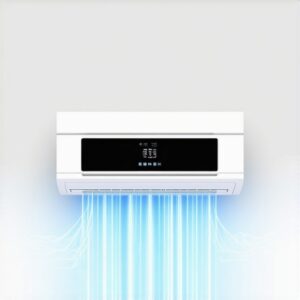
SEER2 isn’t just a marketing label. The old SEER rating was tested at an external static pressure of 0.1 inches of water column. That’s a joke. No real-world duct system runs that low. SEER2 tests at 0.5 inches, which is far more realistic for most homes. When you see a high SEER2 rating on a ductless mini-split, it’s because those units bypass the ductwork entirely, eliminating the friction losses that plague traditional systems. However, if you are sticking with a central system, you need to look into HVAC duct sealing to ensure that ‘Pookie’ (mastic) is actually doing its job and not letting your conditioned air leak into the attic.
Thermodynamic Zooming: How Mini-Splits Handle Latent Heat
In colder, damp climates, the enemy isn’t just the temperature—it’s the latent heat. When we talk about variable speed furnace services or inverter-driven mini-splits, we are talking about the ability of the evaporator coil to stay below the dew point for longer periods. A traditional ‘on/off’ unit is a blunt instrument. It kicks on, hammers the air with cold, and then shuts off. It cools the room (sensible heat) but doesn’t run long enough to pull the moisture out (latent heat). You end up in a cold, clammy room. An inverter-driven mini-split, however, throttles down. It keeps the coil cold and the air moving slowly, wringing out the humidity like a sponge. This is why WiFi thermostat integration is so useful; it allows you to monitor not just the temp, but the relative humidity, which is the true metric of comfort.
[IMAGE_PLACEHOLDER]
The Physics of Airflow and the Oil to Gas Conversion
In my thirty years, I’ve seen plenty of ‘Sales Techs’ try to sell a new system when the old one was just suffering from a cracked heat exchanger or a failing blower. If you’re considering an oil to gas conversion, especially in older structures or church heating systems, you have to be meticulous about the flue pipe installation and the venting. Natural gas burns cleaner, but it produces a lot of water vapor. If your flue is oversized or poorly lined, that vapor will condense and eat your masonry from the inside out. It’s not just about the furnace; it’s about the entire ‘thermal envelope’ of the building. This is where heating service hacks for comfort come into play—properly sizing the equipment to the load of the building using ACCA Manual J, not just guessing based on square footage.
The Air Handler and HEPA Filter Trap
Everyone wants HEPA filter systems now, especially after the last few years of air quality concerns. But here’s the dirty secret: most residential air handlers aren’t built to push air through a HEPA filter. Those filters are dense. If you slap a high-MERV filter into a standard return, you’re going to spike the static pressure and eventually burn out the blower motor. This leads to an expensive air handler repair that could have been avoided. If you want high-level filtration, you need a bypass system or a beefed-up motor that can handle the resistance. I’ve seen ‘Sparky’ (the electrician) have to come out and run new circuits just to handle the power draw of a motor that’s struggling against a clogged or over-dense filter.
“Standard practice for residential systems requires that the duct system be designed to deliver the required airflow against the external static pressure of the equipment.” – ASHRAE Standard 62.2
The Reality of Repairs: When to Pull the Plug
I hate seeing homeowners get scammed. I followed a ‘Sales Tech’ last week who quoted a family $18,000 for a new system because of a ‘leaking coil.’ I put my leak detector on it—nothing. It was a loose Schraeder valve. A $5 part. Before you jump into a furnace repair or a full replacement, you need a tech who actually understands the refrigeration cycle. Is the suction line ‘beer can cold’? Is the head pressure within spec? If you’re dealing with an older R-22 system, yes, it’s time to retire it. But if it’s a modern unit, top HVAC repair strategies can often buy you another five to seven years of life. Don’t let a slick guy in a clean uniform tell you the ‘compressor is grounded’ without seeing the multimeter readings yourself. Real HVAC work is about physics, gauges, and the smell of the ‘juice,’ not just signing a financing agreement.
Final Verdict on Modern Efficiency
Whether you’re looking at fireplace insert services to supplement your heat or upgrading to a high-efficiency variable speed furnace, the goal is the same: managed airflow. In 2025, with R-454B becoming the standard, the equipment will be more sensitive and more expensive. The days of ‘set it and forget it’ are over. You need preventative HVAC repair to keep those sensors clean and the ‘Pookie’ sealed on your ducts. Comfort isn’t magic; it’s the result of moving the right amount of air over a coil at the right temperature for the right amount of time. Anything else is just blowing smoke.