The Sound of Silence: When Your HVAC Becomes a Water Hazard
The scariest sound in an attic isn’t a squirrel; it is the absolute silence of a high-efficiency system that has shut down in the middle of a humid July afternoon because the condensate pan is full. I followed a ‘Sales Tech’ last summer who quoted a sweet lady $15,000 for a new system because her unit ‘had a terminal internal leak.’ I walked up there with a shop vac and a flashlight. All she had was a slime-plugged primary drain and no secondary safety switch. I cleared the line, installed a smart leak detector, and charged her for a service call. That Sales Tech was looking for a commission; I was looking for the physics of the problem. That is the difference between a parts-changer and a technician who understands airflow measurement services and thermodynamic balance.
The Forensic Anatomy of a Condensate Crisis
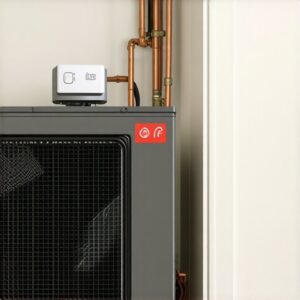
In our cold northern climate, we deal with a dual-threat: high-efficiency boiler repair services and hyper-heat heat pumps that produce staggering amounts of water during both the cooling season and the defrost cycle. When your evaporator coil drops below the dew point, it pulls latent heat out of the air. That heat doesn’t just vanish; it turns into liquid water. If your ductless mini-split installation wasn’t leveled perfectly, or if your shop heater services ignored the pitch of the flue, that water stays in the cabinet. It starts as a drip, turns into a puddle, and ends with a ruined ceiling or a cracked heat exchanger due to localized rusting.
“The most expensive equipment in the world cannot overcome a bad duct system.” – Industry Axiom
We are currently in the middle of the R-454B refrigerant transition services era. These new A2L refrigerants are efficient, but the equipment is more sensitive than the old R-22 ‘tank’ units we used to work on. You can’t just ‘slug’ these systems with gas and hope for the best. Everything from programmable thermostat programming to the internal sensors must be calibrated. A smart leak detector integrated into your WiFi thermostat integration is no longer a luxury; it is the only way to prevent a catastrophic overflow when the primary drain line gets choked with ‘white slime’ (a bacterial colony that loves cool, dark pans).
The Math of Mitigation: Repair vs. Replacement
When I look at a system, I am looking at the ‘Static Pressure.’ If your airflow measurement services reveal that your fan is working too hard because of a dirty filter or undersized returns, the air velocity across the coil actually ‘strips’ water off the fins before it can reach the pan. This ‘blow-off’ bypasses your safety switches entirely. This is why a warranty service plans check-up is vital. We check if the ‘Pookie’ (mastic) on your plenum is holding or if you’re sucking in attic humidity that overloads the system’s dehumidification capacity. If you have an old pellet stove repair need or a failing boiler, you might think the dampness in the basement is just ‘seasonal.’ It’s not. It’s a failure of moisture management.
“Condensate disposal systems shall be provided for equipment and appliances that produce condensate in order to prevent damage to the structure.” – International Mechanical Code (IMC)
Smart Integration: The New Standard
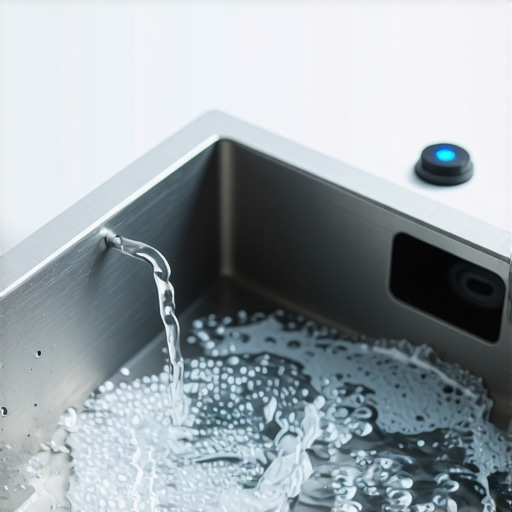
By using WiFi thermostat integration, we can now wire smart water sensors directly into the ‘R’ or ‘Y’ wire of your control board. When the sensor detects a 1/16th inch of moisture in the secondary pan, it kills power to the compressor while keeping the indoor fan running to prevent the coil from icing up. This is a far cry from the old mechanical ‘float switches’ that used to get stuck. For homeowners looking at top HVAC repair strategies, this is the single best ROI move you can make. It’s much cheaper than a mold remediation bill. If you’re wondering about the cost, check our choosing the right HVAC fixes guide for a breakdown of safety upgrades versus basic repairs.
The Airflow Manifesto: Why Water is a Symptom
If your unit is ‘sweating’ through the insulation, your ‘Sparky’ (electrician) isn’t the one to call; your ‘Tin Knocker’ (duct expert) is. Most overflows happen because of poor drainage physics. Water won’t flow uphill, yet I see ‘Sales Techs’ install hyper-heat heat pumps with drain lines that have ‘bellies’ in them all the time. Proper preventative HVAC repair tips always include a nitrogen blow-out of the lines. If you want to avoid the ‘July 4th Panic’ when no one is available for a service call, you need a proactive approach. Visit our contact us page to get a professional to look at your drain geometry before the humidity hits. Remember, comfort is physics, and water is the enemy of your home’s structural integrity. Don’t let a $30 sensor failure turn into a $10,000 insurance claim. Stay ahead of the R-454B transition and ensure your smart home is actually smart enough to turn itself off before it drowns.