The Death of R-410A and the 2025 Regulatory Cliff
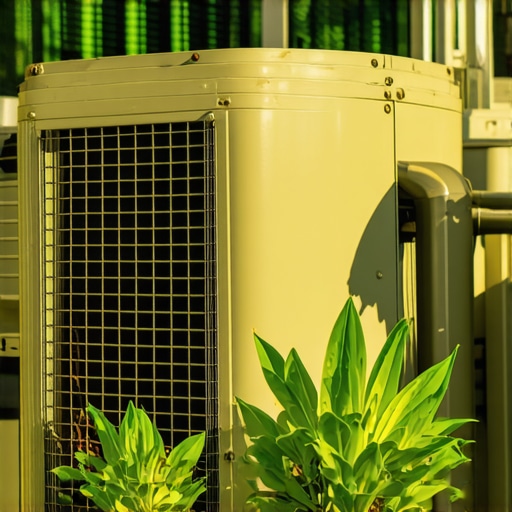
The HVAC industry is currently standing on a precipice that most homeowners don’t even realize is there. We aren’t just talking about a minor update; we are talking about the total phase-down of R-410A, the refrigerant that has been the industry standard for two decades. As a tech who has spent 30 years crawling through crawlspaces and dragging manifolds across icy roofs, I’ve seen these transitions before—from R-22 to R-410A—and let me tell you, the ‘Sales Techs’ are already licking their chops. They want to sell you a whole new system when you might just need a strategic upgrade. But if you’re looking at reducing carbon footprints with low-GWP refrigerant retrofits, you need to understand the physics, not the marketing fluff. My old mentor, a grizzly tin knocker who could smell a gas leak from a block away, used to scream at me, ‘You can’t cool what you can’t touch!’ This was his way of saying that heat transfer—the very essence of thermodynamics—is only as good as the medium carrying it. This is why airflow matters more than horsepower, and why the new A2L refrigerants like R-454B are changing the game. They have a lower Global Warming Potential, but they require a completely different approach to leak detector integration and safety sensors because they are technically ‘mildly flammable.’ Don’t let that scare you; your stove is ‘highly flammable’ and you sleep fine. It just means the days of a ‘Sparky’ or a ‘Tin Knocker’ cutting corners are over.
“The most expensive equipment in the world cannot overcome a bad duct system.” – Industry Axiom
In our climate, especially when dealing with multi-family heating upgrades or a steam boiler repair in an old Chicago-style brownstone, the enemy is often the age of the infrastructure. You can’t just slap a new high-efficiency heat pump on a system designed for a different era of physics. When we talk about boiler repair services, we are looking at the thermal mass. Steam is a violent way to move heat compared to modern hydronics, but it’s incredibly effective if maintained. However, if you’re trying to integrate air purification integration or voice control setup Alexa Google into these legacy systems, you’re bridging a century of technology. For those in the cold North, the danger of the ‘Polar Vortex’ means your heat pump needs a backup. That’s where the baseboard heater repair or keeping that boiler in top shape becomes critical. If you are looking for more technical depth on system longevity, check out these top HVAC repair strategies to extend your systems life.
The Physics of Heat Transfer: Why Low-GWP Matters
Let’s talk about thermodynamic zooming. When a refrigerant moves through the evaporator coil, it’s not ‘creating cold.’ It’s absorbing heat. The goal of low-GWP (Global Warming Potential) refrigerants is to maintain that heat-carrying capacity while ensuring that if the ‘juice’—that’s what we call the refrigerant—ever leaks, it doesn’t stay in the atmosphere for a hundred years. The transition to A2L refrigerants is part of a global mandate, but the real-world application involves demand-controlled ventilation and better leak detector integration. If you have a slow leak in a multi-family unit, you aren’t just losing efficiency; you’re potentially creating a safety hazard with these new gases. This is why I always tell people that capacitor replacement services are the cheapest insurance policy you can buy. A failing capacitor makes the compressor work harder, increasing heat and pressure, which eventually causes the copper to fatigue and leak that expensive gas. If you find yourself in a situation where your furnace is acting up before a retrofit, you should read about how to identify when furnace repair is urgent.
“Standard 15-2022 provides the essential safety requirements for the design, construction, installation, and operation of refrigeration systems using the new A2L classifications.” – ASHRAE Standards
One of the biggest scams in this industry is the ‘Sales Tech’ who ignores the rebate side of things. If you are doing a retrofit, you should be screaming for rebate application assistance. The government and local utilities are practically throwing money at homeowners to move away from high-GWP systems. But they won’t tell you that unless you ask. Whether it’s baseboard heater repair to supplement a new heat pump or a full-scale multi-family heating upgrade, the paperwork is as important as the pipework. We see too many folks miss out on thousands of dollars because they didn’t document the SEER2 ratings or the low-GWP specs correctly. For those planning a new install in this transitional year, I highly recommend looking at this ultimate guide to ac installation expert tips for 2025 success.
The Airflow Manifesto: Beyond the Refrigerant
You can have the most eco-friendly, low-GWP unit on the planet, but if your ductwork is sealed with cheap tape instead of ‘Pookie’ (mastic), you are wasting your money. Airflow is the lifeblood of the system. I’ve seen systems where the ‘suction line’ was ‘beer can cold’—which is how lazy techs used to check the charge—but the house was still 80 degrees. Why? Because the static pressure was so high the blower motor was basically just spinning its wheels. This is where demand-controlled ventilation comes in. By using sensors to determine when the building actually needs fresh air, we reduce the load on the compressor and the boiler. This is the ‘smart’ part of voice control setup Alexa Google integration. It’s not just about telling your house to be 70 degrees; it’s about the system knowing how to get there with the least amount of energy. If you are curious about how these innovations are shaping the future, see heating service innovations transforming 2025 climate control. Always remember, a technician who doesn’t pull out a manometer to check your static pressure isn’t a technician—they’re a part-swapper. Real comfort is physics, and physics doesn’t care about your thermostat’s flashy screen.
[IMAGE_PLACEHOLDER]