The Sound of Silence: When Your Rooftop Becomes a Liability
The desert is a cruel mistress. One week you are begging for a breeze in 105°F heat, and the next, a dry northern front rolls in, threatening to turn every drop of water in your evaporative cooler into a pipe-bursting ice bullet. I have spent three decades hauling my tool bag across these roofs, and if there is one thing I have learned, it is that silence is the most expensive sound in HVAC. When you flip that thermostat to ‘Heat’ and forget about the water sitting in your cooler lines, you are not just being forgetful; you are inviting a catastrophic flood into your attic. My old mentor used to scream, ‘You can’t cool what you can’t touch!’ He was talking about airflow, but the logic applies to winterization too: you cannot protect what you have abandoned to the elements. This is why evaporative cooler services are the most overlooked part of the seasonal transition.
“The most expensive equipment in the world cannot overcome a bad duct system or neglected maintenance protocols.” – Industry Axiom
In our arid Southwest climate, we deal with extreme sensible heat. The ‘Monsoon Effect’ usually kills swamp cooler efficiency by August, but the real danger starts in November. When the temperature drops below the dew point and then hits the freezing mark, the physics of water expansion take over. Water expands by roughly 9% when it freezes. In a 1/4-inch copper supply line, that expansion has nowhere to go but out through the wall of the pipe. If you haven’t performed a proper heating service check that includes shutting down your summer equipment, you are playing Russian roulette with your drywall. I have seen ‘Sales Techs’ try to tell homeowners they need a whole new system because of a frozen line, when the reality is they just needed to understand the thermodynamic reality of their machine.
The Mechanical Anatomy: A Forensic Diagnosis of Your Cooler
Let’s look at the cooler like a living organism. You have the heart (the motor), the lungs (the pads), and the circulatory system (the water lines and spider tubes). During the summer, the pump sends water to the distribution header, which then trickles down through the spider tubes to saturate the media. This is where latent heat is removed through evaporation. But come winter, that entire circulatory system becomes a liability. If you leave water in the pump or the spider tubes, you aren’t just risking a burst pipe; you’re risking a cracked pump housing. I followed a guy once who ignored his cooler for three years; the calcium buildup was so thick it looked like a cave formation. He ended up needing a full heat pump replacement because his dual-fuel system’s cooling side was completely choked out by scale and rust from the neglected cooler sitting right next to it.
The first step in a forensic winterization is the ‘Hook.’ You shut off the water at the saddle valve—usually located in a crawlspace or near the water heater. But don’t stop there. You have to disconnect the line at both ends. If you leave that line full of juice, it will split. I have seen it happen a thousand times. You need to blow the line out. A real tin knocker or seasoned tech knows that even a tiny bit of moisture can cause a pinhole leak that you won’t find until you turn the water back on in May. That is when the real fun starts, and you are calling for urgent furnace repair because the water has leaked into your furnace’s control board.
The Math of Neglect: Repair vs. Prevention
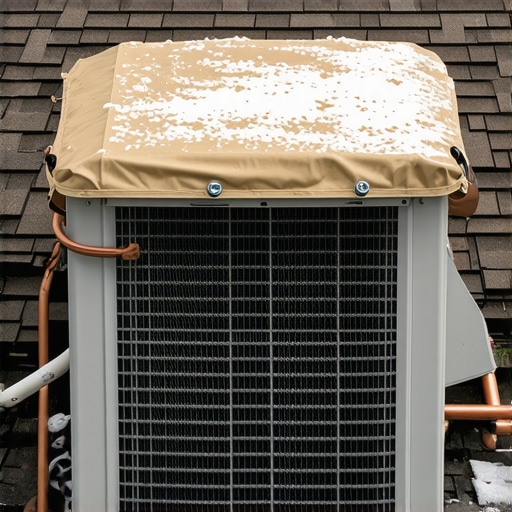
Let’s talk numbers. A proper winterization costs you maybe a hundred bucks and an hour of time. A burst water line in the attic? You are looking at $2,000 in drywall repair, $500 for a plumber, and potentially thousands more if the water hits your high-efficiency heating system. It is basic math. Whether you are managing hospital HVAC zoning or a simple residential unit, the principle of preventative maintenance contracts remains the same: pay a little now or pay a lot later. I have seen people try to use plastic covers from big-box stores that flap in the wind and tear within a month. Use a heavy-duty canvas cover. Why? Because you need to stop the ‘chimney effect.’ If you don’t cover that cooler, the warm air from your home escapes through the ductwork and out the cooler, wasting your heating service dollars and making your variable speed furnace services work twice as hard for no reason.
“Standard 62.1 – Ventilation for Acceptable Indoor Air Quality requires that all HVAC components be maintained to prevent microbial growth and structural damage.” – ASHRAE Standards
Speaking of furnaces, when we shut down the cooler, we should be looking at the commercial furnace repair needs or residential heat checks. If you are in a building with spa heater services, those lines are even more sensitive to the freeze. We often see homeowners who forget that their cooler is part of a larger ecosystem. If the cooler is leaking, the humidity in the home rises, which can mess with your air purification integration. High humidity in winter leads to condensation on windows and, eventually, mold in the ductwork. This isn’t magic; it’s physics. You need to keep the ‘Pookie’ (mastic) on your duct joints tight and your cooler shut down tight.
The Blueprint for a Freeze-Proof Winter
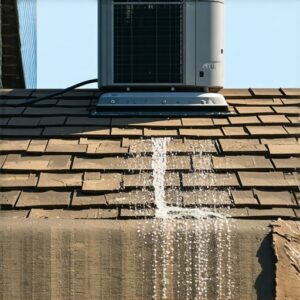
To do this right, you need to be methodical. First, drain the pan completely. Don’t leave a half-inch of ‘swamp water’ at the bottom to freeze and expand against the corners. That is how you get rusted-out pans that leak onto the roof. Scrape the scale off the float valve. If the float valve is stuck, you’ll be wasting gallons of water before you even realize it. Next, check the belt. If it’s frayed, replace it now so you aren’t doing it in the 110-degree heat of June. This is the essence of preventative HVAC repair. Finally, disconnect the motor’s power. You would be surprised how many times a thermostat glitch has tried to turn on a dry cooler in the middle of January, burning out the motor because the belt was frozen to the pulleys.
If you are dealing with a more complex setup, like boiler repair services integrated with a cooling system, the stakes are even higher. A leak in the cooling side can migrate into the boiler’s electrical housing. It’s all connected. Don’t be the person who thinks a ‘tune-up’ is a scam. A real technician isn’t there to sell you a capacitor you don’t need; they are there to make sure your house doesn’t fall down around you because of a 1/4-inch copper pipe. If you’re unsure about the state of your system, check out these furnace repair myths to see what actually matters when the frost hits. Comfort is a science, and in the desert, winterization is the most critical experiment you’ll run all year. Don’t let a simple task turn into a $15,000 headache. Get it drained, get it covered, and get your furnace ready for the long haul. For professional assistance, you can always contact us to ensure your system survives the freeze.