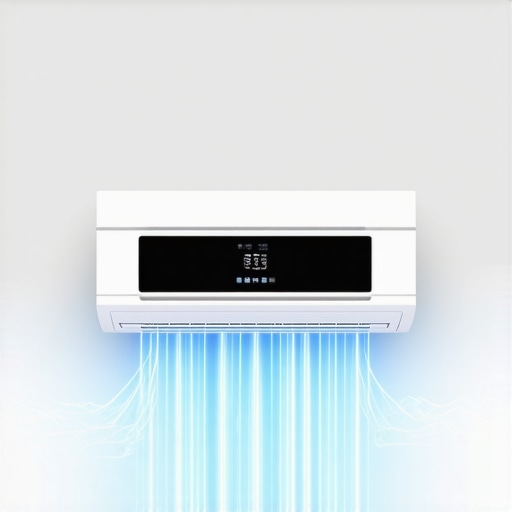
The sound of silence in a house during a 95-degree heatwave isn’t peaceful; it is the sound of a looming four-figure repair bill. I’ve spent thirty years listening to the rhythmic hum of compressors and the frantic clicking of relays, and I can tell you that most homeowners are fighting a losing battle against physics because they’re using 1970s logic in a 2025 world. When the AC stops, the first thing people do is look at the thermostat. They think it’s a simple switch. It’s not. In the modern era, AI-driven HVAC optimization has transformed that wall-mounted plastic box into a predictive engine that understands thermodynamics better than most rookie techs. But before we get into the silicon and software, you need to understand the fundamental law of the trade. My old mentor used to scream, ‘You can’t cool what you can’t touch!’ This is why airflow matters more than horsepower. If the air isn’t physically moving across that evaporator coil at the right velocity, I don’t care if you have fifty tons of cooling capacity; you’re just going to freeze a block of ice in your plenum and slug the compressor with liquid ‘gas.’ AI is the first tool I’ve seen in three decades that actually respects that physics lesson by managing the load before the ‘juice’ even starts flowing.
The Anatomy of a Mechanical Heart Failure
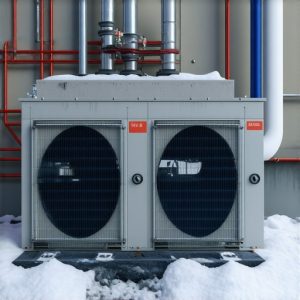
When I walk up to a condenser, I’m looking for the ‘Forensic Diagnosis.’ I’m looking at the capacitor, the contactor, and the compressor—the heart, the lungs, and the brain of your cooling system. A standard ‘Sales Tech’ will see a dead dual-run capacitor and tell you that your whole system is shot and you need to drop fifteen grand on a new unit. I call that malpractice. However, the reason those components fail is usually heat and friction, and that’s where geofencing temperature control and AI algorithms come in to save the hardware. By using geofencing, the system doesn’t just wait for you to get home and then ‘slam’ the compressor into high gear to drop the temp ten degrees in an hour. That ‘slamming’ is what cooks the windings in your motor. Instead, AI-driven systems look at your GPS data, realize you’re twenty minutes away, and begin a gradual ramp-up. This reduces the ‘Inrush Current’—the massive spike of electricity that happens every time a motor starts. High inrush current is what kills your control board diagnostics and fries your contactor points. By smoothing out these starts, AI extends the life of your equipment by years, not just months.
“The most expensive equipment in the world cannot overcome a bad duct system.” – Industry Axiom
In the North, where we deal with brutal humidity swings and freezing winters, the transition between cooling and heating is a mechanical nightmare. We aren’t just dealing with AC; we are managing steam boiler repair and boiler maintenance services alongside our cooling needs. AI optimization is particularly lethal against high bills in these climates because it understands the ‘Lag Time’ of different heating mediums. If you have a baseboard heater repair issue or a pellet stove repair needed, the AI knows that these systems don’t provide instant gratification. It calculates the thermal mass of your home. It knows that your old cast iron radiators take forty minutes to get up to temp, so it doesn’t overshoot the setpoint. This prevents the ‘hunting’ effect where the house is constantly swinging between too hot and too cold, which is where 90% of your energy waste happens.
Thermodynamic Zooming: Latent vs. Sensible Heat
Let’s get technical for a second. Your AC has two jobs: lowering the temperature you see on the thermometer (Sensible Heat) and pulling the water out of the air (Latent Heat). If your unit is oversized or if you’re just cranking the setpoint down to 60 degrees, the unit ‘short cycles.’ It satisfies the thermostat in ten minutes, but the humidifier installation or dehumidification cycle never has time to happen. You end up with a house that is 68 degrees but 70% humidity—it feels like a cold swamp. AI prevents this by controlling the fan speed. By slowing down the blower, the AI keeps the air in contact with the freezing ‘suction line’ longer, allowing more moisture to condense and drip away. This is AI-driven HVAC optimization in action. It’s not about just being ‘smart’; it’s about manipulating the psychrometric chart in real-time. If you’re curious about how these strategies look in practice, check out these top HVAC repair strategies to extend your systems life.
The Control Board: The Unsung Hero of Efficiency
Every time I open a furnace or air handler cabinet, I’m looking at the control board. In the old days, it was just a series of ‘dumb’ relays. Today, these boards are sophisticated computers. When we perform control board diagnostics, we can see exactly how many times the flame sensor has tripped or if the inducer motor is drawing too many amps. AI takes this a step further by reporting these anomalies to the cloud before the part actually breaks. This is the difference between a $200 proactive ventless gas heater services call and a $2,000 emergency midnight repair. For instance, in a restaurant kitchen exhaust repair scenario, if the AI detects a static pressure drop, it knows the grease filters are loaded before the chef even notices the smoke. This kind of predictive maintenance is why preventative HVAC repair tips are no longer just about changing filters; they are about data monitoring.
“Standard 62.1 requires ventilation rates to be maintained regardless of thermal load, ensuring indoor air quality is never sacrificed for energy savings.” – ASHRAE Standards
The Math: When to Stop Patching the Leaks
Eventually, every tech has to have ‘The Talk’ with a homeowner. You’ve got a leak in the evaporator coil, the compressor is pulling high amps (sounding like a bag of gravel in a blender), and the R-410A ‘juice’ is $100 a pound. You’re looking at a $3,000 repair on a twelve-year-old system. This is when you have to look at the 2025 regulatory cliff. With the move toward A2L refrigerants, staying with an old, inefficient pig of a unit is a financial suicide mission. New AI-enabled units are so much more efficient that the ‘Payback Period’ is often less than five years. If you’re at that crossroads, you need to understand choosing the right HVAC fixes versus committing to a full replacement. A ‘Sparky’ can fix your wiring, and a ‘Tin Knocker’ can fix your ducts, but only a master tech can tell you if the ‘gas’ is worth the squeeze. For more on this, look at ac installation secrets that hvac pros wont tell you.
Why Static Pressure is the Silent Killer
I’ve seen AI systems flag ‘High Static Pressure’ more than any other error code. What does that mean? It means your ducts are too small or your filter is too thick, and the blower motor is working itself to death trying to push air through a straw. You can have the smartest AI in the world, but if your ‘Pookie’ (mastic) is failing and your ducts are leaking 30% of your conditioned air into the attic, you’re throwing money into the wind. This is why boiler maintenance services and steam boiler repair often include a full system evaluation. Whether it’s a pellet stove repair or a high-end AI air conditioner, the medium (air or water) must be able to move freely. If you want to dive deeper into the myths that keep your bills high, read about these furnace repair myths debunked. Efficiency isn’t just about the unit; it’s about the entire envelope of the home. AI is just the brain; the ductwork is the circulatory system. If the circulatory system is clogged, the brain can’t save the body. This is why we emphasize heating service hacks for comfort and savings in 2025 that focus on holistic system health.