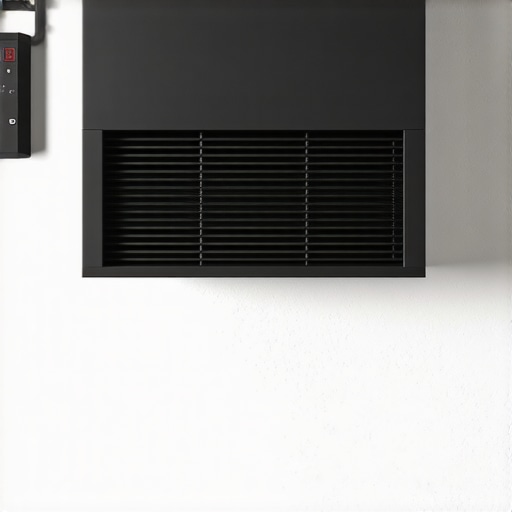
The Physics of the Freeze: Why Your Garage is a Thermal Sieve
My old mentor, a guy who had probably inhaled enough R-22 over forty years to see in infrared, used to scream at me in the middle of a frozen January job: ‘You can’t heat what you can’t touch!’ He wasn’t just being a cranky old bastard; he was teaching me the fundamental law of thermodynamics that every ‘Sales Tech’ forgets. You can throw a 100,000 BTU blast furnace into a garage, but if the airflow is garbage and the envelope is leaking, you’re just burning money to heat the neighborhood. Garage heating is a different animal than residential comfort. You’re dealing with high ceilings, uninsulated slabs, and the ‘Tin Knocker’s’ nightmare: massive infiltration from that oversized roll-up door. When people ask about garage heater installation, they usually focus on the box. I focus on the physics of the space. If you want to avoid a gas bill that looks like a mortgage payment, you have to understand the forensic diagnosis of your garage’s heat loss.
“The most expensive equipment in the world cannot overcome a bad duct system.” – Industry Axiom
Blueprint of the Mechanical Anatomy: Unit Heaters vs. Radiant Systems
In the cold trenches of the North, where the frost line stays deep, you have two real choices for the garage: forced air (unit heaters) or infrared radiant tubes. A forced-air unit is like a punch in the face. It uses a burner and a blower to move sensible heat through the air. It’s great for quick recovery—say, after you’ve had the door open to move the truck—but it’s a gas-hog if your ceiling isn’t sealed with enough ‘Pookie’ (mastic) and insulation. On the other hand, radiant tube heaters are the silent giants. They don’t heat the air; they heat the objects—your workbench, your floor, your tools. It’s the difference between standing in the sun on a cold day versus standing in a warm breeze. For those looking for crawl space heating solutions or specialized garage setups, radiant is often the ‘pro move’ because it doesn’t lose all its energy the second a draft hits. However, if you have low ceilings, radiant will cook the paint off your car roof. This is why we perform a Load Calc before we even pull a wrench out of the bag.
The 2025 Efficiency Shift: AFUE and the A2L Transition
We are currently standing on a regulatory cliff. By 2025, the industry is moving toward R-454B refrigerant transition services and higher SEER2/HSPF2 requirements. While garage heaters are primarily gas-fired, the push for electrification means we’re seeing more financing for heat pump installs in garages. If you’re sticking with gas, you need to look at the AFUE (Annual Fuel Utilization Efficiency). An 80% unit vents through a ‘B-vent’ (metal pipe) and loses 20 cents of every dollar up the stack. A 95% high-efficiency unit uses a secondary heat exchanger to squeeze out the latent heat, venting through PVC. But beware: in a garage, that 95% unit produces acidic condensate. If your installer doesn’t know how to handle a condensate pump in a freezing garage, you’re going to have an ice rink on your floor by February. This is a common point of failure I discuss when debunking furnace repair myths.
Sizing the Beast: Don’t Let a ‘Sales Tech’ Oversell You
The biggest scam in the trade is the ‘bigger is better’ lie. If a tech walks into your 2-car garage and says ‘You need a 75k BTU unit’ without looking at your windows or ceiling height, show him the door. An oversized unit will ‘short cycle’—it turns on, blasts the room to temp in three minutes, and shuts off. The heat never penetrates the slab, the heat exchanger undergoes massive thermal stress, and your gas valve wears out in half the time. You want long, steady run times to keep the mass of the garage warm. This is where WiFi thermostat integration becomes a lifesaver. You can set a ‘setback’ temp of 45°F to keep the pipes from freezing and use your phone to ramp it up to 65°F twenty minutes before you head out to work on the car. Proper control is the secret to heating service hacks for comfort and savings in 2025, as detailed in our latest guide.
“Standard 62.2 defines the roles of mechanical ventilation in maintaining acceptable indoor air quality, even in semi-conditioned spaces like garages.” – ASHRAE Standards
The Installation Minefield: Venting and Combustion Air
I’ve seen too many DIY jobs that are essentially carbon monoxide traps. You cannot just ‘poke a hole’ in the wall. You need to account for combustion air. If your garage is tight (well-insulated), the heater will starve for oxygen, causing ‘flame rollout’ or a cracked heat exchanger. This is a lethal situation. When we do a professional garage heater installation, we often use ‘separated combustion’ units. They draw fresh air from outside and vent the exhaust back out, meaning the ‘Gas’ (refrigerant or fuel) stays isolated from the sawdust or gasoline vapors in your shop. If you ever smell something acidic or sour, that’s not just ‘old garage smell’—it could be a failing heat exchanger. You need to know how to identify when furnace repair is urgent before you end up in the ER.
Integration with the Whole Home: Smart Building Management
In 2025, we aren’t just hanging a ‘hot box’ on the wall. We’re talking smart building management. Your garage heater should talk to your WiFi thermostat integration, which should talk to your snow melt systems installation. Imagine your driveway sensors detecting ice and triggering the boiler while your garage heater ramps up to keep the ‘Suction Line’ of your hybrid water heater from freezing. It’s a symphony of physics. For those in the North/Cold zones, combining these systems with whole-home humidifiers inside the main house prevents the dry-air-rot that happens when garage air infiltrates the living space. We also offer rebate application assistance because many utility companies will actually pay you to install these high-efficiency systems. If you’re looking for an ultimate guide to installation, you have to look at the whole-home ecosystem.
Conclusion: The Veteran’s Verdict
Picking a garage heater isn’t about the brand name on the cabinet; it’s about the static pressure, the venting category, and the thermal envelope of your ‘tin’. Don’t let a ‘Sparky’ (electrician) tell you a 240V space heater is ‘just as good’—your meter will spin fast enough to take flight. Get a gas-fired unit or a properly sized heat pump, seal your ducts with ‘Pookie’, and for heaven’s sake, pay attention to your venting. If you’re ready to stop shivering and start saving, check out our contact page for a real tech—not a salesman—to look at your slab. Comfort is physics, and physics doesn’t lie.