The Thermal Mass Manifesto: Why Your Old Iron Kettle Needs a New Brain
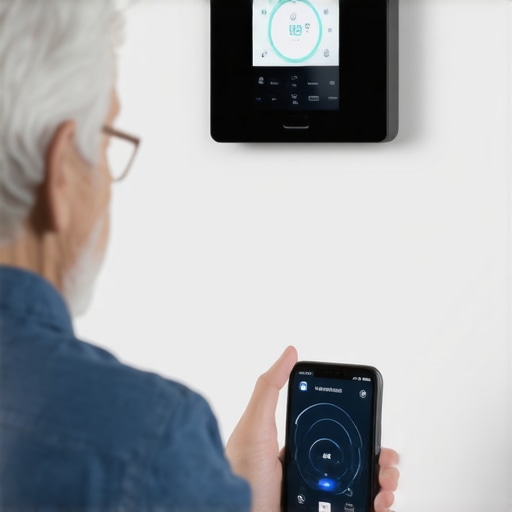
Listen closely. If you live in a place where the wind howls through the siding and the frost stays on the grass until noon, you likely have a boiler. Not one of those sleek, wall-hung Italian jobs that looks like a giant computer, but a heavy, cast-iron beast sitting in the basement. My old mentor used to scream at me while we were lugging a 400-pound section up a flight of stairs: ‘You can’t heat what you can’t control! This is why airflow matters more than horsepower, and why thermal mass is your best friend or your worst enemy.’ He was right. A boiler is essentially a giant kettle. It has incredible ‘thermal inertia’—meaning it takes a long time to get hot, and it stays hot for a long time after the fire goes out. In the old days, we controlled these beasts with a simple mercury bulb thermostat. It was binary: on or off. But that leads to ‘overshoot.’ The thermostat hits 70 degrees, the boiler stops, but those radiators are still packed with 180-degree water. They keep dumping heat until the room hits 75. Then the room cools to 65 before the boiler even realizes it needs to wake up. This cycle is a waste of money and a disaster for comfort. [image_placeholder] This is exactly why WiFi thermostat integration isn’t just a gadget for tech nerds; it is the single most important upgrade you can give an atmospheric boiler to drag it into the 21st century.
“Design heating loads shall be determined in accordance with the procedures described in ACCA Manual J.” – ANSI/ACCA 2 Manual J – 2016
When we talk about heating service innovations transforming 2025 climate control, we aren’t just talking about shiny new boxes. We are talking about the logic that runs them. Modern smart thermostats use PID (Proportional-Integral-Derivative) loops. They learn the ‘recovery time’ of your specific house. They know that if it’s 10 degrees outside, your cast iron radiators need to start cooling down five minutes before the setpoint is reached to prevent that 5-degree overshoot. For a ‘Tin Knocker’ working on ductwork, this is like perfect balancing; for a hydronics guy, it’s the holy grail. But here is the catch that the Sales Techs won’t tell you: your old boiler probably doesn’t have a ‘C-wire.’ Most of these old systems operate on a two-wire ‘R’ and ‘W’ circuit. A smart thermostat needs a constant 24V power supply to run its WiFi chip and screen. This often requires a transformer replacement. If you try to ‘power-steal’ from an old, crusty transformer, you’ll end up with a chattering contactor or a fried control board. It’s a simple fix, but ignore it and you’ll be calling for emergency service on a Friday night. If you’re wondering about the health of your current setup, checking for urgent furnace or boiler repair signs is your first step before upgrading the controls.
The Physics of Comfort: Latent Heat and the Dry Winter Throat
In the North, the enemy isn’t just the cold; it’s the lack of moisture. When you heat air, its relative humidity drops. This is why whole-home humidifiers are mandatory partners for any boiler system. Boilers don’t move air (unless you have a hydro-air setup), which means the air becomes stagnant and bone-dry. Integrating a humidifier that talks to your smart thermostat allows the system to manage the ‘apparent temperature.’ You feel warmer at 68 degrees with 40% humidity than you do at 72 degrees with 10% humidity. It’s basic psychrometrics. If you’re serious about your home’s envelope, you should also look into HVAC duct sealing if you have a secondary AC system, because heat loss through leaky ducts is just throwing ‘gas’ out the window. And speaking of gas, I’m not talking about the stuff from the utility company—I’m talking about refrigerant. Even if you’re a boiler person, your summer cooling matters. With the shift toward SEER2 compliant upgrades and inverter-driven compressors, the old ways of ‘slugging’ a compressor with too much liquid are dying out. Modern units modulate, just like a well-controlled boiler should. For those who want the ultimate luxury, snow melt systems installation tied into your boiler can keep your driveway clear without a shovel, but it requires massive BTU capacity and precise control logic to prevent ‘thermal shock’ to the boiler when that ice-cold water comes back from the driveway pipes.
“Proper control of thermal hydronic systems is essential for maximizing AFUE and minimizing cyclic losses.” – ASHRAE Systems and Equipment Handbook
I’ve spent years fixing pool heater repair issues and even restaurant kitchen exhaust repair, and the common thread is always the same: poor maintenance and zero control. People ignore their systems until they die. That’s why warranty service plans are actually worth the paper they’re printed on, provided you’re dealing with a technician and not a salesman. A real tech will check your expansion tank, scrub your burners, and ensure your ‘Pookie’ (mastic) is still holding tight on any duct connections. If you want to dive deeper into how to keep things running, check out these heating service hacks for 2025. At the end of the day, your old boiler is a tank. It’s built to last 50 years, while a modern high-efficiency wall-hung unit might give you 15 if you’re lucky. By adding WiFi thermostat integration, you’re giving that old tank the ability to think. You’re reducing the ‘Short Cycling’ that kills efficiency and wears out components. You’re making sure that the only thing ‘Beer Can Cold’ in your house is the beverage in your hand, not your living room during a polar vortex. Comfort isn’t magic; it’s physics. And physics doesn’t care about your feelings, it only cares about the Delta-T.