The Lie of the ‘Pretty’ Blue Flame
My old mentor used to scream, ‘You can’t cool what you can’t touch, and you can’t burn what you don’t measure!’ This is why airflow matters more than horsepower. He’d stand over a high-efficiency condensing furnace, looking at that steady blue flame, and shake his head while the young apprentices bragged about how clean it looked. ‘A blue flame is just a pretty mask for a dirty secret,’ he’d say. He was right. You can have a furnace that looks like it’s performing perfectly to the naked eye while it’s actually eating its own secondary heat exchanger from the inside out or, worse, dumping carbon monoxide into the supply plenum because the fuel-to-air ratio is skewed. In my 30 years of melting in attics and crawling through crawlspaces, I’ve seen more ‘high-efficiency’ systems fail prematurely due to a lack of professional combustion analysis than from any actual mechanical defect. This isn’t just about HVAC repair; it’s about the physics of fire and the chemistry of the air your family breathes.
“The most expensive equipment in the world cannot overcome a bad duct system or an uncalibrated burner.” – Industry Axiom
Thermodynamic Zooming: The Chemistry of the Burn
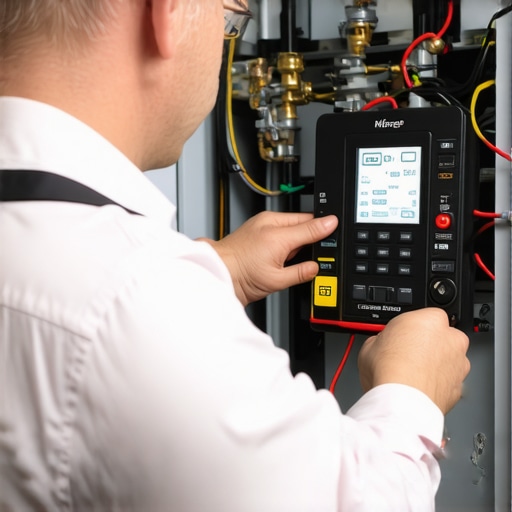
When we talk about a high-efficiency furnace—something with a 90% AFUE or higher—we are talking about a machine that extracts latent heat. In a standard 80% furnace, the exhaust gases are so hot they stay in a gaseous state and float right out the chimney. But a high-efficiency unit is a different beast. It uses a secondary heat exchanger to drop the temperature of those flue gases below the dew point. This is where the magic (and the danger) happens. When the gas reaches that dew point, it undergoes a phase change from vapor to liquid, releasing latent heat that we then pump into your living room. But that liquid is acidic condensate. If your combustion isn’t tuned perfectly, that condensate becomes a caustic soup that will rot out the ‘tin knocker’s’ hard work in a matter of seasons. A professional combustion analysis uses an electronic analyzer to measure O2, CO, and CO2. We aren’t just looking for ‘heat’; we are looking for the sweet spot where the fuel is completely oxidized without creating excess carbon monoxide or wasting energy heating up too much ‘excess air’. This is the difference between a system that lasts 20 years and one that becomes a boat anchor in seven.
The Forensic Diagnosis: Anatomy of a Failing System
When I walk up to a unit that’s locked out, I don’t just start swapping parts like a ‘Sales Tech’ looking for a commission. I listen. Is the inducer motor screeching like a banshee? That’s usually a sign of restricted venting or a bird’s nest in the PVC. If the burner is ‘huffing,’ you’ve got a combustion stability issue. Before I even pull my tools, I’m looking at the overall smart building management integration if it’s a commercial site, or the thermostat’s call for heat in a residence. Often, a wiring repair for heating systems is the first step when a ‘Sparky’ has been in the attic and nicked a low-voltage line. But the real diagnosis starts with the probe in the flue. If I see CO levels climbing north of 100 ppm (parts per million) as the furnace warms up, we have a problem with the heat exchanger’s integrity. This is often linked to poor airflow. If the blower isn’t moving enough air over the heat exchanger, the metal overheats, expands too far, and eventually cracks. You can’t fix a crack with ‘Pookie’ (mastic); you have to replace the heart of the machine.
The Humidity Trap: Why Your Bypass Humidifier Matters
In our freezing northern winters, the air is bone-dry. Many homeowners think a humidifier installation is just a luxury, but it’s actually a critical component of your thermal envelope. When the air is too dry, moisture evaporates off your skin, making you feel cold even if the thermostat says 72°F. This leads to ‘thermostat wars’ where the furnace runs 24/7. However, I’ve seen countless DIY bypass humidifier repair jobs where the homeowner has the damper closed or the pad is so scaled with calcium it’s basically a brick. This restricts airflow, increases static pressure, and can actually cause the furnace to high-limit. Proper demand-controlled ventilation and a well-maintained humidifier allow you to keep the house comfortable at 68°F because the ‘apparent temperature’ is higher. If your humidifier is leaking or the solenoid is shot, it’s a direct threat to the electronics sitting right below it in the furnace cabinet.
“Combustion equipment shall be adjusted for the maximum safe output while minimizing the production of carbon monoxide and other products of incomplete combustion.” – ASHRAE Standards
The 2025 Regulatory Cliff and Low-GWP Refrigerants
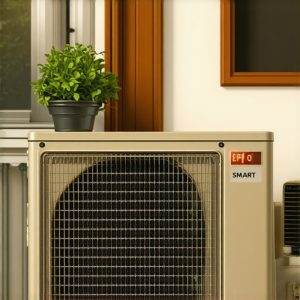
We are currently standing at a massive crossroads in this industry. The ‘gas’ (refrigerant) we’ve used for years, R-410A, is being phased out in favor of low-GWP refrigerant retrofits and new units using A2L refrigerants like R-454B. These are ‘mildly flammable,’ which means the sensors and the calibration of your system are more critical than ever. If you are looking at financing for heat pump installs this year, you need to understand that these aren’t your grandpa’s heat pumps. They can pull heat out of the air even when it’s sub-zero outside, but they require surgical precision during installation. The days of ‘topping off the Freon’ are over; it’s a sealed system, and if it’s low, you have a leak that needs a torch and some silver solder, not just a shot of juice. Check out these heating service innovations transforming 2025 climate control to see where the tech is heading. If your tech doesn’t know what an A2L sensor is, show him the door.
The Math of Repair vs. Replace
I get asked all the time: ‘Is it worth it?’ If you have a cracked heat exchanger and the unit is over 12 years old, the answer is almost always no. You’re looking at a $2,000 repair on an $8,000 system that’s already halfway to the graveyard. However, if it’s just a failed igniter or a bad capacitor, don’t let a Sales Tech talk you into a whole new system. I’ve caught guys trying to quote $15,000 for a new install when all the unit needed was a good cleaning and a bypass humidifier repair. If you want the truth about your system’s health, you need to know how to identify when furnace repair is urgent and why. We also see people installing ventless gas heater services in basements without realizing the massive amount of moisture and CO they dump into the home. Or they try an infrared heater installation in a garage without proper clearance to combustibles. Physics doesn’t care about your floor plan; it only cares about BTUs and clearance.
The Final Word on Airflow
At the end of the day, comfort is physics, not magic. If one room is freezing and the other is a sauna, you don’t need a bigger furnace; you need a ‘Tin Knocker’ who understands static pressure. Closing vents in unused rooms is a myth that kills compressors and heat exchangers by choking the airflow. Your system was designed to move a specific volume of air—usually 400 CFM per ton. When you close vents, the pressure builds up, the blower motor works harder (pulling more amps), and the heat exchanger gets too hot. Stop trying to outsmart the engineers. Instead, focus on preventative hvac repair tips for year-round efficiency and get that combustion analysis done every single year. It’s the only way to know if your furnace is a heater or a hazard. If you’re worried about the cost of a modern high-efficiency upgrade, look into heating service hacks for comfort and savings. Stay warm, stay safe, and for heaven’s sake, change your filters.