The Anatomy of Silence: Why Your Smart Home is Freezing
My old mentor used to scream, ‘You can’t cool what you can’t touch, and you can’t heat what you can’t reach!’ He was a man who believed that physics didn’t care about your feelings or your fancy Wi-Fi settings. This is why airflow matters more than horsepower. In thirty years of crawling through spider-infested joists and dragging my bones across frozen rooftops, I have seen the same story play out: a homeowner buys a high-end system, only for it to fail because of a two-cent wire or a ‘Tin Knocker’ who didn’t understand static pressure. We are entering 2026, and the ‘Smart Home’ has made things even more complicated. You have voice control setup Alexa Google integrated into boards that are more sensitive than a teenager. When that furnace stops in the dead of a northern winter, the silence isn’t just golden—it is expensive. Whether you are dealing with multi-family heating upgrades or a new construction heating design, the logic remains the same: thermodynamics is a cruel mistress.
“The most expensive equipment in the world cannot overcome a bad duct system.” – Industry Axiom
The Forensic Diagnosis: When the 24V Loop Goes Dark
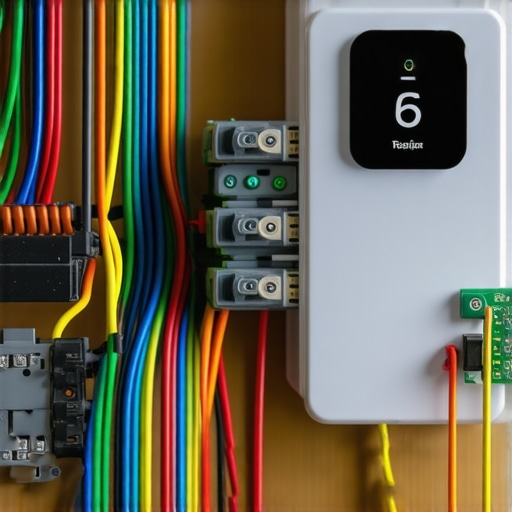
In the North, where the polar vortex turns your breath into ice the moment you step outside, your heating system is your life support. The first thing I look at when I get an emergency heating repair call is the control wiring. Most modern systems are moving toward dual fuel heat pump systems, which combine the efficiency of an electric heat pump with the raw power of a gas furnace. But here is the catch: the wiring for these is a nightmare for the uninitiated. If your ‘Sparky’ or a lazy sales tech didn’t run a dedicated ‘C’ wire, your smart thermostat is ‘power stealing’ from the gas valve circuit. This creates a phantom voltage that can chatter the contactor until it welds shut or, worse, fries the integrated furnace control (IFC) board. You do not want to be the person paying for a $900 board when a simple 18/8 thermostat wire upgrade would have saved you.
Fix #1: Resolving the ‘C-Wire’ Ghost in the Machine
The transition to 2026 smart standards means your thermostat is doing more than just closing a switch; it is running a mini-computer. For a stable voice control setup Alexa Google, you need a constant 24V return. I have seen countless DIYers try to use ‘add-a-wire’ kits that fail during high-demand cycles. The fix is simple: pull a new bundle. If you are looking for heating service innovations transforming 2025 climate control, you’ll see that communication-bus wiring is replacing standard 24V signals. If your system keeps dropping off the network or short-cycling, check the voltage between ‘R’ and ‘C’ at the air handler. If it is dipping below 22V when the inducer motor kicks on, your transformer is undersized for the new smart load. This is a common oversight in industrial heater services where legacy transformers can’t handle modern logic boards.
Fix #2: The Limit Switch and Airflow Bottlenecks
I recently followed a technician who told a client they needed a $12,000 furnace because of a ‘cracked heat exchanger.’ I looked at the unit—a five-year-old high-efficiency model—and found the limit switch replacement was all that was needed, but the switch didn’t die of old age. It died because the crawl space heating solutions used in the house were starving the return air. A limit switch is a safety device; it opens when the plenum gets too hot, cutting power to the gas valve to prevent a fire. If your emergency heating repair involves a system that runs for five minutes and then shuts down, you are likely hitting a high-limit trip. This is usually caused by ‘Pookie’ (mastic) or tape blocking a secondary heat exchanger or just a plain old dirty filter. We call this ‘Thermodynamic Zooming’—looking past the broken part to find the heat-load failure that killed it. If you want to avoid this, read up on how to identify when furnace repair is urgent and why.
“The designer shall verify that the indoor coil and the furnace/air handler are compatible with the heat pump’s capacity and airflow requirements.” – ACCA Manual S
Fix #3: Dual Fuel Logic and Crossover Wiring
For those in cold climates moving to dual fuel heat pump systems, the wiring fix often lies in the outdoor ambient sensor. In 2026, we are seeing more ‘intelligent’ crossovers. If your system is wired incorrectly, the heat pump might try to run while the gas furnace is firing. This is a recipe for disaster. The high-temperature air from the furnace will send the ‘gas’ (refrigerant) pressures in the heat pump’s indoor coil into the stratosphere, tripping the high-pressure switch or killing the compressor entirely. Ensure your wiring uses a true ‘lockout’ relay or a smart board that understands ‘O/B’ reversing valve logic. This is critical for new construction heating design where energy codes are strict. If your hot water heater repair technician also dabbles in HVAC, make sure they aren’t crossing these wires, or you’ll be looking at a total system meltdown.
The Math: Repair vs. Replace in 2026
When is it time to pull the plug? If your furnace is over 15 years old and you are facing a $600 wiring and board repair, you are throwing good money after bad. However, if it’s a simple limit switch replacement or a wiring tweak, keep the ‘juice’ flowing. Always check your warranty service plans before signing a work order. Many 2026-era smart components carry 10-year parts warranties that homeowners forget. If a tech isn’t checking that, they are a salesman, not a technician. For more on this, see choosing the right hvac fixes what homeowners need to know. Preventive maintenance is the only way to ensure you aren’t the one making that 2 AM call when the temperature hits negative twenty. Keep your coils washed, your filters changed, and your ‘Pookie’ tight. Comfort isn’t magic; it’s physics. “