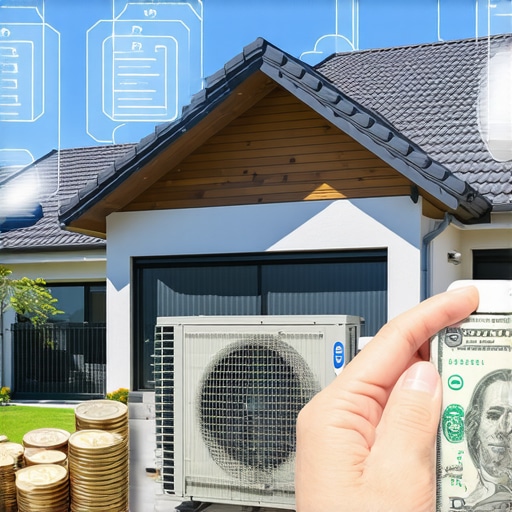
The Reckoning of R-410A and the 2026 Financial Cliff
If you are sitting in a house in the Northeast or the Midwest right now, listening to the rhythmic thump-hiss of an aging steam radiator or the labored groan of a twenty-year-old boiler, you are standing on the edge of a regulatory cliff. By 2026, the HVAC industry won’t just look different; it will be priced differently. We are currently mid-transition into the R-454B refrigerant era, moving away from R-410A (the ‘Gas’ we’ve used for decades). These new A2L refrigerants are ‘mildly flammable,’ which means the equipment requires more sensors, more safety protocols, and yes, more money. But there is a silver lining for those who know how to play the physics of the system against the bureaucracy of the banks.
“The most expensive equipment in the world cannot overcome a bad duct system.” – Industry Axiom
My old mentor, a man who had more soot in his lungs than a chimney sweep, used to scream at me while I was trying to balance a blower motor: ‘You can’t heat what you can’t touch!’ He was talking about airflow. He meant that if your static pressure is too high because some ‘Tin Knocker’ thirty years ago undersized your return air drop, it doesn’t matter if you buy a gold-plated heat pump—it will still fail. This is the fundamental truth of the Airflow Manifesto. As we look at financing a new heat pump installation, we have to look at the whole house as a thermodynamic envelope, not just a box that makes noise outside.
1. The Federal Efficiency Rebate & Tax Credit Combo
By 2026, the Inflation Reduction Act’s provisions have matured. We aren’t just talking about a couple hundred bucks back on your taxes. The HEEHRA (High-Efficiency Electric Home Rebate Act) provides point-of-sale rebates for low-to-moderate-income households that can cover up to $8,000 of a heat pump installation. This is critical when you’re dealing with the R-454B refrigerant transition services cost hike. When you apply for rebate application assistance, you are essentially looking for ways to offset the increased manufacturing costs of these new, safer systems. The physics here is simple: higher efficiency (SEER2 and HSPF2 ratings) means more surface area on the evaporator and condenser coils. More copper and aluminum means more weight and more cost. These credits make the math work when the ‘Sparky’ (electrician) has to come in and upgrade your panel for that 50-amp circuit.
2. Dual Fuel Heat Pump Systems & Utility On-Bill Financing
In cold climates, the ‘Polar Vortex’ is the enemy of the standard air-source heat pump. When the ambient temperature drops to -10°F, the compressor has to work overtime to find any remaining sensible heat in the frozen air. This is where dual fuel heat pump systems become the financial savior. By pairing a high-efficiency electric heat pump with your existing gas or oil furnace, you create a hybrid beast. Many utilities now offer ‘On-Bill Financing,’ where the cost of the system is added to your monthly bill at 0% or low interest. Why? Because the utility wants to shave the peak load. They’d rather you use the heat pump during the ‘mild’ 30°F days and only kick on the ‘Gas’ (the furnace) when it gets brutal. This prevents the grid from melting down and saves you from a radiator replacement that could cost a fortune in labor alone. You should also look into heating service innovations that allow these systems to switch over based on real-time energy pricing.
3. The ‘Green Bank’ State Revolving Loans
Several states have established ‘Green Banks’ specifically to fund residential decarbonization. These aren’t traditional bank loans; they are structured around the projected energy savings of the unit. When we perform static pressure testing on your home, we aren’t just looking for air leaks; we are proving to the lender that the system will operate at its rated AFUE or HSPF. If your ducts are leaky, we slap on some ‘Pookie’ (mastic) to seal them up. A sealed system moves air more efficiently, reducing the load on the compressor and lowering the ‘Suction Line’ temperature to that perfect ‘beer can cold’ in the summer, or the high-pressure discharge heat in the winter. These loans often cover thermostat wiring upgrades and WiFi thermostat integration, which are mandatory for these banks to verify that you are actually saving the energy you promised. For more on how to maintain these high-tech systems, check out HVAC repair strategies that focus on longevity.
4. Manufacturer-Direct 2026 ‘A2L’ Transition Incentives
The big brands—Trane, Carrier, Lennox—are in a race. They don’t want old R-410A stock sitting in warehouses, but they also need to move the new R-454B units. By 2026, expect aggressive internal financing from manufacturers. They are offering 60 to 72 months of 0% interest because they need to capture the market share of the ‘Mildly Flammable’ era. However, don’t fall for the ‘Sales Tech’ trap. They will try to sell you a 5-ton unit for a 3-ton house. In the cold North, an oversized unit won’t just ‘short cycle’; it will fail to properly modulate, leading to massive temperature swings. You want a variable-speed compressor that can sip electricity like a fine wine, not chug it like a cheap beer. If you’re dealing with an older home, you might even consider boiler maintenance services alongside a wood burning stove installation for backup, all wrapped into one financing package that prioritizes energy independence.
“Standard 62.2 defines the roles of mechanical ventilation in low-rise residential buildings, but it cannot account for a homeowner who closes all their registers.” – ASHRAE Guidance
The Physics of the 2026 Install: Why Airflow is King
I’ve spent thirty years crawling through spider-infested crawlspaces to tell people that their ‘broken AC’ is actually just a clogged Energy Recovery Ventilator (ERV) or a dirty filter. In 2026, the complexity of these systems is skyrocketing. We are now integrating ERVs to ensure that while we seal the house tight for efficiency, we aren’t trapping carbon monoxide or VOCs inside. This is why WiFi thermostat integration is no longer a luxury; it’s a diagnostic tool. If I can see your system’s delta-T (temperature difference) from my truck, I can tell you if you have a refrigerant leak or just a dirty coil before I even step foot on your property. This saves me time and saves you a ‘diagnostic fee.’ If you think your current system is failing, read about when furnace repair is urgent before you commit to a full replacement.
Ultimately, getting a heat pump in 2026 is about more than just a box in the yard. It’s about the thermostat wiring upgrades that allow for multi-stage heating, the static pressure testing that ensures your ‘Tin’ can handle the airflow, and the rebate application assistance that keeps the money in your pocket. Don’t let a ‘Sales Tech’ tell you that you need a whole new duct system without showing you the manometer readings. Physics doesn’t lie, but people with a commission check sometimes do. Make sure you are looking at preventative maintenance to keep that new investment running for the next twenty years. Comfort isn’t magic; it’s just moving BTUs from where you don’t want them to where you do.