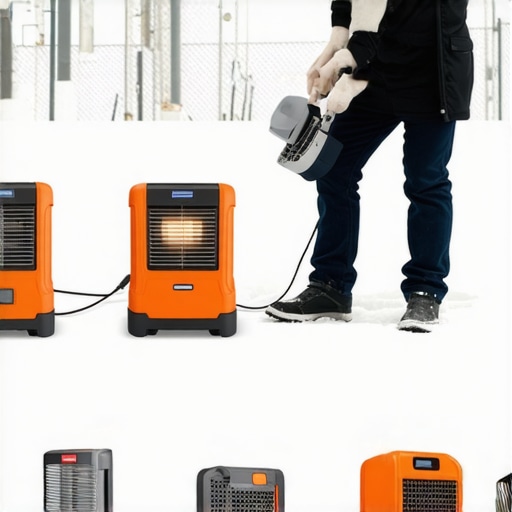
The Physics of Survival: Why Your Portable Heater is a Controlled Fire
My old mentor used to scream at me until his face was the color of a cherry-red heat exchanger: ‘You can’t cool what you can’t touch, and you can’t heat what you don’t respect!’ He was a grizzly old tin knocker who had seen enough melted service plugs to last three lifetimes. He knew that airflow matters more than horsepower. When we talk about the impending 2026 winter, most folks think about just flipping a switch. But as a guy who has spent thirty years sniffing out cracked heat exchangers and listening to the high-pitched death rattle of a failing blower motor, I’m telling you: that little plastic box sitting in your closet is a thermodynamic ticking clock. Portable heaters are great for supplemental heat, but they are the leading cause of house fires for a reason. They aren’t just ‘plug and play.’ They are high-amperage appliances that put a massive strain on your home’s electrical and IAQ (Indoor Air Quality) profile. Before you trust your frozen toes to one of these units, we need to perform a forensic diagnosis on your equipment.
“The most expensive equipment in the world cannot overcome a bad duct system.” – Industry Axiom
1. The Electrical Anatomy: Inspecting the Plug and ‘The Juice’
The first thing I do when I walk into a shop heater services call is look at the wall outlet. Most portable heaters pull 1,500 watts. In the world of sparky math, that’s about 12.5 amps on a standard 15-amp circuit. If you’ve got a lamp or a computer on that same circuit, you’re redlining it. You need to inspect the plug for ‘the melt.’ If the prongs are discolored or the plastic feels brittle, that’s high-resistance heating at the point of contact. This is where leak detector integration isn’t just for gas; it’s a mindset of finding where the energy is escaping. Sensible heat is what you feel, but that localized heat at the outlet is a sign of a fire in progress. If your outlet feels warm, stop immediately. You might need to look into furnace repair services rather than relying on a portable fire hazard to keep your living room habitable. We’re moving into an era where app-controlled heating systems allow us to monitor these loads, but they won’t save you from a loose terminal screw in a cheap 1970s outlet.
2. The Thermodynamic Barrier: Clearance and Airflow Physics
Airflow is king. If you block the intake of a portable heater, the internal nichrome wire or ceramic element will skyrocket in temperature. Every heater has a thermal limit switch—a bimetal strip designed to snap open and cut the power when things get too hot. But these switches fail. I’ve seen them welded shut after years of short cycling. Your heater needs three feet of ‘no-fly zone’ in every direction. This isn’t just a suggestion; it’s about the Stefan-Boltzmann Law. Heat radiates. If that radiant energy hits a synthetic curtain or a pile of laundry, it reaches the auto-ignition temperature faster than you can yell for a fire extinguisher. In larger spaces, we often recommend infrared heater installation because it heats objects, not air, which is much safer and more efficient for a drafty garage or workshop. Unlike traditional convection heaters, infrared doesn’t rely on a flimsy fan that can seize up and cause a meltdown.
3. The IAQ Factor: Dust, Dander, and Acidic Burnout
When you first turn on a heater and smell that ‘burning dust’ smell? That’s pyrolysis. It’s the chemical decomposition of organic matter (skin cells, pet dander, lint) on the heating element. While it usually dissipates, in a home that hasn’t seen IAQ improvement services, that dust can be a bridge for a flash fire inside the unit. If you’re using a portable heater because your main system is failing, you’re likely circulating stagnant, dirty air. For 2026, we’re seeing a huge push for air purification integration even in small-scale heating. If your heater doesn’t have a washable intake filter, you’re basically breathing in toasted dust mites. This is why shop heater services are so critical—commercial-grade heaters handle this better, but domestic portables are often ‘disposable’ junk that accumulates grease. If your furnace is struggling to keep up with the latent heat removal in the summer or the sensible heat demands of winter, check out heating service hacks for comfort and savings in 2025 to get your primary system back in the fight.
“Fuel-fired heaters shall be vented in accordance with the manufacturer’s instructions and shall be connected to a chimney or vent system.” – International Mechanical Code
4. The 2026 Tech Audit: App Control and Gas Line Integrity
We are entering the age of the ‘Smart Home’ where app-controlled heating systems are the norm. But a smart heater is only as good as its physical installation. If you are using a portable gas-fired unit (which I generally advise against for indoor use), you must check the gas line installation for furnaces and auxiliary lines for leaks. A leak detector integration system can save your life here. Many homeowners are also looking at fireplace insert services or solar thermal heating integration to offset the rising cost of gas. If you’re relying on portable heaters because your furnace repair services were botched by a ‘sales tech’ who just wanted to sell you a new 16-SEER unit, you need a second opinion. Real tin knockers know that a well-maintained system from 2015 can often outperform a poorly installed 2026 model. Ensure your portable units have 2026-standard safety certifications, including 360-degree tip-over protection and ‘cool-touch’ housings. If you’re unsure about your setup, it’s time to contact us for a real professional evaluation. Don’t let a $40 heater burn down a $400,000 house because you ignored the suction line of common sense. For more on the future of HVAC, read about heating service innovations transforming 2025 climate control. Comfort is physics, not magic, and it starts with a safe circuit and a clean coil. Stay warm, stay safe, and keep your Pookie away from the heating elements.
http://James%20Patrick
This article hits the nail on the head about the unseen dangers of portable heaters. I’ve personally experienced a situation where a heater’s outlet was warm to the touch, and thankfully I caught it early before any fire or damage occurred. The emphasis on airflow and clearance is so crucial — it’s amazing how common sense can sometimes be overlooked in the rush to stay warm. I especially appreciate the mention of app-controlled systems; a lot of modern heaters do offer smart diagnostics, but they still depend on proper physical setup, like checking for leaks or ensuring tip-over safety. For those of us in older homes with aging electrical infrastructure, these checks become even more vital. Has anyone here upgraded to infrared heaters specifically to avoid the typical fan failures and overheating issues? I’d also be interested to hear how folks are using IAQ improvements alongside their heating solutions for better safety and comfort.