The Sound of a Frozen School: A Forensic Diagnosis of Heating Failure
The most expensive sound in the world isn’t a loud bang; it’s the absolute silence of a school building at 5:00 AM on a Monday in mid-January when the mercury has dipped to -10°F. When those boilers fail to fire, it’s not just a mechanical glitch—it’s a logistical nightmare that sends thousands of kids home, disrupts parents’ work schedules, and bleeds taxpayer money through emergency repairs. I’ve spent thirty years in the guts of these buildings, and I can tell you that 95% of these ‘catastrophic’ failures were preventable twelve months earlier. My old mentor, a man who had more soot on his hands than skin, used to scream at me, ‘You can’t heat what you can’t touch!’ He wasn’t talking about the radiators; he was talking about the physics of heat transfer. If your hydronic heating systems are clogged with scale or air-bound, that energy is just a lazy dog sitting in the basement while the classrooms freeze. Modern facility management requires moving past the ‘fix it when it breaks’ mentality and embracing AI-driven HVAC optimization and rigorous demand-controlled ventilation protocols to keep the doors open.
“The most expensive equipment in the world cannot overcome a bad duct system or a poorly maintained heat exchanger.” – Industry Axiom
The Anatomy of a Boiler Breakdown: Beyond the Surface
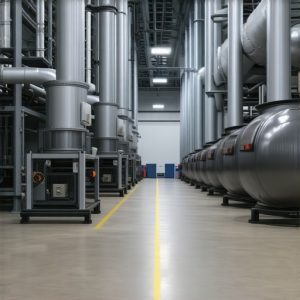
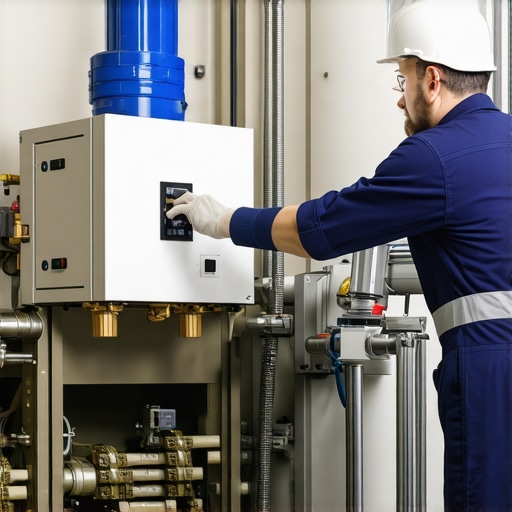
When I walk into a boiler room for a hotel boiler services call or a school inspection, I’m not looking at the shiny paint on the jacket. I’m listening for the screech of a bearing in the air handler repair cycle and smelling for the acidic, sour stench of a localized overheat. In a hydronic setup, the boiler is the heart, but the pumps are the veins. If the water isn’t moving at the right velocity, you get ‘kettling’—that banging sound that ‘Sales Techs’ tell you means you need a new $100,000 unit. In reality, it’s often just localized boiling on the heat exchanger surface because the flow rate is garbage. This is where duct design services and proper HVAC duct sealing come into play for the air-side of the equation. If you’re pushing BTU-heavy water to a coil, but the air can’t get across that coil because the static pressure is through the roof, you’re just spinning your wheels and cooking your components. We use Pookie (mastic) on the seams because tape is a temporary lie that ‘Tin Knockers’ tell themselves. A real tech knows that air leaks are the silent killers of efficiency.
Thermodynamic Zooming: The Physics of Latent and Sensible Heat
Let’s talk real science. In the North, our enemy is the polar vortex and cracked heat exchangers. When we perform furnace repair or boiler tuning, we are managing the Delta-T—the temperature difference between the supply and return. If that water comes back too hot, your boiler short-cycles and kills its own efficiency. If it comes back too cold, you’re hitting the dew point inside the combustion chamber, creating acidic condensate that eats the cast iron or stainless steel from the inside out. This is why a smart thermostat setup isn’t just about a fancy screen; it’s about staging the equipment so it doesn’t shock the system. We’re also seeing a massive shift toward AI-driven HVAC optimization. These systems can predict a pump failure by analyzing the amperage draw before the motor actually burns out. It’s the difference between a $200 capacitor swap and a $5,000 emergency motor replacement on a Sunday night. For those in drier climates using swamp cooler maintenance, the physics change to sensible heat, but the mission remains the same: maintain the heat transfer surface or pay the price later. You can find more about these strategies in our top HVAC repair strategies to extend your system’s life.
“Ventilation shall be provided to maintain a healthy indoor environment and minimize the accumulation of indoor pollutants.” – ASHRAE Standard 62.1
The Regulatory Cliff and 2025 Standards
We are currently facing the ‘Regulatory Cliff’ with the phase-out of traditional refrigerants and the transition to A2L ‘mildly flammable’ gases in air-side units. While boilers don’t use ‘juice’ (refrigerant) the same way, the controls that manage demand-controlled ventilation are becoming increasingly complex. If your school is still running on 1990s pneumatic controls, you are essentially driving a Model T on a modern highway. Upgrading to heating service innovations allows for precision control that prevents the ‘Short Cycling’ trap. Short cycling is when an oversized or poorly controlled unit turns on and off rapidly. It never reaches steady-state efficiency, and it destroys the mechanical life of the contactors and compressors. For school districts, this means knowing how to identify when furnace repair is urgent before the heat exchanger cracks and starts venting carbon monoxide into the hallways. Don’t let a ‘Sparky’ (electrician) who doesn’t understand low voltage play with your safety loops.
Preventative Maintenance vs. The Sales Tech Scam
I despise the ‘Sales Tech’—the guy who carries a shiny iPad and a sales script instead of a multimeter and a combustion analyzer. They see a dusty blower wheel and quote a full system replacement. A real tech knows that HVAC duct sealing and a proper air handler repair can often restore a system to 90% of its original design capacity. In commercial settings, especially with hotel boiler services, the focus should be on water chemistry and burner modulation. If you aren’t testing the glycol levels or the pH of the system water, you aren’t doing maintenance; you’re just looking at it. For a deep dive into what actually matters, check out our blueprint for efficient HVAC repairs. Comfort isn’t magic; it’s physics. Whether it’s hydronic heating systems or duct design services, the goal is to move energy from where it is to where you want it to be, as efficiently as possible. When you ignore the ‘Pookie’ and the static pressure, you’re just wasting the school district’s budget. Stop reacting to failures and start managing your thermodynamics.