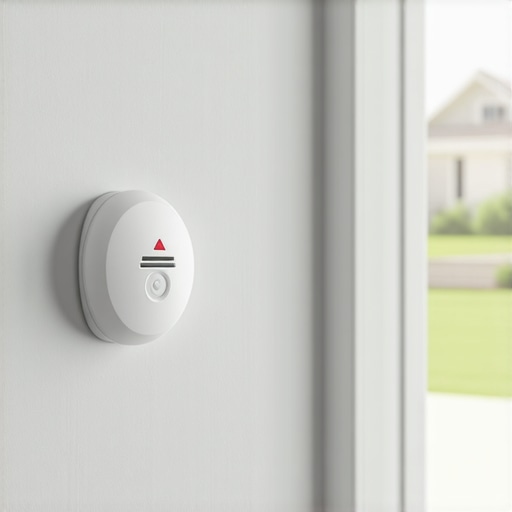
The Invisible Menace and the 2026 Regulatory Shift
I have spent the better part of thirty years belly-crawling through crawl spaces and balancing on icy rooftops in the dead of winter. In that time, I have smelled just about everything a furnace can produce—from the sweet, sickly scent of a refrigerant leak to the pungent, acidic odor of a fried compressor. But it is the thing you cannot smell that keeps me up at night. Carbon monoxide (CO) is a byproduct of incomplete combustion, and as we march toward 2026, the rules for how we monitor this ‘silent killer’ are changing drastically. If you think a $20 plug-in unit from a big-box store is going to satisfy the new safety standards for multi-family heating upgrades or high-efficiency installations, you are in for a cold awakening.
The Physics Lesson: Why Airflow Dictates Safety
My old mentor, a man who could diagnose a failing inducer motor just by the vibration on a handrail, used to scream at me, ‘You can’t burn gas if you can’t breathe!’ He was talking about the stoichiometric ratio—the perfect balance of air and fuel. When a furnace is starved for oxygen, it starts producing CO at lethal levels. He taught me that airflow matters more than horsepower. This is why ductless mini-split installation has become so popular; it removes the combustion risk from the room entirely. However, for those of us still running dual fuel heat pump systems or traditional gas furnaces, the 2026 mandates are about to make our jobs much more technical. We aren’t just ‘tin knockers’ anymore; we are life-safety technicians.
‘The presence of carbon monoxide is often a symptom of a larger systemic failure in the building’s pressure envelope.’ – ASHRAE Standard 62.1
Rule #1: Mandatory Interconnectivity in Multi-Family Upgrades
By 2026, the ‘lone wolf’ detector is dead. New regulations for multi-family heating upgrades require that CO detectors be interconnected. If a cracked heat exchanger in unit 4A starts dumping CO into the plenum, every detector in the building needs to scream. This isn’t just about the furnace; it involves the entire mechanical ecosystem, including heat recovery ventilators (HRVs). In modern, ‘tight’ homes, an HRV is essential for bringing in fresh air, but if it’s not balanced, it can actually cause a backdraft in your water heater or furnace. We are seeing a move toward low-voltage ‘Sparky’ work where these detectors are hardwired into the building’s automation system. If you haven’t looked at programmable thermostat programming lately, you’ll find that the high-end models are now acting as the ‘brain’ for these safety arrays.
Rule #2: Sensor Placement and the ‘Dead Air’ Myth
There is a persistent myth that CO is heavier than air and you should put detectors near the floor. Wrong. CO is slightly lighter than air, but it generally hitches a ride on warm air currents rising from your heating equipment. The 2026 rules emphasize placement within 10 feet of every sleeping area and, more importantly, in every room with a ‘fuel-burning appliance.’ This includes crawl space heating solutions. I’ve seen emergency heating repair calls where the homeowner was dizzy because a furnace in a sealed crawl space was backdrafting due to a blocked flue. The new rules require detectors even in those forgotten areas. This is where duct cleaning services come into play; restricted returns can create the very pressure imbalances that lead to CO accumulation. You need to understand the ‘Beer Can Cold’ rule for the AC side, but for heating, you need to understand ‘Draft and Flow.’
‘Installation of carbon monoxide alarms shall be required in all new construction and for any modification to an existing fuel-burning heating system.’ – UL 2034 Compliance Update
Rule #3: Integration with HEPA and Filtration Systems
The third major shift involves HEPA filter systems. While these are great for scrubbing dust, they can create significant static pressure if the blower motor isn’t beefy enough. High static pressure leads to overheating, which leads to cracked heat exchangers—the primary source of CO leaks. The 2026 standards require that CO detectors be able to shut down the gas valve or the entire HVAC system if a leak is detected. This is a massive leap from the old days of just ‘letting it beep.’ We are now integrating these sensors directly into HVAC maintenance plans. When I do a seasonal check, I’m not just looking for ‘juice’ or gas levels; I’m testing the millivolt signal from the CO sensor to ensure it can actually kill the system in a crisis. You can learn more about these protocols in our top HVAC repair strategies.
The A2L Transition and the Future of Monitoring
We are also facing the ‘Regulatory Cliff’ of new refrigerants. As we move away from R-410A toward A2L refrigerants (which are ‘mildly flammable’), the industry is getting much stricter about sensors in general. Whether it’s a leak in a dual fuel heat pump system or CO from a backup furnace, the 2026 rules treat the air inside your home as a closed loop that must be monitored with surgical precision. If you are still relying on a detector with a manufacture date from ten years ago, you are essentially flying blind. Sensors degrade. The ‘gas’ inside them loses its sensitivity. This is why preventative HVAC repair tips always start with a sensor check.
Conclusion: Don’t Let a ‘Sales Tech’ Scare You, Let the Physics Warn You
I despise the ‘Sales Techs’ who use CO as a scare tactic to sell a $20,000 system when a simple inducer swap would fix it. But I despise negligence even more. Carbon monoxide is the one area where we don’t cut corners. Whether you are looking at ductless mini-split installation to avoid gas altogether or upgrading your current rig, remember that airflow is the king of safety. If you are unsure if your home meets the upcoming 2026 standards, it’s time to check your HVAC maintenance plans. For more information on identifying when your system is truly at risk, see our guide on how to identify when furnace repair is urgent. Stay safe, keep your vents clear of ‘pookie’ and debris, and listen to what your system is telling you through its sounds and its sensors.