The Cold Truth About Winter Labor
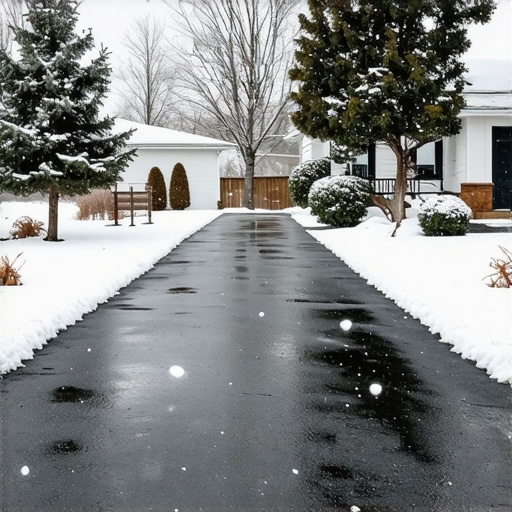
My old mentor used to scream at me in the middle of a frozen mechanical room, ‘You can’t melt what you can’t heat!’ At the time, I was trying to figure out why a high-end driveway system in a Chicago suburb had turned into a literal skating rink despite the boiler firing at full tilt. He was teaching me that airflow matters in a house, but in a slab, it’s all about the thermal bridge. If you don’t touch the snow with enough BTUs, you’re just wasting gas. Most people think a snow melt system is some magical luxury, but it’s actually a brutal exercise in thermodynamics. You are fighting the latent heat of fusion—the energy required to turn 32°F ice into 32°F water. It takes 144 BTUs to melt just one pound of ice. When you have a three-car driveway covered in four inches of wet, heavy lake-effect snow, the math gets scary fast. This isn’t like heating service hacks for comfort and savings in 2025 where we talk about cozying up a bedroom; this is a war against the elements.
The Anatomy of an Under-Slab Heat Exchanger
When I talk about radiant floor heating installation, homeowners usually picture warm toes in a bathroom. But a snow melt system is essentially a heavy-duty version of that same tech, designed to survive the crushing weight of an SUV. We use PEX-a tubing—the high-density stuff—buried deep in the concrete or under pavers. This tubing carries the ‘juice’ (a mix of water and inhibited propylene glycol) to keep the lines from freezing when the system is off. I’ve seen ‘Sales Techs’ try to skip the glycol to save a buck, and three months later, they’re looking at a burst pipe buried under six inches of reinforced concrete. That’s a nightmare you don’t recover from. The system relies on a heat exchanger, usually tied to a dedicated boiler. We don’t use your standard domestic water heater for this; if you try, you’ll be calling for hot water heater repair within a week because the constant cold-return water will cause the tank to condensate and rot the burner out in record time.
“Snow-melting systems shall be designed to melt snow at the rate it falls and to provide a clear surface for safety and convenience.” – ASHRAE Handbook – HVAC Applications
Thermodynamic Zooming: The Melting Process
Let’s get technical. When the ‘Sparky’ (the electrician) finishes wiring the sensors, the system waits for two things: temperature and moisture. If the slab is below 35°F and it senses water, the circulator pumps kick on. This is where the physics gets intense. The heat moves from the fluid, through the PEX wall, into the concrete, and finally to the snow. This is sensible heat until the snow reaches 32°F, then it becomes latent heat. If your system is undersized—maybe because some ‘tin knocker’ tried to guess the heat load instead of doing a proper calculation—the snow will melt at the bottom, create a pocket of air, and then refreeze as an ice bridge. Now you’ve got an igloo effect over your driveway, and you’re still out there with a shovel, cursing the day you spent twenty grand. Proper HVAC duct sealing inside the house is easy, but sealing the heat into a slab requires 2-inch thick rigid foam insulation underneath. Without that insulation, you aren’t heating a driveway; you’re trying to heat the entire planet Earth from the top down.
The Mechanical Room: Where the Magic Happens
Walk into a properly designed snow melt mechanical room and you’ll smell a faint metallic scent and hear the low-frequency hum of a high-efficiency condensing boiler. It’s a beautiful thing. You’ll see the manifold—the brain of the operation—where the large supply lines break down into the individual PEX loops. I always use ‘Pookie’ (mastic) to seal the penetrations where the lines enter the building through the foundation to prevent any moisture or pests from getting into those crawl space heating solutions. We also look at transformer replacement needs for the control logic; these systems draw more control power than a standard furnace because they’re running multiple pumps and motorized mixing valves. If you see a tech trying to run a snow melt off a 40VA transformer, run the other way. He’s going to fry the board the first time the system tries to stage up.
“The most expensive equipment in the world cannot overcome a bad duct system—or in the case of radiant, a poorly insulated slab.” – Industry Axiom
Maintenance: Don’t Ignore the Beast
People ask me if these systems are ‘set it and forget it.’ Absolutely not. You need to check the glycol concentration every year. Glycol becomes acidic over time. If the pH drops, it starts eating your heat exchanger from the inside out. It’s the same reason you need regular furnace repair services; mechanical things break when ignored. I’ve been on too many service calls where the homeowner says, ‘It worked great for five years, now it won’t even melt a flurry.’ I pull a sample of the ‘juice’ and it looks like swamp water. We also do portable heater safety checks in the mechanical room because if the boiler fails, you need a backup to keep the pipes from freezing if the glycol mix was too lean. This is the reality of living in a climate where the air wants to kill your plumbing. Whether it’s heat pump installation for the house or a hydronic boiler for the drive, the physics remains the same: move the heat, maintain the flow, and never trust a salesman who doesn’t carry a manometer.
Hydronic vs. Electric: The Great Debate
There are two ways to skin this cat. Hydronic (liquid) or Electric. Electric is cheaper to install but will make your electric meter spin so fast it might take flight. For a large church heating system or a massive residential estate, hydronic is the only way to go. It’s more complex, requiring transformer replacement, pumps, and boilers, but the operating cost is significantly lower. If you’re doing a small walkway, electric is fine. But for a full driveway? You want the gas-fired BTUs. It’s the difference between a heat pump installation in the Arctic and a proper gas furnace. Both have their place, but you need to know the limits of the tech. If you find yourself needing furnace repair services in the dead of winter, you’ll appreciate why we over-engineer these snow melt systems. We build them to be bulletproof because when the blizzard hits, no one wants to hear about a ‘failed sensor.’ They just want a clear path to the street. In the end, comfort isn’t just about the air in your lungs; it’s about the safety under your tires.
{
“@context”: “https://schema.org”,
“@type”: “HowTo”,
“name”: “How to Maintain a Hydronic Snow Melt System”,
“description”: “Step-by-step guide to ensuring your heated driveway system operates efficiently throughout the winter.”,
“step”: [
{
“@type”: “HowToStep”,
“name”: “Test Glycol pH levels”,
“text”: “Use a refractometer and pH strips to ensure the antifreeze mixture is not acidic and provides adequate freeze protection.”
},
{
“@type”: “HowToStep”,
“name”: “Inspect Circulator Pumps”,
“text”: “Listen for bearing noise or cavitation and check for leaks at the pump flanges.”
},
{
“@type”: “HowToStep”,
“name”: “Clean Moisture Sensors”,
“text”: “Clear any debris or dirt from the slab-mounted sensors to ensure they correctly detect snow fall.”
},
{
“@type”: “HowToStep”,
“name”: “Check Boiler Pressure”,
“text”: “Verify the expansion tank is functioning and the system pressure is within the manufacturer’s recommended range.”
}
]
}