The Airflow Manifesto: Why Your Filter Might Be Choking Your Furnace
My old mentor, a guy who had been crawling through crawlspaces since the Nixon administration, used to scream at me whenever I reached for a high-efficiency filter without checking the static pressure. ‘You can’t heat what you can’t touch, kid!’ he’d bark, pointing at a blower motor that was hotter than a cast-iron skillet. This is why airflow matters more than horsepower. Most homeowners think they are doing their family a favor by sliding a thick, medical-grade filter into a system designed for a cheap fiberglass rock-catcher. In reality, they are just paying for a slow-motion blower motor replacement. If you are in the North, where we deal with six months of sub-zero wind chills, your furnace isn’t just a luxury; it is a life-support system. When you choke it with the wrong filter, you aren’t just cleaning the air; you are killing the machine.
“The most expensive equipment in the world cannot overcome a bad duct system.” – Industry Axiom
The Standard Pleated Filter: The Workhorse of the North
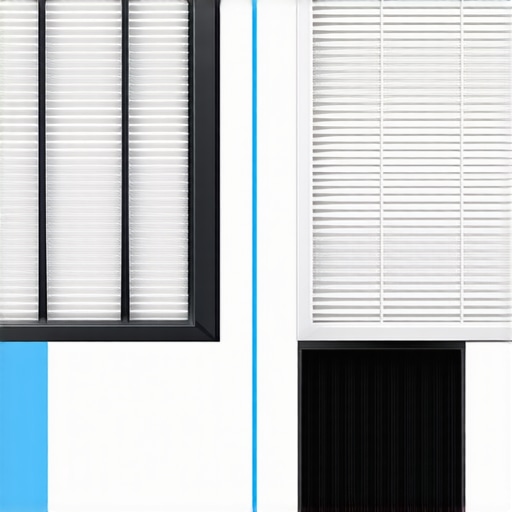
Standard pleated filters are what we call ‘sensible’ filtration. They are designed to catch the big stuff—pet dander, carpet fibers, and the dust bunnies that roam your hallways. They usually carry a MERV rating between 8 and 11. In a cold climate, where we rely on heating service hacks for comfort and savings in 2025, these filters are generally the safe bet for a standard furnace. Why? Because they have enough surface area to trap particles without creating a brick wall for the air. When air moves through these pleats, the velocity stays high enough to ensure the heat exchanger doesn’t overheat. If you restrict that flow, the limit switch trips, the furnace short cycles, and you end up with a cracked heat exchanger. That is an expensive mistake that often starts with a $20 filter. Many people ignore how to identify when furnace repair is urgent, but a whistling sound coming from your filter slot is a cry for help from your blower.
The HEPA Filter: Medical Grade or Mechanical Menace?
HEPA (High-Efficiency Particulate Air) filters are the gold standard for air quality, capable of trapping 99.97% of particles down to 0.3 microns. That sounds great on a brochure, but in the world of physics, it presents a massive problem: static pressure. Imagine trying to breathe through three masks while running a marathon. That is what your furnace feels like with a HEPA filter slapped onto a standard return. To run a HEPA setup correctly, you need heating service innovations transforming 2025 climate control, specifically a bypass system or a specialized filter housing that accounts for the massive pressure drop. Without a Manual J calculation and a proper duct assessment, a HEPA filter can actually reduce your air quality by causing the system to run less frequently, leaving pockets of stagnant air in your home. This is why air purification integration is a job for someone who understands the math, not just a guy with a truck and a roll of foil tape.
Thermodynamic Zooming: The Blower Motor Battle
Let’s get technical about the blower motor. In modern variable speed furnace services, we use ECM (Electronically Commutated Motors). These motors are smart—too smart for their own good. If they sense high static pressure (resistance) from a thick HEPA filter, they ramp up their RPM to compensate and maintain the programmed CFM (Cubic Feet per Minute). This sounds good in theory, but it’s a trap. As the motor works harder to pull air through that dense media, it draws more amperage, generates more heat, and eventually, the ‘Sparky’ of the motor—the control module—fries. You’ve just traded a $15 filter for a $1,200 blower motor replacement. This is why we preach top hvac repair strategies to extend your systems life. You have to balance the need for clean air with the mechanical limits of the ‘tin’ (the ductwork) that the ‘tin knocker’ installed twenty years ago.
The Cold Climate Factor: Heat Pumps and Wood Stoves
If you are looking at financing for heat pump installs or upgrading to cold climate heat pumps, filtration becomes even more critical. Heat pumps have lower discharge temperatures than gas furnaces. They rely on high airflow volumes to move BTUs. A restricted filter on a heat pump doesn’t just make it inefficient; it can cause the outdoor unit to ice up or the compressor to fail due to liquid slugging. Furthermore, for those with fireplace insert services or a wood burning stove installation, the indoor air quality (IAQ) demands are different. Wood smoke introduces fine particulates that standard filters can’t handle. In these cases, we often recommend a chimney liner installation to ensure proper drafting and a dedicated air purifier rather than choking the central HVAC system with a HEPA filter. Demand-controlled ventilation can also help by bringing in fresh outside air when sensors detect high CO2 or VOC levels, rather than just recirculating the same dirty air through a clogged filter.
“Ventilation systems shall be designed to provide a minimum outdoor air intake flow… to maintain acceptable indoor air quality.” – ASHRAE Standard 62.1
The Practical Verdict: How to Breathe and Save
If you want the best of both worlds, stop looking for a ‘magic’ filter and look at the system as a whole. Use a high-quality MERV 11 pleated filter and change it every 60 days—not when it looks like a wool sweater. For those with severe allergies, consider a 5-inch media cabinet. These have much more surface area than a 1-inch filter, which lowers the static pressure while providing superior filtration. This is a core part of preventative hvac repair tips for year-round efficiency. Don’t fall for the ‘Sales Tech’ who tells you a HEPA filter will solve your problems without checking your ‘Juice’ (refrigerant) levels or your duct sizing. If the suction line isn’t ‘beer can cold’ in the summer or the heat exchanger isn’t hitting its temp rise in the winter, the filter is the last thing you should worry about. Use choosing the right hvac fixes as your guide to avoid the marketing hype. Proper filtration is about the harmony between the air we breathe and the machines that move it. If you need a pro who knows the difference between a sales pitch and a static pressure reading, it is time to contact us for a real evaluation. Don’t let your furnace suffocate in the name of ‘clean’ air.