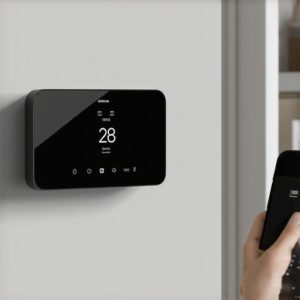
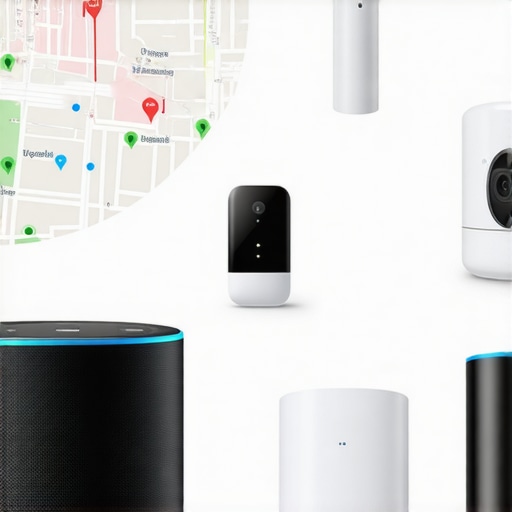
I have spent thirty years in the guts of mechanical rooms, smelling that distinct mix of scorched ozone and metallic dust that tells you exactly when a furnace has given up the ghost. I’ve crawled through crawlspaces so tight I had to exhale just to move an inch, all to find the one leak where some ‘tin knocker’ forgot the pookie. These days, everyone wants to talk about smart thermostat setup and geofencing. They ask me if Alexa or Google Home can actually handle their climate control. The answer isn’t a simple yes; it’s a deep dive into the thermodynamics of your home’s envelope. If you think a smart home assistant is a magic wand for your utility bill, you’re missing the forest for the trees. My old mentor used to scream at me, ‘You can’t cool what you can’t touch!’ and he wasn’t just talking about the refrigerant juice in the lines. He was talking about airflow. If your airflow is garbage, all the geofencing in the world won’t save you from a frozen evaporator coil or a tripped limit switch replacement in the dead of a Chicago winter.
The Mechanical Anatomy of Geofencing
Geofencing works by drawing a virtual perimeter around your house using your phone’s GPS. When you cross that line, the smart home assistant tells your HVAC system to ramp up or scale back. But here is where the physics gets messy. In a cold climate, we aren’t just fighting temperature; we are fighting the loss of thermal mass. If you have a high-efficiency furnace installation, that unit is designed to maintain a steady state. When you use remote thermostat access to drop the temp 10 degrees while you’re at work, your furnace has to work three times as hard to recover that heat when you cross the geofence. This often leads to short cycling, which is the fastest way to fry your blower motor. A blower motor replacement isn’t cheap, especially for the high-end ECM models that rely on precise signals from your control board. We see people trying to save fifty bucks a month on gas only to spend eight hundred on a new motor because they treated their furnace like a light bulb.
“Equipment capacity must be determined based on the building’s heat loss and heat gain, not on arbitrary rules of thumb.” – ASHRAE Standard 183
When we talk about smart home assistants, we are talking about demand-controlled ventilation and the logic of your home’s ‘brain.’ Most assistants can trigger geofencing routines flawlessly, but they don’t understand the latent heat in your walls. In our northern climate, we deal with extreme dry air. That is why I always recommend steam humidifiers for any smart home integration. A smart assistant can monitor the outdoor temp and adjust your indoor humidity setpoint to prevent window condensation. If your system isn’t balanced using manual J calculations, the geofencing logic will fail because the recovery time will be longer than your commute. You’ll walk into a house that is still 62 degrees while the thermostat is screaming for 70.
The Forensic Diagnosis: Why Smart Tech Fails
The sound of silence is the scariest thing an HVAC tech hears in January. Usually, it means a limit switch replacement is imminent because the system overheated. Why? Because homeowners often think that ‘smart’ means they can ignore the mechanical reality. They install a wood burning stove installation in the living room, the smart thermostat sees it’s 75 degrees, and it shuts off the rest of the house, letting the pipes freeze in the north bedroom. This is where geofencing becomes a liability. If your smart home assistant thinks you’re ‘away’ and lets the house drop to 55 degrees, but your wood stove is smoldering, you’re creating a massive temperature imbalance that can warp your ductwork. You need a tech who understands choosing the right HVAC fixes before you start layering on the software.
We also have to talk about the ‘Sales Tech’ scam. I’ve followed guys who see a ‘C-wire’ error on a smart thermostat and try to sell the homeowner a whole new $15,000 system. It’s disgusting. Half the time, the smart thermostat setup just needs a dedicated power leg or a simple relay. Don’t let someone talk you into a full replacement when a little technical troubleshooting is all that’s required. If you’re looking for efficient HVAC repairs, you start with the wiring and the static pressure, not the flashy touchscreen on the wall.
“The most expensive equipment in the world cannot overcome a bad duct system.” – Industry Axiom
The Math: Repair vs. Replace in 2025
Is geofencing worth it? If you are applying for rebate application assistance, the answer is usually yes. Many utilities give you money back for installing these controls. But the real savings come from how you program the logic. You want the geofence to be wide—at least 5 to 10 miles—so the system has time to achieve the target temp before you pull into the driveway. This prevents the ‘blast’ effect where the furnace runs at maximum stage for an hour straight. If you have a high-efficiency unit, you want it to modulate, not roar. For those who want to understand the deeper tech, check out these heating service innovations. Geofencing is just one tool in the kit. If you pair it with remote thermostat access and a properly sized system, you can save 15% on heating costs. But if your system is oversized (because your last guy didn’t do a Manual J), the geofencing will actually increase your wear and tear. You’ll be doing a blower motor replacement every five years instead of every fifteen. Prevention is the name of the game, and preventative HVAC repair tips always start with changing your filters and checking your static pressure.
The Final Verdict: Is It Magic or Physics?
In the end, geofencing does work with smart home assistants, but it requires a solid mechanical foundation. You can’t put a Ferrari engine in a lawnmower and expect it to win at Le Mans. Your furnace needs to be healthy first. If you’re struggling with high bills, don’t just buy a new gadget. Look at your top HVAC repair strategies. Ensure your limit switches are functioning, your heat exchanger isn’t cracked, and your blower is clean. Only then should you worry about the GPS tracking on your phone. Comfort is a matter of physics, not magic. Whether you’re dealing with a furnace repair that is urgent or just looking to upgrade your tech, remember that the air is what keeps you alive and comfortable. Treat your ductwork with respect, and the smart tech will actually do its job. If you need help getting the balance right, you know where to find us. Just don’t ask me to ‘top off the juice’—if it’s low, it’s leaking, and we’re going to find out why. That’s how a real veteran handles business. Check out our privacy policy if you’re worried about the tech tracking you, but honestly, you should be more worried about your static pressure.