The Silence of the Dead Furnace and the Mercaptan Warning
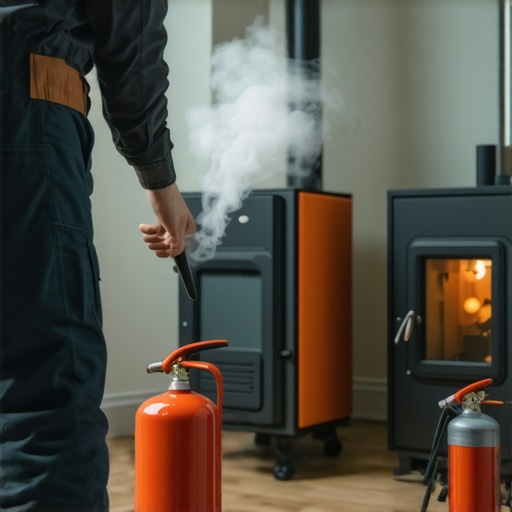
There is a specific kind of silence that hits you when you walk into a warehouse in the dead of a North-side winter. It’s not just quiet; it’s a heavy, biting cold that feels like it’s trying to freeze the grease in the door hinges. But there’s a worse sound: the rhythmic, frantic click-click-click of a furnace trying to ignite and failing. And then, there it is—the smell. That sulfurous, rotten-egg stench of mercaptan. If you smell that, the thermodynamics of your building just changed from a heating problem to a potential explosion hazard. You don’t ‘wait and see’ with gas. You don’t ‘hope it goes away.’ I’ve spent three decades in attics and mechanical rooms, and I can tell you that gas doesn’t care about your production schedule or your bottom line. When that smell hits, you need a 24/7 heating emergency response immediately.
The Sales Tech vs. The Real Diagnosis: A Lesson in Integrity
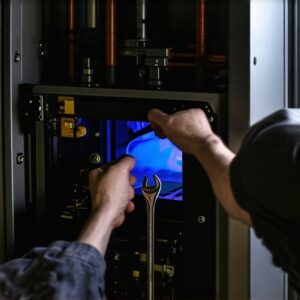
I remember following a ‘Sales Tech’—you know the type, clean uniform, more hair gel than brain cells, carrying a tablet instead of a pipe wrench—to a warehouse job last January. He’d quoted the facility manager eighteen grand for a total system replacement because he claimed the heat exchanger was ‘toast.’ He spent an hour pitching ‘energy-efficient ecosystem upgrades’ and ‘smart-grid connectivity’ while the client was shivering. When I got there, I didn’t look at a brochure. I pulled my combustion analyzer and a spray bottle of soap bubbles. It wasn’t the heat exchanger. It was a $40 gas valve solenoid that had developed a hairline crack and a dirty flame sensor that was preventing a clean burn. He was trying to sell a new system; I was there to provide actual furnace repair. This is why I tell people: if a tech doesn’t show you the crack in the metal or the manometer reading, they aren’t diagnosing; they’re auditioning for a commission. You can’t fix what you don’t measure.
“The combustion air requirements for gas-fired appliances are non-negotiable for safety. Improper venting leads to carbon monoxide accumulation, which is the silent killer of the HVAC world.” – NFPA 54 National Fuel Gas Code
The Forensic Anatomy of Combustion: Why Airflow is King
In a cold climate like ours, your furnace is a high-performance engine. It’s not just ‘making heat.’ It’s a complex dance of fuel, air, and spark. When you call for heat, the draft inducer motor kicks on first. This little fan is the ‘Tin Knocker’s’ best friend; it clears the heat exchanger of any residual gases and creates a negative pressure. If that pressure switch doesn’t click, nothing happens. This is a safety lockout. If your inducer is screaming like a banshee, your bearings are shot. Once the switch proves airflow, the hot surface igniter glows orange—we’re talking 2,500°F—and the gas valve opens. This is where identifying when furnace repair is urgent becomes vital. If that ignition isn’t crisp, you get ‘delayed ignition.’ That’s the BOOM you hear that shakes the floorboards. That’s gas building up and then exploding all at once. It’s bad for the unit, and it’s worse for your nerves.
Thermodynamic Zooming: Latent Heat and the Heat Exchanger
To understand why a gas smell is so dangerous, you have to look at the heat exchanger itself. Think of it as the lungs of your furnace. On the inside, you have burning gas and toxic combustion byproducts (including CO). On the outside, your blower fan is pushing the air you breathe over those metal cells. This is ‘Sensible Heat’ transfer. If those lungs have a crack, the ‘Juice’ (gas) or the exhaust leaks into your breathing air. In our region, where furnaces run 24/7 during a polar vortex, the metal undergoes massive thermal expansion and contraction. Over time, it fatigues. A ‘Sparky’ (electrician) might fix your control board, but only a master tech can tell you if your heat exchanger is venting poison. This is why we use preventative maintenance alerts to catch these stress fractures before they become 3 AM emergencies.
Warehouse Heating Solutions: Beyond the Standard Box
Heating a 50,000-square-foot warehouse isn’t the same as heating a bungalow. You need warehouse heating solutions that account for ‘stratification’—the tendency of heat to sit 30 feet up at the ceiling while your workers freeze on the floor. This is where innovations in heating service come into play. We look at efficient HVAC repairs and system designs like hydronic heating systems or radiant floor heating installation. Imagine the floor itself being the radiator. No drafts, no dust blowing around, just consistent, thermal mass heating. And for the loading docks? A snow melt systems installation under the concrete prevents ice buildup without the need for corrosive salt. It’s all about physics, not just blowing hot air.
“Equipment shall be located so as not to interfere with proper circulation of air within the heated space.” – ASHRAE Standard 15
The Gas Line: Why Pookie Won’t Save You
I’ve seen DIY ‘geniuses’ try to seal a leaking gas line with duct tape or ‘Pookie’ (mastic). Let me be clear: that is a death wish. Gas line installation for furnaces requires threaded black iron pipe, the right pipe dope, and a pressure test that would make a submarine captain nervous. We don’t just ‘hand-tighten’ things. We use two pipe wrenches to ‘back-up’ every joint so we don’t snap a fitting inside the furnace cabinet. If you smell gas at the unit, it could be a failed manifold or a leaking union. This is a ‘Suction Line’ level of seriousness—if the pressure drops, your flame won’t stay lit, or worse, it will ‘roll out’ and burn the wiring harness to a crisp. This is also why hot water heater repair often goes hand-in-hand with furnace work; they often share the same gas manifold and venting system.
Humidity and the Cold Climate Battle
In the North, the air in winter is bone-dry. This doesn’t just give you static shocks; it actually makes you feel colder because moisture is evaporating off your skin faster. A whole-home humidifier integrated into your ductwork allows you to feel warmer at 68°F than you would at 72°F in a dry house. On the flip side, in commercial spaces with sensitive inventory, dehumidification services are required even in winter to prevent condensation on cold exterior walls. It’s a delicate balance of the psychrometric chart that ‘Sales Techs’ simply don’t understand. They just see a box; we see a pressure vessel, a humidifier, and a ventilation machine.
The Repair vs. Replace Math
When is it time to pull the plug? If your furnace is over 15 years old and the inducer motor, gas valve, and board all decide to quit at once, you’re looking at a $1,500 repair on an 80% AFUE dinosaur. In that case, upgrading to a 96% AFUE two-stage unit makes thermodynamic sense. You’ll save 16 cents on every dollar of gas, and the ‘Tin Knocker’ can resize your return air drop to actually let the machine breathe. But if it’s just a $150 igniter? You fix it and you keep it moving. Don’t let anyone tell you otherwise. Comfort is physics, and physics doesn’t lie. If you’re hearing noises or smelling things you shouldn’t, stop reading and call the pros who know the difference between a real fix and a sales pitch.