The Sound of Silence in a Sub-Zero Midnight
It is 3:15 AM. The temperature outside has plummeted to a bone-chilling 12°F, and you wake up not to the alarm, but to the silence. That specific, heavy silence that only occurs when the blower motor stops and the registers stop humming. As a tech with three decades in the trenches, I know that sound. It is the sound of a homeowner about to get fleeced by a "Sales Tech" or the sound of a DIYer about to save their family's night. I have spent thousands of hours in cramped crawl spaces and drafty attics, and I am here to tell you that most furnace failures in the dead of winter are not catastrophic—they are physical. My old mentor used to scream at me while we were shoulder-deep in a "dead" system: "You can't move heat if you can't move air! Airflow is the blood, the heat exchanger is the heart, and if the blood stops, the heart explodes." This is why understanding HVAC load calculation services and static pressure is more important than the brand name on the cabinet. If your ductwork is restricted, your fancy new furnace is just a very expensive paperweight.
"The most expensive equipment in the world cannot overcome a bad duct system." – Industry Axiom
The Forensic Diagnosis: Why Your Furnace Quit
When a furnace locks out, it is usually the "brain" (the integrated furnace control board) sensing a safety violation. Let's perform a mechanical autopsy of the three most common middle-of-the-night culprits. First, the Flame Sensor. This is a simple stainless-steel rod that sits in the path of the flame. Over time, it develops a thin layer of carbon or silica oxidation. The board sends out a tiny DC voltage, looking for a return in microamps (µA) through the flame (rectification). If that rod is dirty, the board thinks the burners didn't light and shuts the "gas" off to prevent an explosion. A simple cleaning with a Scotch-Brite pad can save you a $400 emergency call. Second is the Pressure Switch. This little plastic puck monitors the draft created by the inducer motor. In Northern climates, I often find that the small vacuum port is clogged with a tiny bit of scale or the exterior vent is blocked by ice. Without that switch closing, the "sparky" components will never fire. Finally, there is the Hot Surface Igniter. These are made of silicon carbide or silicon nitride. They get brittle. If you see a small white crack on the element, it is dead. No glow, no fire. For those with complex setups, a modulating furnace repair might involve checking the VFD (Variable Frequency Drive) on the blower, which is a different animal altogether compared to a standard single-stage box. For more on keeping your gear alive, see these
Thermodynamic Zooming: The Physics of the Freeze
In the North, we don't just fight cold; we fight the lack of latent heat. Cold air is dry air. When we heat that air to 72°F, the relative humidity drops to desert levels. This is why steam humidifiers are a necessity, not a luxury. They inject actual water vapor into the air stream, which allows the air to hold heat better. You feel warmer at 68°F with 40% humidity than you do at 74°F with 10% humidity. From a physics standpoint, we are managing the enthalpy of the home. If your "tin knocker" didn't seal your ducts with "pookie" (mastic), you are losing that expensive, conditioned air into the attic. Speaking of which, attic insulation for heating is the single most ignored component of a HVAC system. I have seen 95% AFUE furnaces run 20 hours a day because the attic only had R-11 insulation. You are literally trying to heat the outdoors. If you are considering a heat pump replacement in a cold climate, you need to ensure you have a backup heat source (dual fuel) or a unit rated for hyper-heating down to -15°F, otherwise, you'll be relying on expensive electric strip heat when the polar vortex hits.
"Design for heating and cooling systems shall be based on the outdoor design conditions for the specific locality." – ACCA Manual J Section 1-4
The Repair vs. Replace Math: When to Pull the Plug
As a veteran, I hate "Sales Techs" who condemn a unit just because it is ten years old. However, there is a point of diminishing returns. If you are looking at a commercial furnace repair or a residential secondary heat exchanger failure, the cost can be 50-60% of a new unit. A two-stage furnace installation offers a significant jump in comfort and efficiency over an old 80% "builder grade" unit. The two-stage gas valve and variable speed motor allow the unit to run on "low" for 80% of the time, providing a more consistent temperature and better filtration. If you're tired of 3 AM surprises, warranty service plans are the only way to go. They ensure a "Sparky" or a mechanical expert looks at your system before the first frost. We check the manifold pressure, the temperature rise, and most importantly, the heat exchanger for cracks. A cracked heat exchanger isn't just a repair issue; it is a Carbon Monoxide death trap. For those in rural areas, biomass boiler services are becoming a niche favorite, but they require a different level of maintenance than gas. Always look for
before signing a contract. Don't forget crawl space heating solutions either; a frozen pipe in a crawl space is often the result of a duct that fell off or a lack of proper zoning.
The Preventive Manifesto
Maintenance isn't just about cleaning; it's about verification. When we do a "tune-up," we are checking the capacitor's capacitance against its rating. If a 5µF capacitor is reading 3.2µF, it will kill your motor during a cold snap. We are checking the "juice" levels if you have a heat pump. We are ensuring the drain lines aren't backed up with slime. If you want to avoid the emergency page, you need to be proactive. If your system is old and you are worried about the 2025 R-454B transition, check out this
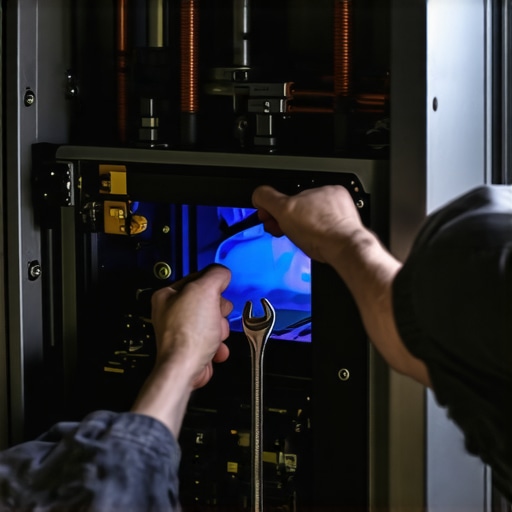
. Comfort isn't magic; it's a balance of CFM, BTUs, and Delta T. If you respect the physics, your furnace will respect your sleep. “, “image”: {“imagePrompt”: “A close-up, high-contrast photo of a veteran HVAC technician’s hands using a Scotch-Brite pad to clean a thin metal flame sensor rod inside the dark, industrial interior of a gas furnace cabinet, with the blue glow of a pilot light reflecting off the steel.”, “imageTitle”: “DIY Furnace Flame Sensor Cleaning”, “imageAlt”: “Technician cleaning a furnace flame sensor to fix a lockout emergency”}, “categoryId”: 0, “postTime”: “”}“`of_the_night_furnace_fix_that_actually_works“`