The Sound of a Potential Tragedy: Why Your Garage Heater is a Ticking Clock
I’ve spent thirty years crawling through spider-infested crawlspaces and balancing on ice-slicked rooftops in the dead of a Chicago winter, and if there is one thing I’ve learned, it is that the most dangerous problems don’t make a sound. You won’t hear a cracked vent pipe screaming. You won’t smell the carbon monoxide—it’s colorless, odorless, and tasteless. My old mentor, a grizzly veteran who could diagnose a bad transformer replacement just by the hum of the cabinet, used to scream at me, ‘You can’t cool what you can’t touch, and you can’t heat what you can’t vent!’ He was a fanatic about airflow, and for good reason. He knew that the moment the integrity of a combustion path is compromised, you aren’t just losing BTUs; you’re inviting a killer into your home.
We see it every year when the first real frost hits. Homeowners fire up those old unit heaters in the garage to keep the pipes from freezing or to work on their cars, oblivious to the fact that a hairline fracture in the flue pipe is dumping CO directly into the workspace. In the HVAC trade, we call the guys who just look at the thermostat and leave ‘parts changers.’ I’m a technician. I look at the variable speed furnace services and the venting geometry because the physics of the draft is what keeps you alive. When a garage heater vent cracks, it ruins the pressure differential required for a safe burn. You end up with ‘flame rollout’ or, worse, a slow leak of combustion byproducts that seep into the living quarters through the shared wall.
“Proper venting of combustion appliances is critical to prevent the accumulation of flue gases, including carbon monoxide, which can be fatal in enclosed spaces.” – ASHRAE Standard 62.1
The Forensic Diagnosis: Anatomy of a Failing Vent
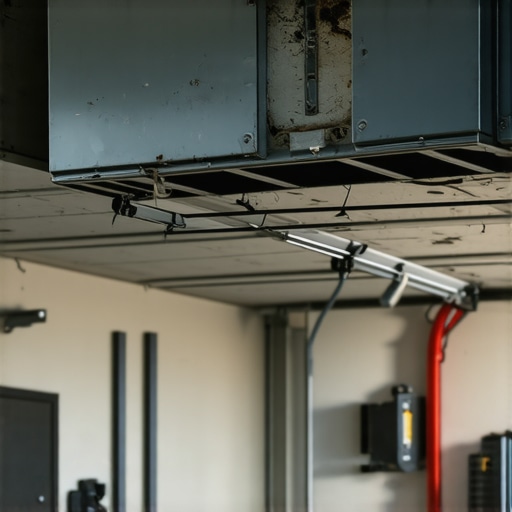
When I walk into a garage, I’m not looking at the shiny cabinet; I’m looking for the ‘ghosting’—those faint soot marks around the draft hood. If I see those, I know the thermocouple replacement the last guy did was a waste of time because the unit is back-drafting. In cold climates, the temperature differential between the flue gas and the outdoor air is the engine that drives the exhaust out of the house. If that pipe is cracked, that ‘engine’ loses its compression. This is where HVAC load calculation services become vital; it’s not just about the size of the heater, but the volume of air required for safe combustion. If your garage is sealed tighter than a drum and you have a cracked vent, you’re essentially running an engine in a closed room.
I once followed a ‘Sales Tech’—those guys in the starched shirts who get commissions for selling new units—who told a customer her hydronic heating systems were obsolete and needed a $20,000 overhaul. I took one look at the venting of her secondary garage unit and found a rusted-out elbow that was choking the system. A few hundred dollars in tin knocker work and a new relay services check, and she was back in business. That’s the difference between knowing the trade and knowing a sales script. We don’t just ‘top off the gas’; we ensure the thermodynamics of the entire envelope are balanced.
Thermodynamic Zooming: The Physics of Incomplete Combustion
Let’s talk about the ‘why.’ When a vent is compromised, the burner doesn’t get the oxygen it needs. Instead of a crisp, blue flame, you get a lazy, orange flame. That orange signifies incomplete combustion. This is where the carbon monoxide is born. In cold climate heat pumps, we don’t worry about this as much because there’s no flame, but in a gas-fired garage heater, it’s everything. The latent heat is trapped, the moisture in the flue gas condenses prematurely, and that acidic ‘juice’ eats through the metal pipe from the inside out. This is why I always check the air purification integration points; if you’re pulling air from a garage with a leaky vent, you’re just circulating poison.
“The most expensive equipment in the world cannot overcome a bad duct system or an improperly vented combustion chamber.” – Industry Axiom (ACCA Manual J Principles)
If you’re using a WiFi thermostat integration to kick on your garage heater from your phone, you might be walking into a trap if you haven’t had a pro look at the flue. These smart systems are great, but they don’t have ‘noses.’ They don’t know if the solar thermal heating integration is fighting the furnace or if a cracked vent is filling the rafters with CO. For more on why immediate action is needed when things smell ‘off,’ check out how to identify when furnace repair is urgent and why.
The Repair vs. Replace Reality Check
Is a cracked vent an automatic death sentence for the heater? Not always. But it is a sign of systemic neglect. If the vent is gone, the heat exchanger is usually next. I’ve seen guys try to patch a flue with pookie (mastic) or silver tape. That’s a felony in my book. You don’t patch a vent; you replace it. If the unit is over 15 years old, you’re better off looking at expert tips for 2025 success in equipment replacement. Modern units have better safety sensors, including high-limit switches that actually work. But even the best tech won’t save you from a bad install. That’s why AC installation secrets often revolve around the stuff you can’t see, like the pitch of the vent pipe.
Preventative maintenance isn’t just a buzzword; it’s the only way to catch these ‘silent killers’ before they catch you. For more on keeping your system running without the drama, read about preventative HVAC repair tips. Whether it’s a simple transformer replacement or a complex solar thermal heating integration, the goal is always the same: keep the fire in the box and the fumes in the pipe. Don’t be the homeowner who ignores a ‘little rattle’ in the garage. That rattle might be the sound of a failing draft inducer motor trying to push air through a cracked, restricted vent. Get it checked. Your life is worth more than a service call fee.