The Sound of a Looming Disaster
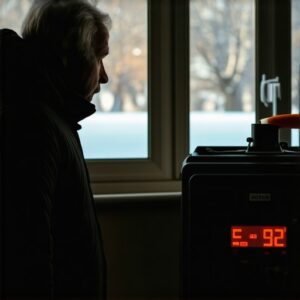
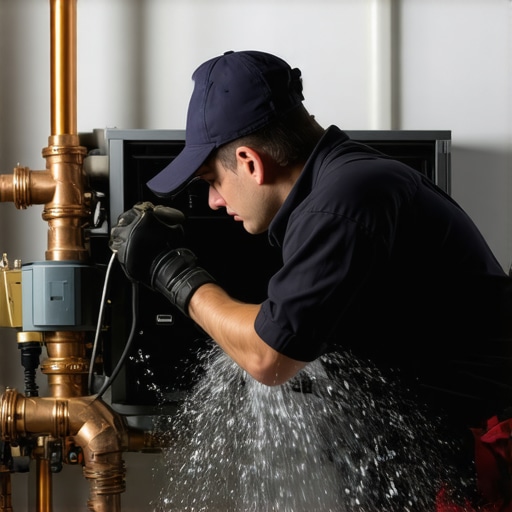
You’re lying in bed at 2 AM in the middle of a January cold snap. The house is quiet—too quiet. Usually, you hear the muffled roar of the burners or the rhythmic hum of the air handler repair you’ve been putting off. But tonight, there’s nothing but the sound of the wind whipping against the siding. Your thermostat is set to 70, but the display says 64. Most homeowners think the emergency is the cold air. They’re wrong. The real emergency is the physics of thermal transfer happening inside your walls. When your heating system fails in a sub-zero climate, your home stops being a shelter and starts becoming a giant refrigerator. Once that interior temperature drops below the dew point and eventually hits the freezing mark, the water in your copper lines expands. Ice doesn’t compress; it ruptures. That $400 draft inducer motor repair you ignored just turned into a $25,000 whole-home restoration project.
The Physics Lesson: My Mentor’s Golden Rule
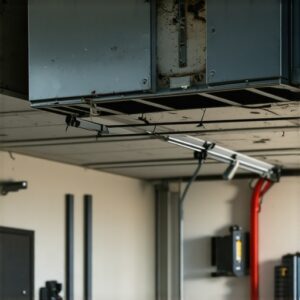
My old mentor, a guy who had been a tin knocker since the days of coal furnaces, used to scream at me, ‘You can’t heat what you can’t touch!’ He wasn’t talking about the air; he was talking about the heat exchanger surfaces. He believed that airflow was the literal lifeblood of the home. If your air handler repair needs are neglected, the heat exchanger doesn’t just ‘get hot’—it undergoes catastrophic thermal fatigue. It’s a basic thermodynamic reality: if you don’t move enough CFM (cubic feet per minute) across that metal, the internal temperature spikes, the metal expands beyond its design limits, and it cracks. Now you don’t just have a cold house; you have a carbon monoxide factory. This is how to identify when furnace repair is urgent and why—because the line between a simple fix and a lethal situation is thinner than the gauge of the sheet metal in your plenum.
“The most expensive equipment in the world cannot overcome a bad duct system.” – Industry Axiom
The Anatomy of a Cold-Weather Failure
In the North, we deal with sensible heat loss at a rate that would make a Florida tech sweat. When we talk about steam boiler repair or hotel boiler services, we aren’t just looking at ‘fixing a heater.’ We are managing pressure vessels. If a steam boiler’s low-water cut-off fails, you aren’t just looking at a cold room; you’re looking at a potential explosion or a dry-fired block that’s cracked and useless. Often, the culprit is something as small as a capacitor. Our capacitor replacement services are frequently the only thing standing between a functioning motor and a burnt-out winding. If that capacitor doesn’t provide the phase shift necessary to kickstart the motor, the motor sits there stalled, drawing Locked Rotor Amps (LRA), cooking its own insulation until it smells like sour ozone and failure. It’s much cheaper to swap a $50 part during an emergency call than to replace a $1,200 motor three days later.
[IMAGE_PLACEHOLDER_1]
The Regulatory Cliff: SEER2 and R-454B
We are currently standing at a massive crossroads in the HVAC industry. The transition to SEER2 compliant upgrades and the phase-out of R-410A in favor of R-454B refrigerant transition services has changed the math for every homeowner. The new ‘mildly flammable’ A2L refrigerants require entirely different handling and sensor arrays. If your old system is leaking ‘juice’ (refrigerant), topping it off isn’t just an EPA violation—it’s a waste of money. The R-410A ‘gas’ prices are skyrocketing as production ceases. This is why heating service innovations transforming 2025 climate control are so critical to understand. If your system is over 12 years old and the wiring repair for heating systems is starting to look like a bird’s nest of charred copper, a repair might just be throwing good money after bad. However, in an emergency, our goal is stabilization. We stabilize the thermal envelope first to prevent the pipes from bursting, then we talk strategy.
The Propane and Steam Factor
For those in rural areas, propane conversion services are a frequent necessity when natural gas isn’t an option. Propane burns hotter and requires specific orifice sizing. If you try to run a natural gas furnace on propane without a conversion kit, you’ll get massive soot buildup and a heat exchanger cleaning job that will take hours—if you don’t burn the house down first. Similarly, in older urban buildings, steam boiler repair is a dying art. It’s about the ‘click-clack’ of the air vents and the pitch of the pipes. If the pitch is off, you get ‘water hammer,’ which sounds like someone hitting your walls with a sledgehammer. That’s not just noise; that’s kinetic energy looking for a weak spot in your plumbing.
“Design for the most restrictive component in the air distribution system, usually the cooling coil or the filter.” – ACCA Manual J Standards
The Math of the Emergency Call
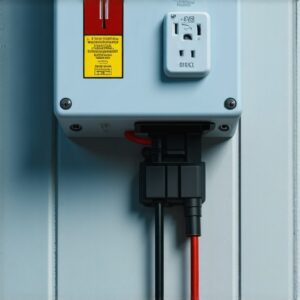
Let’s look at the numbers. An emergency service call on a Saturday night might cost you a few hundred dollars. In that visit, a tech might perform a draft inducer motor repair or clear a clogged condensate line that froze over. Compare that to the ‘Sales Tech’ approach, where they see a 10-year-old unit and immediately quote a $15,000 replacement. Many homeowners fall for this because they are cold and desperate. But a veteran knows that top hvac repair strategies to extend your systems life often involve simple mechanical hygiene. Cleaning the flame sensor, checking the manifold pressure, and ensuring the wiring repair for heating systems is tight can buy you another five years. Preventing a burst pipe isn’t just about the furnace; it’s about maintaining a minimum 55°F ambient temperature to ensure the water in your walls stays liquid. Physics doesn’t care about your budget, but a good tech does. Don’t let a ‘Sparky’ or a fly-by-night contractor touch your control board; one wrong jump and you’ve fried a $600 ECM motor. Stick to the pros who know that the ‘suction line’ should be ‘beer can cold’ in the summer, and the ‘stack temp’ should be precisely tuned in the winter.