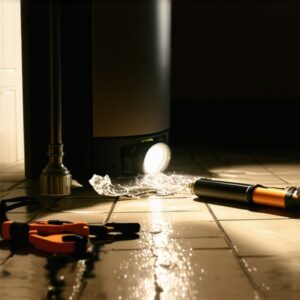
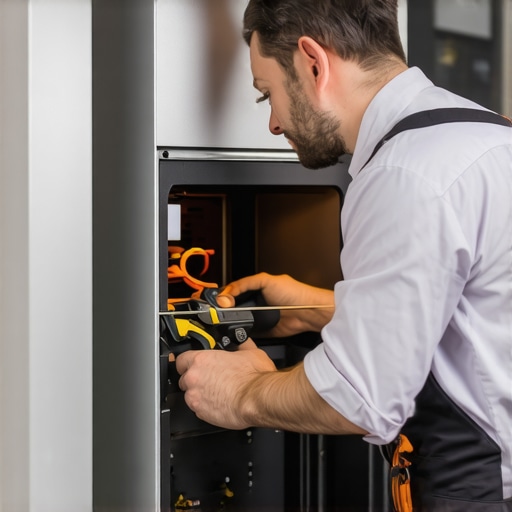
The sound of a dead furnace in the middle of a sub-zero February night isn’t just quiet; it’s an expensive, heavy silence that sits in your chest. As an HVAC tech who’s spent more time in crawlspaces than in my own living room, I can tell you that silence usually starts with a flicker and ends with a shivering family. When that pilot light refuses to stay lit, most people start panicking about the cost of a new unit. But before you let some ‘Sales Tech’ convince you that you need a $12,000 system because of a flickering flame, we need to talk about the physics of the thermocouple and the reality of gas pressure. My old mentor used to scream at me, ‘You can’t move heat if you can’t control the fire!’ This is why airflow and sensor integrity matter more than the brand name on the cabinet. If the pilot won’t hold, the system is doing its job—it’s preventing your house from becoming a gas-filled bomb.
The Anatomy of the Flame: Why the Thermocouple is Your Best Friend
In the world of gas furnace repair, the thermocouple is the unsung hero. It’s a simple device: two dissimilar metals joined at one end that produce a tiny millivolt signal when heated. That signal is the only thing telling your gas valve it’s safe to stay open. If that flame is dancing, yellow, or lifting off the burner, the thermocouple cools down, the millivolts drop, and—click—the safety shuts everything down. This is basic thermodynamics. You aren’t just ‘lighting a fire’; you are maintaining a closed-loop safety circuit. Most emergency furnace fixes start with cleaning the soot off that sensor with a bit of steel wool. If it’s burnt crisp, no amount of ‘Topping off the gas’ (which isn’t a thing, by the way) will help. You need a relay services check to ensure the signal is actually reaching the control board.
“The most expensive equipment in the world cannot overcome a bad duct system or a neglected safety circuit.” – Industry Axiom
In the North, where we deal with legitimate steam boiler repair and ancient radiator replacement jobs, the stakes are higher. A pilot light out on a steam system isn’t just about cold air; it’s about preventing a dry-fire situation that could crack a cast-iron section faster than a hammer. We see it all the time in school boiler maintenance—massive systems where the restaurant kitchen exhaust repair guy didn’t realize his fans were pulling a negative pressure so strong they were literally sucking the pilot flame right off the burner. This is the ‘Physics Lesson’ my mentor hammered into me. You have to look at the whole building as a pressure vessel.
The Forensic Diagnosis: From Pilot Lights to Geofencing
When I walk up to a unit that won’t stay lit, I’m looking for the ‘why’ behind the ‘what.’ Is the pilot orifice clogged with spider webs? Is the bypass humidifier repair you did last summer leaking water onto the burner assembly? Or is the issue more modern, like a geofencing temperature control system sending erratic signals to a failing 24V transformer? Understanding how to identify when furnace repair is urgent and why is the difference between a $150 service call and a $5,000 emergency pipe-burst nightmare.
“Proper venting and combustion air are non-negotiable requirements for the safe operation of any gas-fired appliance.” – NFPA 54 / ANSI Z223.1
If you’re in a tightly sealed modern home, your furnace might be starving for oxygen. Adding whole-home humidifiers can change the air density enough that an already weak draft becomes a failure point. We often find that homeowners who invest in fireplace insert services forget that the chimney draw can fight the furnace for air, leading to pilot outages. This is where ‘Pookie’ (mastic) and proper ‘Tin Knocker’ skills come in to ensure the return air drops aren’t leaking and the static pressure is balanced.
The Commercial Scale: Kitchens and Schools
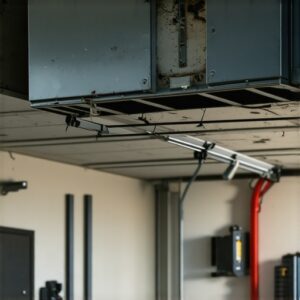
In a commercial setting, like restaurant kitchen exhaust repair, a pilot light failure is usually a symptom of a much larger airflow catastrophe. If your makeup air unit isn’t keeping up with the hood, the building goes negative. I’ve seen school boiler maintenance crews baffled by pilot failures only to find that a new roof installation blocked the fresh air intakes. This isn’t magic; it’s atmospheric pressure. Whether you’re looking for top hvac repair strategies to extend your systems life or just trying to survive the night, you have to respect the draft. If the flame is ‘lazy’ and yellow, you’ve got incomplete combustion and a carbon monoxide risk. If it’s a crisp blue cone, but won’t stay lit, your thermocouple or the relay services are the culprits. Check out our furnace repair myths debunked by industry experts for more on why ‘more gas’ is never the answer to a pilot problem. If you’re still stuck, don’t be the hero who blows up the block; contact us before you start messing with the gas valve settings.