The Sound of a Dying Flame
The silence of a frozen house at 3 AM isn’t actually silent. It has a weight to it. If you have been in the trade as long as I have, you don’t even need to look at the thermostat. You hear the absence of the inducer motor’s hum and the missed ‘click-click-whoosh’ of the burners. When you finally get to the furnace in a crawlspace or a freezing basement, the first thing you do isn’t reaching for a screwdriver; it’s using your nose. A sour, metallic tang in the air usually means someone has been ‘gas-and-go’ing’ a system that is literally choking to death. Combustion is a chemical reaction, not a magic trick, and most techs today couldn’t tell you the difference between a stoichiometric mix and a hole in the ground.
The Physics Lesson: Why Airflow Rules the Burn
My old mentor, a man who had 40 years in the field and lungs full of fiberglass, used to scream at me every time I touched a gas valve. ‘You can’t burn what you can’t feed!’ he’d bark, usually while I was trying to figure out why a high-efficiency unit was tripping its roll-out switch. He wasn’t talking about the gas pressure, though that matters; he was talking about oxygen. Specifically, the oxygen required to ensure that every molecule of methane finds a dance partner. This is the foundation of combustion analysis. If you don’t understand excess air, you aren’t an HVAC tech; you’re just a part-changer waiting for a warranty claim. In the North, where the ‘Polar Vortex’ isn’t just a news headline but a threat to your pipes, getting this right is the difference between a cozy winter and an emergency heating repair call that costs three times as much as a tune-up.
“Safety and efficiency in combustion require more than just a visible flame; they demand precise air-to-fuel ratios to prevent the production of carbon monoxide.” – ASHRAE Standard 103
When we talk about excess air, we are talking about the safety net. In a perfect world—a lab in some ivory tower—you need exactly 10 cubic feet of air for every 1 cubic foot of natural gas. But in the real world, with dust, humidity, and the ‘Tin Knocker’ who didn’t quite get the flue pipe installation pitch right, you need extra. We call this ‘excess air.’ It’s the buffer that ensures we don’t produce Carbon Monoxide (CO). But here is the catch: too much excess air is like leaving the front door open while the heater is on. You’re just heating the neighborhood birds by throwing sensible heat right out the chimney.
The Forensic Diagnosis: Anatomy of a Poor Burn
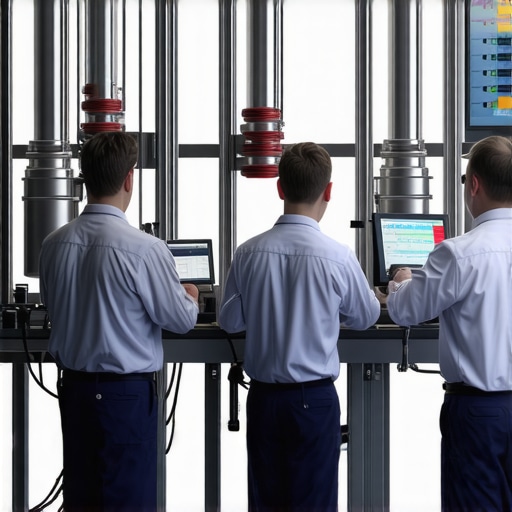
When I walk into a mechanical room, I’m looking for the ‘Mechanical Anatomy.’ The furnace is a heart, and the gas line is the artery. If the gas line installation for furnaces was done by a ‘Sparky’ or a DIY-er who used the wrong pipe diameter, your manifold pressure is going to be garbage. But the real diagnosis starts with the combustion analyzer. This little tool tells me the CO levels, the O2 percentage, and the stack temperature. If I see O2 levels that are too low, I know the burners are starving. This is when you get soot. Soot is the ‘cholesterol’ of an HVAC system; it coats the heat exchanger, insulates it, and eventually causes the metal to fatigue and crack. [IMAGE_PLACEHOLDER]
Then there is the electrical side. I’ve seen countless techs misdiagnose a combustion issue when they actually needed capacitor replacement services for the inducer or blower motor. If the motor isn’t spinning at the correct RPM because the run capacitor is weak, you aren’t pulling enough air through the cabinet. The flame starts to ‘lazy’ up, turning yellow and licking the top of the heat exchanger. That’s how you kill a furnace in five years. This is why identifying when furnace repair is urgent is critical—before the ‘lazy’ flame burns a hole in your heat exchanger and starts venting CO into the bedrooms.
The High-Stakes Math: Repair vs. Replace
Is it worth fixing? I get asked this in warehouse heating solutions environments and residential hallways alike. If you have a cracked heat exchanger because of poor combustion, you’re looking at a $2,000 to $4,000 job. At that point, you’re halfway to a new 96% AFUE unit. But if the issue is just a clogged burner or a bad flue pipe installation, the fix is simple physics. We clean the orifices, check the static pressure (which, by the way, is usually messed up because of bad duct design services), and we dial in the ‘gas.’ If your tech isn’t checking the manifold pressure with a digital manometer, send him back to the shop. You can find more about the ‘sales tech’ tactics in this guide to furnace repair myths debunked.
“Excess air is necessary to ensure complete combustion, but excessive amounts result in significant energy loss as the extra air carries heat out through the exhaust.” – EPA Section 608 Training Manual
The Modern Twist: WiFi and Warehouses
We live in an era of WiFi thermostat integration and programmable thermostat programming. These tools are great for the homeowner to track their energy spend, but they can’t tell you if your heat exchanger is rusting out. In large-scale warehouse heating solutions, I often see ‘short-cycling.’ The unit is so oversized that it never reaches a steady-state combustion temperature. This leads to condensation inside the heat exchanger. That ‘juice’ is acidic, and it eats the metal from the inside out. Whether you are using electric heater services for a small office or a 100k BTU furnace for a home, the physics of airflow remains the king of the mountain.
I’ve been out on calls where the customer was convinced they needed a whole new system because their old ‘Pookie’-covered ducts were leaking so much air that the furnace couldn’t keep up. They thought it was a ‘gas’ issue. It wasn’t. It was a static pressure issue. If you’re looking for ways to boost efficiency without buying a new rig, check out these heating service hacks for 2025. Proper combustion and duct integrity are the two pillars of a system that actually lasts thirty years.
The Conclusion: Don’t Settle for a ‘Part-Changer’
In the end, combustion analysis is about more than just a printout from a machine. It’s about understanding the ‘Thermodynamic Zooming’ of the flame. It’s about knowing that every time the temperature drops in the North, your furnace is fighting a battle against physics. If you want a system that runs quiet, safe, and efficient, you need a tech who respects the role of excess air. Don’t let a ‘sales tech’ talk you into a $15,000 replacement when a professional cleaning and a capacitor replacement could have saved you. Be proactive. Invest in preventative HVAC repair and stop the problems before they become emergencies. Comfort isn’t a luxury; it’s a result of well-applied physics. If your ‘Tin Knocker’ didn’t mention airflow, he wasn’t doing his job.