The Screech of Inefficiency: Why Your ERV is Screaming at You
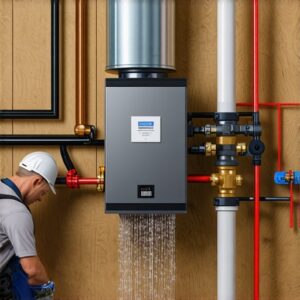
There’s a specific kind of silence you only find in a well-tuned mechanical room, and then there’s the sound of a blower motor in an Energy Recovery Ventilator (ERV) that’s about to give up the ghost. It starts as a low-frequency thrum, a vibration that works its way through the floor joists of a luxury hotel or a multi-family complex, and ends in a high-pitched metallic shriek that sounds like a banshee in a blender. If you’re hearing that, it’s not just an annoyance; it’s the sound of your ASHRAE 62.1 compliance flying out the window. As an HVAC vet who has spent more time in cramped mechanical closets than in my own living room, I can tell you: a noisy blower is a symptom of a deeper mechanical or aerodynamic failure. My old mentor used to scream at me, ‘You can’t move air you can’t touch, and you can’t touch air if your blower is fighting the housing!’ This is the absolute law of physics in our trade. Airflow matters more than horsepower, and when your ERV blowers start acting up, it’s usually because someone ignored the basic principles of static pressure or motor maintenance. In 30 years, I’ve seen everything from ‘Tin Knockers’ who left a roll of tape inside the duct to ‘Sparkies’ who wired a three-phase motor backward. But most often, the noise is a cry for help from a system that’s been choked out by poor installation or neglected maintenance. [image_placeholder]
The Mechanical Anatomy: Diagnosing the Source of the Racket
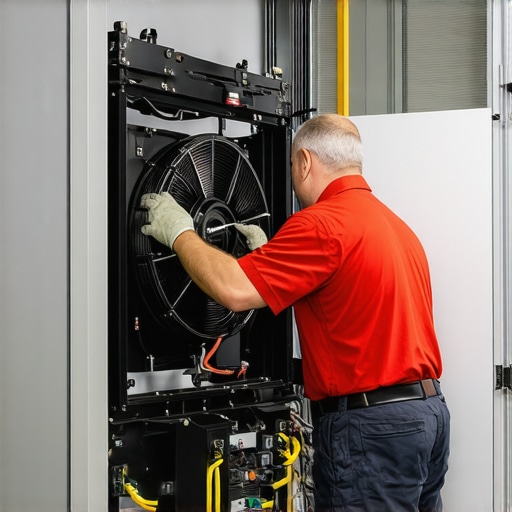
When I walk into a mechanical room to diagnose a noisy ERV, I’m not looking at the control board first. I’m looking at the blower assembly. You have to treat the ERV like a living organism. The blower is the heart, and the ducts are the arteries. If the heart is pounding against the ribs, you’ve got a problem. Most modern ERVs use centrifugal blowers—often called squirrel cages—and they are prone to several specific failure points. First, check the capacitor. If you have a PSC motor, a weak capacitor will cause the motor to hum and vibrate because it can’t create the proper phase shift to spin the rotor smoothly. This is why capacitor replacement services are the bread and butter of any real tech. Next, we look at the bearings. In the cold climates of the North, where we deal with everything from hotel boiler services to industrial heater services, those bearings take a beating. When the lubricant dries out, the metal-on-metal friction creates a high-pitched squeal. If you touch the motor housing and it’s hot enough to fry an egg, those bearings are shot. You also have to consider the ‘Pookie’—that’s the mastic we use to seal ducts. If a Tin Knocker didn’t secure the blower housing to the main cabinet with proper isolation, the whole unit will resonate like a guitar string.
“The most expensive equipment in the world cannot overcome a bad duct system.” – Industry Axiom
In our climate zone, especially during a polar vortex, the air is dense and the ERV core can actually frost up if the defrost cycle fails. This adds massive static pressure to the blower, forcing it to work harder and louder. If you’re managing multi-family heating upgrades, you need to ensure the ERV is integrated with the furnace ignition repair protocols so the house isn’t under negative pressure. I’ve seen biomass boiler services where the ERV was so poorly balanced it was literally sucking smoke back into the building because the exhaust blower was screaming at 100% while the intake was choked. This isn’t magic; it’s psychrometrics and physics. If the static pressure is too high because someone didn’t use a top-tier HVAC repair strategy, the blower will go into ‘surge,’ which sounds like a rhythmic ‘whoosh-whoosh’ noise as the air slips off the blades.
The Logic of Repair vs. Replace: When to Pull the Plug
I despise ‘Sales Techs’ who try to sell a whole new unit because a blower wheel is dirty. But there is a math to this. If you’re looking at an ERV that’s 15 years old and the blower motor is toast, you aren’t just replacing a motor; you’re betting on the enthalpy wheel and the sensors too. However, if the unit is relatively new, a simple thermocouple replacement (if it’s integrated with a gas-fired heater) or a thermocouple replacement won’t fix a noise, but a new motor and a proper balance will. For commercial clients, we often look at rebate application assistance to help offset the cost of upgrading to ECM (Electronically Commutated Motors). These motors are dead silent compared to the old PSC junk and they can ramp down based on actual CO2 levels. If you are dealing with fireplace insert services or thermostat wiring upgrades, you want a system that communicates. A noisy blower is often a motor running at 100% when it only needs to be at 30%. That’s a configuration error, not a mechanical failure. Check your thermostat wiring upgrades to ensure the 0-10V signal to the blower isn’t stuck.
“Ventilation systems shall be designed to minimize the transmission of noise to occupied spaces.” – ASHRAE Standard 62.1
If you’re in a hotel and the guests are complaining about the ‘ghost in the walls,’ you likely have a vibration isolation issue. Check the spring isolators. If they are bottomed out, they are useless. The noise is traveling straight through the hangers into the structure. This is common in hotel boiler services setups where the ERV is mounted right above the guest rooms. Use some ‘Pookie’ to dampen the panels and check the blower wheel for ‘dead weight’—sometimes dust builds up on one side of the blades, throwing the whole thing out of balance like a washing machine with a brick in it. If you catch it early, a cleaning and a new capacitor are cheap. If you wait, you’ll be calling for industrial heater services when the whole unit shakes itself apart. Don’t let a $20 part turn into a $10,000 headache. You can read more about avoiding these traps in our guide on furnace repair myths. Understanding the difference between ‘normal’ mechanical hum and ‘imminent failure’ chatter is what separates a Master Tech from a parts changer. Always verify your static pressure with a manometer. If it’s over the manufacturer’s rating, your blower is going to be noisy no matter how many parts you throw at it. Fix the ductwork, fix the noise.
How To Fix a Noisy ERV Blower
First, kill the power at the disconnect. Safety first—I’ve seen too many ‘Sparkies’ get bit by a charged capacitor. Open the access panel and inspect the blower wheel. If it’s caked in grey fuzz, that’s your imbalance. Clean it with a stiff brush and vacuum. Spin the wheel by hand; if it grinds or has side-to-side play, the bearings are gone. Check the capacitor with a multimeter set to microfarads (µF). If it’s 10% below the rated value, swap it out. This is one of those urgent furnace repair scenarios where a small fix prevents a motor burnout. Finally, check the tension on the drive belt if it’s an older commercial unit. A loose belt will squeal like a stuck pig, and a tight belt will kill the bearings in a week. Balance is everything. Once you’ve cleaned and serviced the mechanicals, check your dampers. A partially closed damper will create ‘whistling’ as the air is forced through a tiny gap. Seal any leaks with Mastic (Pookie) and ensure your multi-family heating upgrades include a commissioning report to prove the airflow is right. If you need help navigating the technical side or want to look into rebate application assistance for a quieter, more efficient system, you can always contact us for a real diagnostic, not a sales pitch.
{“@context”: “https://schema.org”, “@type”: “HowTo”, “name”: “How to Fix a Noisy ERV Blower”, “step”: [{“@type”: “HowToStep”, “text”: “Disconnect power and open the ERV cabinet access panel.”}, {“@type”: “HowToStep”, “text”: “Inspect and clean the centrifugal blower wheel (squirrel cage) of all dust and debris.”}, {“@type”: “HowToStep”, “text”: “Test the motor capacitor using a multimeter and replace if capacitance is low.”}, {“@type”: “HowToStep”, “text”: “Check motor bearings for play or grinding noise by spinning the wheel manually.”}, {“@type”: “HowToStep”, “text”: “Apply mastic or vibration isolation pads to resonant panels to reduce structural noise.”}]}