The Physics of Freshness: Why Your House is Suffocating
My old mentor, a man we called ‘Iron Lung’ Pete, used to stand in the middle of a drafty 1920s basement, point his crooked finger at a massive cast-iron radiator, and scream, ‘You can’t cool what you can’t touch, and you can’t breathe what you don’t move!’ Pete was a fossil even back then, but he understood something that most modern ‘Sales Techs’ forget while they’re busy trying to push a $15,000 system on a family with a dirty filter: airflow is the lifeblood of thermodynamics. In the old days, houses were ‘leaky.’ They breathed through poorly sealed windows and gaps in the framing. Today, we build them like plastic bags. We seal them up so tight to save on energy that we’ve created a new problem—stale, toxic air that just sits there, stewing in its own carbon dioxide and off-gassing VOCs. This is where the Energy Recovery Ventilator (ERV) comes in, and if you think it’s just a fancy fan, you’re dead wrong. It is a precision-engineered lungs-of-the-home that manages the impossible: bringing in fresh, sub-zero winter air without dumping your expensive heating bill out the window.
“The most expensive equipment in the world cannot overcome a bad duct system.” – Industry Axiom
Thermodynamic Zooming: Inside the Exchange Core
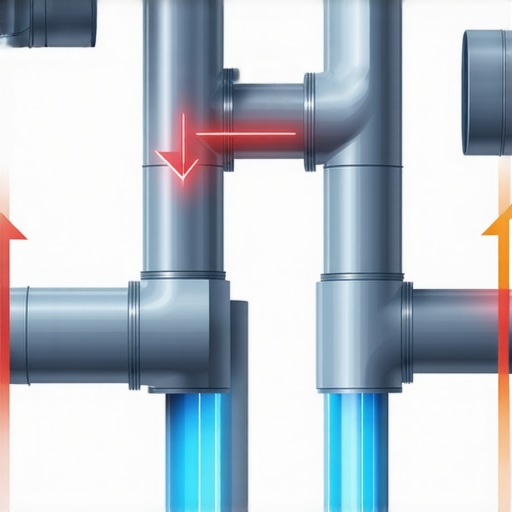
To understand an ERV, we have to look at the molecular dance happening inside the exchange core. Imagine two streams of air passing each other like ships in the night. One stream is the stale, warm air from your kitchen and bathrooms, headed outside. The other is the fresh, freezing air from your backyard. In a standard ‘Tin Knocker’ setup without an ERV, you’d just be losing all that thermal energy. But inside the ERV core—usually a series of thin, desiccant-coated plates—the streams never touch, yet they share everything. The sensible heat (the temperature you feel) and the latent heat (the moisture content) migrate across the membrane. In a cold climate heat pump application, this is critical. While your heat pump is working overtime to pull heat from the frigid outside air, the ERV is recovering up to 80% of the heat you’ve already paid for from the air you’re exhausting. It’s not magic; it’s enthalpy. We are moving energy from the high-concentration side to the low-concentration side through a vapor-permeable material. This is why heating service innovations transforming 2025 climate control are focusing so heavily on ventilation; without it, high-efficiency equipment is just recirculating poison.
The Humidity Factor: Why ERVs Beat HRVs in the North
In our neck of the woods, where the ‘Polar Vortex’ isn’t just a news headline but a Tuesday afternoon, humidity management is a battle. If you use a standard Heat Recovery Ventilator (HRV), you’re only moving sensible heat. But an ERV moves moisture too. During a brutal winter, your indoor air can drop to 15% relative humidity—drier than the Sahara. This cracks your wood floors and makes your skin feel like parchment. By using an ERV, some of the moisture from your outgoing air is ‘grabbed’ by the desiccant and transferred back to the incoming fresh air. This lightens the load on your whole-home humidifiers. If you’ve ever had to deal with a bypass humidifier repair, you know that those systems are only as good as the air moving through them. When an ERV is balanced correctly, it maintains a ‘Goldilocks’ zone of humidity that keeps your nasal passages happy and your furnace from having to work quite as hard to make the air ‘feel’ warm.
The Mechanical Anatomy of a High-Performance System
When I’m out on a call for school boiler maintenance or checking a shop heater services setup, the first thing I look at is the static pressure. Most guys just slap an ERV onto the return air drop and call it a day. That’s bush league. A real pro, a real ‘Airflow Architect,’ knows you need dedicated ducting or a ‘Siam’ setup to ensure the ERV doesn’t get bullied by the main blower motor. If the static pressure is too high, the ERV motors—often small, high-efficiency ECM fans—will burn out. I’ve seen capacitor replacement services needed on ERV units simply because the installer didn’t understand the resistance of the ductwork. You have to seal every joint with Pookie (mastic)—tape is for amateurs. If you’re looking for top hvac repair strategies to extend your systems life, start with the duct seals. Leaky ducts mean the ERV is sucking air from your attic or crawlspace instead of the fresh outdoors.
The Scams, the Sales Techs, and the Truth
I recently followed a Sales Tech into a house where he’d quoted the owner $4,000 for a ‘UV Air Scrubber’ to fix a ‘musty smell.’ I walked in, saw the house was sealed tighter than a submarine, and pointed at the lack of mechanical ventilation. A UV light doesn’t fix CO2 buildup. It doesn’t fix 70% indoor humidity in the summer. It’s a band-aid on a gunshot wound. What that house needed was a properly sized ERV and a solid HVAC maintenance plan. We see the same thing with wall furnace installation or ventless gas heater services; people install these ‘convenient’ heat sources without realizing they are dumping moisture and combustion byproducts directly into their breathing air. According to ASHRAE Standard 62.2, you need a specific amount of fresh air per square foot, and you aren’t getting it from an ‘air purifier’ that sits in the corner and glows blue.
“Ventilation is the intentional introduction of outside air into a space to control air quality.” – ASHRAE Standards
Maintaining the Lungs: Predictive Alerts and Proactive Care
We are entering the era of predictive maintenance alerts. Modern ERVs can now tell you when their filters are loaded or when the core is starting to face too much pressure drop. This is a far cry from the old days where we just waited for the compressor to scream its death rattle. If you’re running a business or a school, ignoring school boiler maintenance or institutional ERV cleaning is a recipe for ‘Sick Building Syndrome.’ The cores in these units need to be vacuumed or washed—depending on the manufacturer’s spec—at least once a year. If the core gets plugged with dust and skin cells, your heat exchange efficiency drops to zero. You’re essentially just running two expensive fans that do nothing. This is why how to identify when furnace repair is urgent and why is often linked directly to your ventilation health; if the furnace is cycling too often, check if the house is struggling to breathe first.
The 2025 Regulatory Cliff
As we move into 2025, the industry is changing. We’re seeing the phase-out of R-410A and the rise of A2L refrigerants. While that affects your cold climate heat pumps and their ‘juice’ (gas), it also means that indoor air quality is becoming a regulated safety standard. Higher-efficiency homes require these ventilation systems by code now. If you’re looking for efficient hvac repairs the blueprint for cooler summers and warmer winters, you have to look at the system as a holistic organism. You can’t just swap a part; you have to balance the physics. Whether it’s a shop heater services call or a residential wall furnace installation, if you don’t account for the ‘V’ in HVAC (Ventilation), you’re just a parts-changer, not a technician.
Conclusion: Comfort is Physics, Not Magic
At the end of the day, an ERV is the only way to win the war between energy efficiency and human health. It allows us to keep the heat we’ve created while purging the air we’ve used. Don’t let a ‘Sales Tech’ talk you into a $500 ‘magic’ filter when your house is actually choking for fresh air. Invest in the ductwork, seal it with pookie, and make sure your HVAC maintenance plans include a deep dive into your ventilation core. Comfort isn’t about the number on the thermostat; it’s about the molecular quality of the air you’re pulling into your lungs at 3 AM. Listen to the veterans, watch your static pressure, and remember: if you can’t move it, you can’t breathe it.