The Ghost in the Drywall: Why Your HVAC is Lying to You
You can buy the most expensive, high-SEER cold climate heat pumps on the market, but if your delivery system is a sieve, you’re just lighting money on fire. I remember my old mentor, a grizzled tin knocker who’d forgotten more about static pressure than most factory reps will ever know, used to grab me by the collar when a customer complained about a cold room. He’d scream, ‘You can’t heat what you can’t touch! This isn’t magic, kid, it’s physics.’ He was right. Most homeowners think that if the furnace is roaring, the house should be warm. But in the North, where we deal with brutal winters and cracked heat exchangers, the real enemy is usually buried behind twelve inches of insulation and double-layered drywall.
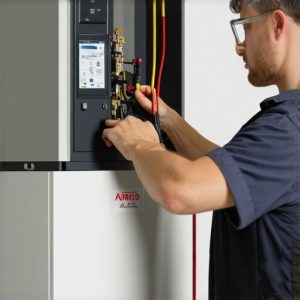
When we talk about furnace repair services, people expect me to swap a flame sensor or handle a limit switch replacement. And sure, those parts fail. But the real ‘forensic diagnosis’ starts when I pull out the manometer. If your ductwork is leaking 20% of its conditioned air into a wall cavity or a crawlspace, your unit is short-cycling itself into an early grave. That’s why system performance testing is the only way to see through the walls. We aren’t just looking for heat; we’re measuring the delta-T and the total external static pressure to find where the ‘juice’ is escaping.
“The most expensive equipment in the world cannot overcome a bad duct system.” – Industry Axiom
Static Pressure: The Silent Killer of Comfort
Think of your ductwork like the circulatory system. If the arteries are clogged or leaking, the heart (your blower motor) has to work twice as hard. In our region, where boiler maintenance services and chimney liner installation are standard for older homes, we often see ‘Frankenstein’ systems where a modern blower is slapped onto 50-year-old tin. The result? High static pressure that creates a whistling sound or, worse, silent heat loss. Using a duct blaster test, we can pressurize the system and find exactly where the ‘Pookie’ (mastic) has dried up and flaked off, or where a ‘sparky’ accidentally stepped on a flex duct during a remodel.
When we perform an AC installation or a furnace swap, we’re seeing a massive shift in the industry. We’re moving toward R-454B refrigerant transition services as the old R-410A fades out. These new A2L refrigerants require precise airflow to operate safely and efficiently. If your ducts are leaking, these high-tech systems won’t just run poorly; they might throw a fault code and lock you out entirely. You can’t just ‘top off the gas’ anymore. You have to fix the delivery.
Thermodynamics of the North: From Boilers to Infrared
In cold climates, we deal with sensible heat in a way that the guys down south don’t understand. We aren’t just fighting humidity; we’re fighting a massive temperature gradient. If you’ve got a drafty house, an infared heater installation in a garage or workshop might feel like a godsend because it heats objects, not air. But for the main living space, if your furnace is struggling, you need to know if the heat is actually reaching the registers. Often, I find that furnace repair services are called for when the real issue is a disconnected return air duct in the attic sucking in 20-degree air. No heat pump, even the best cold climate heat pumps, can keep up with that kind of thermal sabotage.
“Standard practice requires that duct leakage be limited to less than 4% of the total floor area to ensure designed thermal delivery.” – ACCA Manual D
Many homeowners are looking for rebate application assistance to help offset the cost of these high-efficiency upgrades. But here’s the trade secret: most of those rebates require a blower door test or a duct leakage report. They don’t want to subsidize a 96% AFUE furnace that’s blowing half its heat into a vented attic. We also see this with electric heater services; if the envelope is leaky, the electric bill will make your eyes water. You have to seal the tin with Mastic or high-grade foil tape—never the cloth-backed ‘duck’ tape that turns into a brittle mess in five years.
The 2025 Shift: R-454B and Advanced Diagnostics
As we move into 2025, the complexity of AC installation is skyrocketing. With the transition to R-454B, we’re dealing with mildly flammable refrigerants that require leak sensors in the evaporator coil housing. If your ductwork is restricted, your suction line won’t get ‘beer can cold’ like it used to; it will cause the coil to freeze, potentially triggering a sensor that shuts down the whole house. This is why we push top HVAC repair strategies that focus on the ‘whole house’ approach. It’s not just about the box; it’s about the lungs of the home.
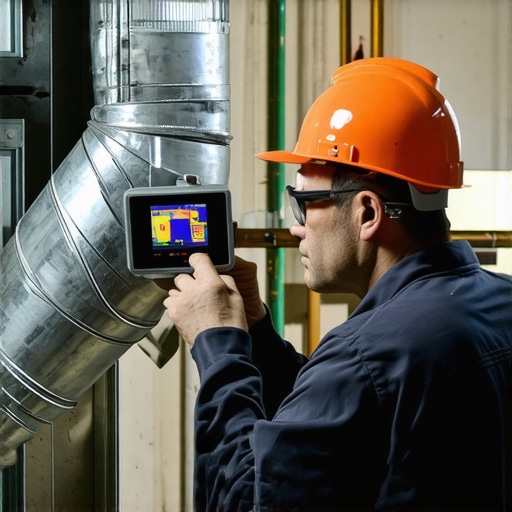
If you’re noticing one room is a meat locker while the other is a sauna, stop looking at the thermostat. The thermostat is just a switch; it doesn’t know what’s happening in the walls. You need a tech who knows how to use a thermal imaging camera and a flow hood. We can see the heat signatures of leaky joints through the plaster. This isn’t just about comfort—it’s about safety. Especially with boiler maintenance services, ensuring that your chimney liner installation is intact prevents carbon monoxide from back-drafting into the living space when the house is under negative pressure from a leaky return duct.
For those looking for efficient HVAC repairs, remember that the lowest bid is usually the guy who isn’t going to check your static pressure. He’s going to ‘drop and swap’ the unit and leave you with the same high bills and cold toes. If you want it done right, you have to measure. Physics doesn’t lie, even if a sales tech does. Whether you need urgent furnace repair or just a seasonal tune-up, make sure your tech is looking at the ductwork, not just the filter.