
The Myth of the ‘Super-Sized’ Furnace
Every time I walk into a sprawling, open-concept home where the owner is wearing a parka in the kitchen while the upstairs loft is a sauna, I hear the same thing: ‘I think I need a bigger furnace.’ My old mentor, a man who could sniff out a cracked heat exchanger from the driveway, used to grab my shoulder and growl, ‘You can’t heat what you can’t touch, kid!’ He was right. Airflow is the absolute monarch of thermodynamics. You can have a million BTUs of raw heating power in the basement, but if the static pressure is off or the blower motor isn’t dialed in, that heat is just a ghost in the machine. Open-concept floor plans are a nightmare for the average ‘tin knocker’ because they delete the walls that traditionally guided air movement, creating massive ‘dead zones’ where heat stratifies and refuses to circulate.
“The most expensive equipment in the world cannot overcome a bad duct system.” – Industry Axiom
The Physics of the Open-Concept Nightmare
In a traditional home, rooms act like pressurized boxes. In a large open-concept layout, you lose that control. Heat rises—we all know that—but in a Great Room with 20-foot ceilings, that heat gathers at the peak, leaving you shivering at floor level. This is where AI-driven HVAC optimization is actually starting to make sense, not just as a gimmick, but as a way to manage variable airflow. If your system isn’t balanced, you’ll find yourself looking for a furnace repair when the real culprit is actually the lack of return air. Without enough return grills to pull the cold air out of the room, the hot air can’t get in. It’s like trying to blow air into a bottle that’s already full. [IMAGE_PLACEHOLDER]
The Mechanical Anatomy: Why Your System is Failing the Comfort Test
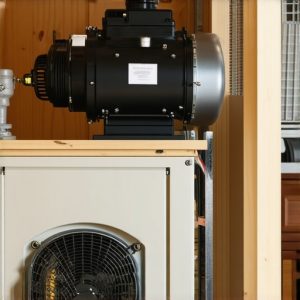
When we look at the ‘guts’ of the problem, we often find a blower motor that’s struggling. If your motor is over ten years old, it likely lacks the torque needed to push air through the complex duct runs of a large home. A blower motor replacement with a high-efficiency ECM (Electronically Commutated Motor) can allow for variable speeds, which keeps the air moving constantly at a lower, quieter volume. But don’t forget the electrical side. I’ve seen contactor repair jobs turn into full system replacements because a ‘sales tech’ lied to a homeowner. A pitted contactor can cause the outdoor unit or the blower to chatter or fail to start, but it’s a $150 fix, not a $15,000 reason to buy a new unit. You need to know the right HVAC fixes before you sign any contracts.
Solving the ‘Cold Spot’ with Specialized Heating
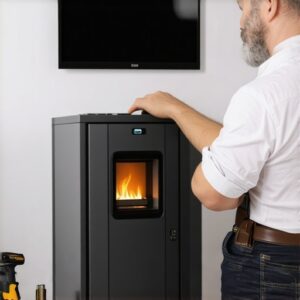
Sometimes, the central system just isn’t the answer for a massive addition or a crawl space that’s leaching heat. For those stubborn peripheral areas, a wall furnace installation provides localized, high-intensity heat without the need for massive ductwork. In more rural or ‘off-grid’ luxury builds, I’m seeing more biomass boiler services being requested to handle the heavy lifting of hydronic floor heating. If your home has a crawl space that feels like an icebox, you should look into crawl space heating solutions like specialized insulation and dedicated duct runs to prevent the ‘cold floor’ effect that ruins the open-concept experience. And if you’re lucky enough to have an indoor pool attached to that open floor plan, remember that pool heater repair is vital—an unheated pool acts like a massive heat sink, sucking the warmth right out of the adjacent living areas.
The 2025 Regulatory Cliff: Refrigerants and Efficiency
We are currently facing the ‘death of R-410A.’ With the low-GWP refrigerant retrofits coming into play for 2025, the ‘juice’ or gas we’ve used for decades is being phased out for A2L refrigerants like R-454B. While this mainly affects cooling, the entire system’s efficiency is tied together. If you’re planning an upgrade to fix your heating, you need to understand the expert tips for 2025. These new systems require specialized sensors because the refrigerants are ‘mildly flammable.’ If a tech tells you it’s the same old process, they’re lying. It’s a new world of sparky-level electrical complexity and precision.
“Design of the duct system shall be based on the heating and cooling loads of each room or area.” – ACCA Manual D
Safety First: The Silent Killer in Large Homes
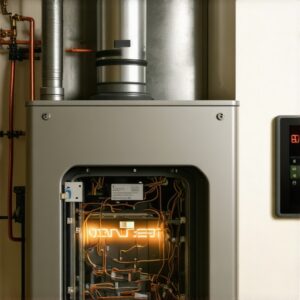
In large, tightly sealed modern homes, the risk of carbon monoxide is real, especially with high-BTU furnaces and biomass boilers. A carbon monoxide detector installation isn’t optional; it’s a lifeline. I’ve walked into homes for a simple school boiler maintenance check or a residential tune-up and found levels that would make your head spin because of ‘flame rollout’ or a cracked heat exchanger. Always check the vent pipes for ‘Pookie’ (mastic) that has cracked or tape that has failed; if the vent isn’t sealed, those gases are coming inside. For more on keeping your family safe, check out preventative repair tips.
Final Verdict: Physics vs. Magic
Uneven heating in a large home isn’t a mystery; it’s math. It’s about static pressure, CFM (Cubic Feet per Minute), and the thermal envelope. Don’t let a ‘sales tech’ sell you a new unit when you really need better duct sealing and a variable-speed motor. Whether you need efficient repairs or a total system redesign, remember that comfort is a science. Fix the airflow, and you fix the home. “,