The Sound of a Frozen Shop and the Physics of Radiance
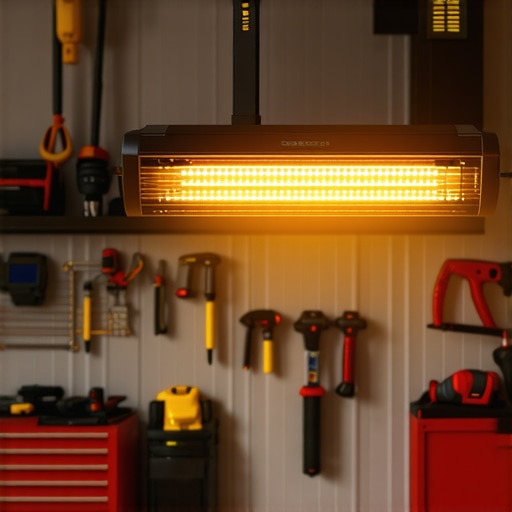
Walk into any shop in the dead of a Northern winter and you’ll hear it: the silence of a slab that has reached equilibrium with the frost line. If you’re a ‘Tin Knocker’ or a mechanic, you know that trying to heat a drafty garage with a standard forced-air furnace is like trying to fill a bucket with a hole in the bottom. You’re heating the air, but the minute the overhead door opens to pull in a truck, all that expensive ‘Gas’ vanishes. My old mentor, a man who could sniff out a cracked heat exchanger from the driveway, used to scream at me, ‘You can’t cool what you can’t touch, and you can’t heat what you won’t reach!’ He was talking about the fundamental failure of convection in high-ceiling environments. This is where infrared garage heaters come into play, acting like a pocket-sized sun hanging from your rafters.
“Infrared heaters shall be installed in accordance with their listing and the manufacturer’s instructions, ensuring clearance to combustibles is maintained to prevent fire hazards.” – NFPA 54 / National Fuel Gas Code
When we talk about infrared heating, we’re doing a Thermodynamic Zoom into sensible heat. Unlike a standard air handler repair where we worry about static pressure and CFM, infrared is about electromagnetic waves. It doesn’t heat the air; it heats the objects—your workbench, your tools, and your cold-soaked concrete floor. Once those objects absorb the energy, they become secondary heat sources. This is critical in North/Cold climates where heat loss is rapid. If you’ve spent time on school boiler maintenance or large-scale industrial sites, you know that radiant heat is the only way to keep a massive space comfortable without burning a hole in your pocket.
The Anatomy of Infrared: Diagnosing the Core Components
In the world of service, we treat an infrared heater like a simplified boiler. You have your gas valve, your burner assembly, and your control board. One of the most common service calls I get for these units involves a thermocouple replacement. If that little copper lead isn’t sensing the pilot or the flame properly, the whole system stays dead. It’s the same logic we apply to hotel boiler services; without flame rectification, you have no safety, and without safety, the gas valve stays shut. I’ve seen ‘Sales Techs’ try to quote a whole new burner assembly when the ‘Sparky’ just didn’t wire the 24V transformer correctly, or when a simple contactor repair would have solved the staging issue. Don’t let them hustle you.
If you’re running on a rural property, you might be looking at propane conversion services. Natural gas is great, but in the sticks, you’re often tethered to a tank. Converting an infrared heater isn’t just about swapping a brass orifice; it’s about adjusting the manifold pressure. Propane is heavier and has more BTUs per cubic foot than natural gas. If you don’t dial it in, you’ll soot up the tube, and eventually, you’ll be smelling that acidic, sour odor of incomplete combustion—a precursor to carbon monoxide poisoning. This is why identifying when furnace repair is urgent is vital for shop owners.
Airflow vs. Radiance: Why Your Ductwork Might Be the Enemy
Most shops are built with zero insulation in the slab. This creates a massive thermal sink. If you install a variable speed furnace, you’re still fighting the fact that hot air rises. In a shop with 14-foot ceilings, it’s 90 degrees at the roof and 40 degrees at your ankles. Infrared bypasses this by aiming the heat. It’s the same technology we use in snow melt systems installation—direct energy transfer. However, if your shop is tight and well-insulated, you might actually be better off with hyper-heat heat pumps. These modern ‘Juice’ drinkers can pull heat out of the air even when it’s -15°F outside, providing a steady, modulated warmth that infrared can’t match for efficiency in a sealed environment.
“Radiant heating systems can reduce building heat loss by 10% to 20% compared to convective systems by reducing the air temperature required for comfort.” – ASHRAE HVAC Systems and Equipment Handbook
For those considering a ductless mini-split installation in their workspace, remember that these units provide both heating and cooling. But, if you’re doing heavy grinding, welding, or woodworking, those fine dust particles will wreck a mini-split’s evaporator coil faster than a ‘Sales Tech’ can cash a commission check. Infrared tubes are sealed and far more rugged for a ‘working’ shop. If you already have a system that’s struggling, you might need an air handler repair to ensure your ventilation isn’t actually sucking all your radiant heat out of the building through an imbalanced exhaust fan.
The Preventive Maintenance Mindset
I’ve spent 30 years looking at equipment that died too young. Most of the time, it’s neglect. Whether it’s top hvac repair strategies or just blowing the dust off your infrared reflector, maintenance matters. In the North, your heater is your lifeline. When the ‘Monsoon’ of snow hits and the temperature drops, you don’t want to be troubleshooting a dirty flame sensor with frozen fingers. Use ‘Pookie’ to seal any gaps in your shop’s envelope, and check your gas pressures annually. If you’re unsure about the state of your current setup, check out this guide on choosing the right hvac fixes to see if a shop upgrade is actually in your cards for 2025. Comfort isn’t magic; it’s just physics managed by a guy with a wrench who actually gives a damn.