The Sound of a Wet Winter: Why Your Windows are Crying
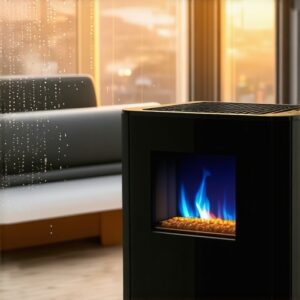
My old mentor, a man who spent forty years breathing in soot and ‘Pookie’ (that’s mastic to you laypeople), used to scream at me in the middle of frozen crawlspaces: ‘You can’t cool what you can’t touch, and you can’t heat what you don’t control!’ He wasn’t just talking about the ‘gas’ or the ‘juice’ in the lines; he was talking about the physics of the air itself. When homeowners in the frozen North start seeing condensation dripping off their window sills in January, they usually blame the windows. They’re wrong. They’ve invited a chemistry experiment into their living room without a vent. If you are looking for ventless gas heater services, you need to understand the thermodynamic debt you are about to pay.
“The most expensive equipment in the world cannot overcome a bad duct system.” – Industry Axiom
In the HVAC world, we talk about sensible heat (the temperature you see on the dial) and latent heat (the energy stored in water vapor). A ventless gas heater is 99.9% efficient at creating sensible heat, but the byproduct is a moisture bomb. For every gallon of propane or therm of natural gas you burn, you are dumping roughly a gallon of water directly into your indoor air. In a house with poor attic insulation for heating, that moisture finds the coldest surface—usually the windows or the underside of the roof deck—and turns back into liquid. That is how you get mold, rot, and a house that feels like a cold swamp even when the thermostat says 72 degrees.
The Static Pressure Deep Dive: Why Moisture Ruins Comfort
Comfort isn’t magic; it is a balance of static pressure and vapor pressure. When you use a ventless heater, the humidity levels can easily spike above 60% or 70%. In a cold climate like Chicago or the Northeast, your indoor humidity should be closer to 30%. High humidity makes the air feel ‘heavy.’ A ‘Tin Knocker’ like me sees this all the time: the homeowner thinks they need a radiator replacement or a massive new furnace when, in reality, their air is just saturated. This excess moisture also makes your HVAC system work harder. Wet air is harder to move and harder to heat efficiently. To combat this, smart technicians look at air purification integration and MERV filter upgrades to ensure that the air being circulated isn’t just warm, but clean and manageable.
“Ventilation is the intentional introduction of outdoor air into a space to control air quality.” – ASHRAE Standard 62.1
If you’re struggling with uneven temperatures because of these humidity spikes, a zoning system installation might be the only way to save your sanity. By isolating the rooms where you use supplemental heat, you can prevent that moisture from migrating into your bedrooms and rotting your drywall. Many ‘Sales Techs’ will try to sell you a whole new $15,000 system when you actually just need to fix your smart thermostat setup or integrate remote thermostat access to monitor humidity levels in real-time. You can learn more about these strategies in our guide on heating service hacks for comfort and savings in 2025.
The 2025 Regulatory Cliff: R-454B and Your Future Comfort
We are currently standing at the edge of the R-454B refrigerant transition services era. As the industry moves toward low-GWP refrigerant retrofits, the way we handle indoor air quality is changing. These new ‘mildly flammable’ A2L refrigerants require much tighter sensors and better airflow management. If your home is already struggling with high humidity from a ventless heater, adding a modern high-efficiency heat pump to the mix requires surgical precision. You can’t just slap a new coil on an old plenum and hope for the best. This is why top hvac repair strategies always prioritize the integrity of the ‘envelope’ over the brand of the box outside. Don’t let a ‘Sales Tech’ tell you otherwise; if they aren’t measuring your static pressure, they aren’t doing their job.
The Airflow Manifesto: Physics Over Magic
The fix for a house that’s too humid from ventless heating isn’t always to rip out the heater. Sometimes, it’s about attic insulation for heating to keep the surfaces warm enough that water doesn’t condense. Other times, it’s about a radiator replacement or a smart thermostat setup that coordinates your primary furnace with your supplemental heat sources. If you are confused by the conflicting advice, check out these furnace repair myths debunked by industry experts. Ultimately, your home is a pressure vessel. If you’re putting moisture in, you have to have a way to get it out, or you’re just inviting ‘The Rot’ to move in. If you’re ready to stop the guesswork and get a real diagnosis from someone who knows the smell of a burnt compressor and the sound of a failing bearing, it’s time to contact us for a real technical evaluation.