The Forensic Diagnosis: Why Your Indoor Air Quality Depends on Physics, Not Marketing
The sound of silence in a house during a northern winter isn’t peaceful; it is expensive. When the mercury drops below zero and you hear that faint click-click-click of a furnace failing to ignite, or worse, the heavy, oppressive smell of unburnt gas from a ventless unit, you aren’t just looking at a comfort issue—you are looking at a chemical imbalance in your living space. As a technician who has spent thirty years navigating the soot-choked heat exchangers of the Rust Belt, I can tell you that the most misunderstood piece of equipment in the residential arsenal is the ventless gas heater. People love them because they are ‘99.9% efficient,’ but in this trade, we know that efficiency comes at a cost. That ‘missing’ 0.1% and the byproduct of combustion—water vapor and carbon dioxide—stay right there in the room with you.
“The most expensive equipment in the world cannot overcome a bad duct system.” – Industry Axiom
My old mentor used to scream at me until he was red in the face, “You can’t burn what you can’t feed!” He was obsessed with the physics of combustion air. This is the fundamental truth of indoor air quality: if you are using a ventless gas heater service, you are participating in a controlled chemical reaction where your lungs are the secondary filter. To maintain safety, you have to understand the oxygen depletion sensor (ODS). This tiny pilot assembly is designed to shut the gas valve before the CO levels become lethal, but it’s a mechanical part, and mechanical parts fail when they are coated in household dust and pet dander. This is why duct cleaning services and regular maintenance aren’t just ‘upsells’ from some sales-hungry tech; they are the literal lungs of your home.
The Mechanical Anatomy: Why the Draft Inducer Motor is the Heart of the System
In a standard vented furnace, the draft inducer motor repair is one of the most common mid-winter calls I get. Think of the inducer motor as the bouncer at a club; its only job is to ensure the toxic combustion gases are escorted out of the flue pipe before the burners even think about lighting. When that motor’s bearings start to screech—a sound like a fork in a garbage disposal—it means your system’s static pressure is off. If the inducer doesn’t create enough negative pressure to close the pressure switch, the ‘gas’ stays off. I’ve seen homeowners try to bypass these switches with a jumper wire. Don’t do it. That’s a fast track to a ‘cracked heat exchanger’ and a permanent sleep. If you’re hearing that screech, you need a professional to look at your urgent furnace repair needs before the safety sensors lock you out in the cold.
Thermodynamic Zooming: Latent Heat and the Ventless Paradox
In the North, we fight two battles: sensible heat (the temperature on the thermostat) and latent heat (the moisture in the air). A ventless gas heater adds massive amounts of latent heat to a home. For every gallon of gas burned, you’re dumping about a gallon of water vapor into your air. If your home is tight—meaning you’ve done your job with the ‘Pookie’ (mastic) and weatherstripping—that moisture has nowhere to go. It hits the cold window glass, turns into condensation, and starts growing mold in your sills. This is why remote thermostat access and proper IAQ monitoring are critical. You aren’t just managing temperature; you are managing a micro-climate. If you’re struggling with these balances, checking out heating service hacks can help you understand how to offset that moisture without losing your efficiency gains.
The SEER2 Transition and Multi-Family Upgrades
We are currently hitting a regulatory cliff. With SEER2 compliant upgrades becoming the law of the land, the old ways of ‘just slapping a unit in’ are over. This affects everything from your central air to multi-family heating upgrades. For landlords and multi-unit owners, the math has changed. You can’t just throw a cheap electric strip heater in an apartment and call it a day. The cost of ‘juice’ (electricity) is too high. We are seeing a massive shift toward electric heater services that utilize heat pump technology even in colder climates. These systems are now designed to pull heat out of -10°F air, but the wiring repair for heating systems must be spot on. A loose neutral or a corroded contactor will fry an inverter board faster than you can say ‘warranty denied.’ I always tell my clients that a high-efficiency system on old, thin wiring is like putting a Ferrari engine in a lawnmower.
“Design of the distribution system is as critical as the selection of the heating or cooling source.” – ACCA Manual J Standards
Specialized Heating: From Shop Heaters to Pellet Stoves
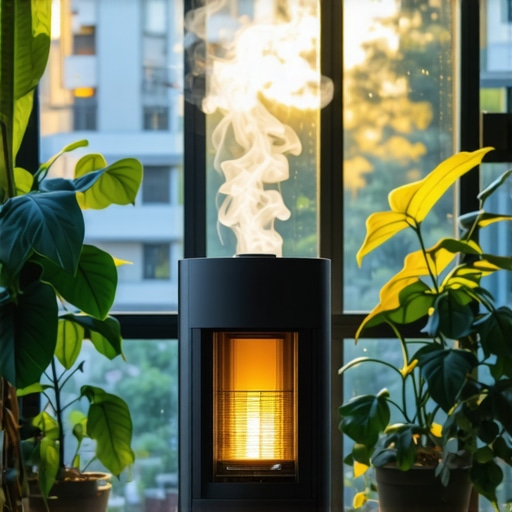
Not every space is a living room. I spend a lot of time on shop heater services. Whether it’s a hanging natural gas unit or a pellet stove repair, these workhorses require a different kind of respect. A pellet stove is a marvel of mechanical engineering—augers, blowers, and sensors all working to burn compressed sawdust. But when that auger jams because you bought ‘cheap’ pellets with too much fines (dust), the whole system grinds to a halt. Similarly, thermostat installation in a shop environment requires ruggedized equipment that can handle the dust and vibration. You don’t want a delicate touch-screen in a place where you’re throwing sparks with a grinder. You need something that can handle the environment and still provide remote thermostat access so you can warm the floor before you head out there on a Saturday morning.
The Repair vs. Replace Math: When to Pull the Plug
So, when do you stop throwing money at the old beast? If you’re looking at a $800 draft inducer motor repair on a 20-year-old furnace with a rusted base pan, you are throwing good money after bad. I tell people to look at the ‘Rule of 5,000.’ Multiply the age of the unit by the repair cost. If it exceeds $5,000, it’s time to look at efficient HVAC repairs or replacement. With 2025 standards looming, getting a SEER2 compliant upgrade now might save you a fortune in the long run. If you’re curious about the myths surrounding this, read up on furnace repair myths to make sure you aren’t being sold a bill of goods by a ‘Sales Tech’ looking for a commission. Real HVAC work is about physics, safety, and longevity, not just a shiny new cabinet in the basement. Seal your ducts with Pookie, keep your sensors clean, and never ignore the smell of ‘burnt’ air—it’s the house trying to tell you something is wrong.