The Forensic Diagnosis: When the Frost Bites the Copper
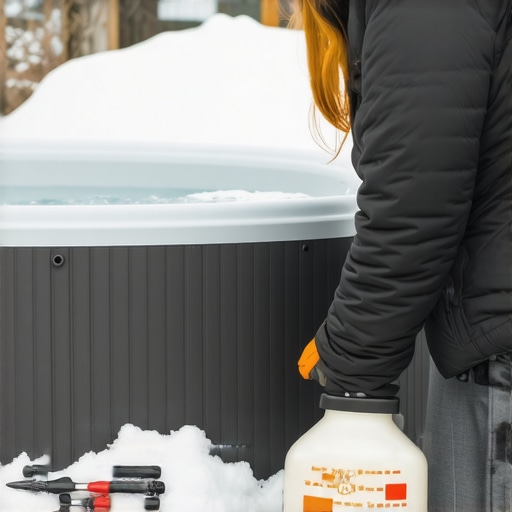
The sound of a spa heater failing after a brutal winter freeze isn’t a bang; it’s a slow, rhythmic drip-drip-drip that tells you the copper has finally surrendered to the ice. I’ve spent thirty years pulling apart frozen manifolds, and if there is one thing I have learned, it is that water is the only substance that gets bigger when it dies. When that thermometer in the North drops below zero during a polar vortex, the water inside your spa heater’s heat exchanger undergoes a phase change. As it turns to ice, it expands with enough force to split heavy-gauge copper wide open. If you’ve just uncovered your spa to find a silent control board and a puddle of frozen ‘juice’ (water/glycol), you are looking at a forensic puzzle that requires more than just a wrench.
My old mentor used to scream, ‘You can’t move heat if you can’t move the medium!’ This is the core of the physics lesson I learned early in my career. Airflow is king in furnaces, but in spa heaters and boilers, fluid dynamics is the law of the land. This is why system performance testing is the first thing I do when I walk onto a job site. You can’t just flip a breaker and hope for the best. You have to understand the thermodynamic stress that the system has endured. If the plumbing froze, the control board probably saw a massive spike before the high-limit switch could even blink. We’re talking about restoring a system that has been physically mangled by molecular expansion. [image_placeholder_1]
“System performance is inherently tied to the integrity of the heat exchange medium and the velocity of the fluid through the primary coil.” – ASHRAE Standards
The Mechanical Anatomy: Control Boards and Limit Switches
Let’s look at the guts of the machine. When you are performing control board diagnostics, you aren’t just looking for a green light. You are looking for ‘toasted’ traces and swollen capacitors. Cold weather is hard on electronics, especially in humid or damp environments where condensation can form on the board as it warms up. I’ve seen countless DIYers try to jump-start a spa heater only to fry the entire logic circuit because they didn’t check for moisture first. This is similar to the precision needed in identifying when furnace repair is urgent; if the brain of the unit is compromised, the whole body is a paperweight.
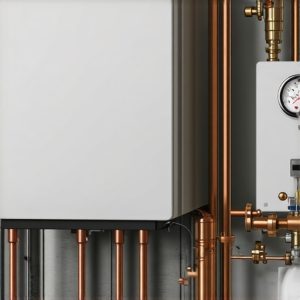
One of the most common failures after a freeze is the limit switch. If the water froze inside the header, it likely crushed the sensitive diaphragm of the pressure switch or warped the bimetal strip in the limit switch. A limit switch replacement is often the cheapest part of the job, but it’s the most critical for safety. Without it, the heater doesn’t know when it’s about to turn into a steam bomb. I treat a spa heater with the same respect I give a high-efficiency boiler. In fact, many of the boiler repair services I’ve performed over the decades use the exact same hydronic principles. You need to verify that the high-limit and the pressure switch are talking to the control board before you ever introduce ‘gas’ (fuel) to the burner tray.
The Physics of the Thaw: Why Flow is Everything
In the North, we deal with sensible heat and latent heat in ways the ‘thin-blood’ techs in the South can’t imagine. When you are restoring a frozen heater, you have to account for the latent heat of fusion. All that ice in the pipes needs a massive amount of energy just to turn back into water before the temperature can even begin to rise. This is where system performance testing becomes a game of patience. If you force the burners on while there is still an ice blockage, you will create localized boiling—also known as ‘kettling.’ This will crack your heat exchanger faster than a hammer blow. It’s the same reason I tell people that top HVAC repair strategies always involve checking for obstructions before firing up the plant.
“No amount of burner capacity can compensate for a restricted flow through the primary exchanger; static pressure is the silent killer of efficiency.” – ACCA Manual J Axiom
Many homeowners ask if their programmable thermostat programming can prevent this. The answer is yes, but only if you have a ‘freeze protection’ mode that circulates the water when the ambient temp hits 38°F. If you didn’t have that set, or if the power went out, you’re in my world now. I’ve followed ‘Sales Techs’ who would see a frozen manifold and immediately quote a $5,000 replacement. Often, if the copper hasn’t split, you just need a leak detector integration test to ensure the seals are still tight. I once caught a guy trying to sell a whole new system to a retiree when all she needed was a new ‘Pookie’ (mastic) seal and a $40 sensor. Don’t be that guy. Fix the physics, don’t just swap the box.
Bridging the Gap: From Spa Heaters to Home Heating
You might wonder what a spa heater has to do with furnace repair services or pellet stove repair. The answer is the ‘Control Loop.’ Whether you are burning wood pellets, natural gas, or using an electric element, the safety sequence is the same: Call for heat, verify flow, check safety limits, ignite, and monitor. If your spa heater died, it’s a good time to look at your home’s overall thermal envelope. Are your pipes in the crawlspace protected? Is your attic insulation for heating up to snuff? Often, the same ‘Sparky’ (electrician) who wired your spa sub-panel is the one who didn’t seal the penetrations into the attic, leading to massive heat loss. Using efficient HVAC repairs as a blueprint for your whole home is just common sense.
Don’t forget the basics while you’re focused on the big components. A furnace filter replacement on your home unit is just as important as cleaning the grit out of your spa’s pump basket. If the pump can’t push the water because the basket is full of pine needles, the heater will short-cycle and eventually burn out the contactor. It’s all connected. Airflow, water flow, and electron flow. If any of them are blocked, you’re going to be calling me on a Saturday night, and I’m not cheap when I have to leave my own fireplace.
The Repair vs. Replace Math
When is it time to pull the plug? If I’m looking at a manifold that looks like a burst soda can, and the control board diagnostics show a fried processor, you’re looking at a $1,500 repair on a $3,000 unit. If the unit is over ten years old, the ‘Tin Knocker’ (duct tech) in me says it’s time for a new, higher-efficiency model. However, if the damage is localized to a single limit switch replacement or a minor leak, the repair is a no-brainer. Always demand a full pressure test after any hydronic repair. If a tech doesn’t stay to watch the unit run through three full cycles, they aren’t a tech—they’re a parts changer. Real maintenance means understanding the ‘why’ behind the ‘how.’