The Silence of the Spa: Why Your Heat Pump Quit
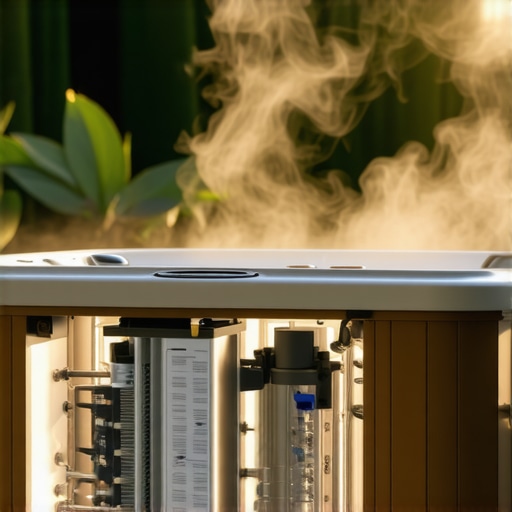
There is a specific sound a residential spa makes when the heating cycle fails—or rather, a lack of sound. As an HVAC technician who has spent three decades dragging gauges through crawlspaces and diagnosing steam boiler repair issues in the middle of a blizzard, I can tell you that a cold spa is rarely just a ‘broken heater.’ It is usually a failure of physics. My old mentor used to scream at me in the back of a freezing service van: ‘You can’t heat what you can’t circulate! This is why airflow matters more than horsepower!’ He was a ‘Tin Knocker’ by trade, but his logic applied to everything from school boiler maintenance to high-end heat pump spa units. If the medium—be it air or water—isn’t moving across the heat exchanger at the precise velocity required by the static pressure testing specs, the system is just an expensive lawn ornament.
“Design for heating and cooling systems shall be based on the heating and cooling loads of the building or zone to be served.” – ACCA Manual J
When you call for heat and nothing happens, the ‘Sales Techs’ will immediately try to sell you a full heat pump installation for six grand. Don’t fall for it. We start with a forensic diagnosis. First, we look at the contactor. If you have a pitted or burnt-out component, a simple contactor repair can save you thousands. You can smell a bad contactor before you see it; it has that ozone-heavy, metallic tang that tells you the ‘Sparky’ didn’t tighten the lugs enough. We also check the flow switch. In the North, where I operate, the ‘Monsoon Effect’ isn’t our problem—it’s the thermal shock of 10°F air hitting a system that’s trying to keep water at a steady 102°F. If your spa is integrated into a hydronic system, we might even be looking at steam boiler repair techniques to ensure the secondary heat exchanger isn’t scaled up with mineral deposits.
The Thermodynamic Zoom: Latent Heat and Low-GWP Retrofits
Understanding spa heating requires zooming into the evaporator coil. In a heat pump scenario, the unit is pulling heat from the ambient air—even if it’s cold—and concentrating it into the refrigerant ‘juice.’ But here is the catch: as we transition into 2025, the industry is moving toward low-GWP refrigerant retrofits. Using R-454B or R-32 means the pressures and thermal properties are changing. If your tech doesn’t understand the glide of these new gases, your spa will never reach temperature. We often find that the HVAC duct sealing in the mechanical room is so poor that the unit is sucking in its own exhaust air, causing it to short cycle. This is why top HVAC repair strategies to extend your systems life always begin with ensuring the environment around the unit is pristine.
The IAQ Factor and MERV Filter Upgrades
If your spa is indoors, the mystery of ‘no heat’ often overlaps with poor air quality. High humidity from the spa can choke a standard furnace or air handler. We recommend IAQ improvement services and MERV filter upgrades not just for your lungs, but to protect the sensitive electronics in your WiFi thermostat integration. If the humidity is too high, it creates a ‘cold swamp’ effect where the controls corrode and the sensors fail. When the system can’t ‘talk’ to the heater, it defaults to a safety lockout. Many homeowners assume they need a furnace repair, but often they just need better moisture control. You can see how we debunk these issues in our guide on furnace repair myths debunked by industry experts. It’s about the total ecosystem of the home.
“Ventilation for acceptable indoor air quality is not a luxury, it is a physiological requirement and a mechanical necessity for equipment longevity.” – ASHRAE Standards
Static Pressure: The Silent Heater Killer
I’ve walked into multi-million dollar homes where the owner complained the spa heater took three days to warm up. The ‘Sales Tech’ told them they needed a bigger unit. I ran a manometer and found the static pressure was off the charts because the previous installer used cheap tape instead of ‘Pookie’ (mastic) on the ductwork, or the water bypass was plumbed backwards. You have to treat the ‘Suction Line’ with respect. If the refrigerant isn’t ‘beer can cold’ on the return side of the compressor, you aren’t moving heat efficiently. This is why how to identify when furnace repair is urgent often involves looking at the pressure differentials across the entire mechanical system. We don’t just swap parts; we fix the physics. [image placeholder] Whether it is a school boiler maintenance job or a residential spa, the goal is the same: maximum heat transfer with minimum resistance. Don’t let a ‘Sales Tech’ convince you that a $20 capacitor failure requires a $15,000 system replacement. Listen for the screech of a bearing, smell for the acid of a burnout, and always, always check your airflow and water flow first. If you’re struggling with a system that won’t stay warm, check out our heating service hacks for comfort and savings in 2025 to get ahead of the next freeze. Physics doesn’t lie, and neither does a veteran tech who’s seen it all.
“