Listen, I’ve spent enough time in the basement of 100-year-old schools to know that a boiler isn’t just a tank; it’s the heart of the building. My old mentor, a guy who could smell a leak from the parking lot, used to scream, ‘You can’t heat what you can’t touch!’ This wasn’t just old-man rambling. He was talking about the physics of heat transfer—the boundary layer of air on a radiator. If your steam traps are failed or your water isn’t moving, you’re just burning cash. Choosing between steam and water for a school isn’t a matter of preference; it’s a matter of thermodynamics, maintenance overhead, and long-term mechanical survival.
The Ghost of the System: Why Steam Still Haunts School Districts
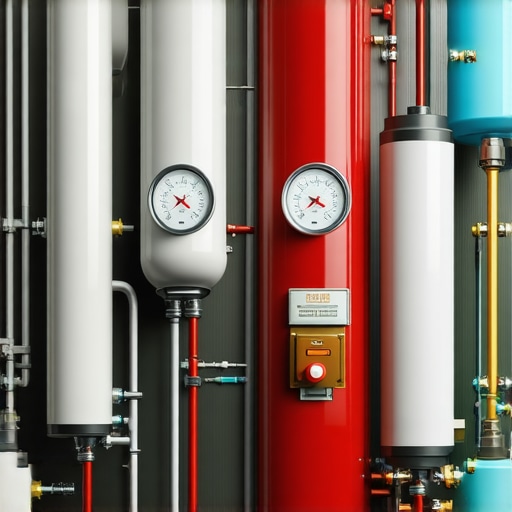
Steam systems are the dinosaurs of the HVAC world, but they are powerful. When you look at an old cast-iron radiator, you’re looking at a latent heat machine. Here is the Thermodynamic Zooming: Steam carries energy through the latent heat of vaporization. It takes 970 BTUs to turn one pound of water into steam at 212°F without the temperature moving a single degree. When that steam hits the cold metal of a radiator in a 2nd-grade classroom, it collapses back into water, releasing all that energy instantly. That’s a massive punch of heat. But there’s a catch. Steam is acidic and violent. Without proper water treatment and urgent maintenance, the return lines rot from the inside out. I’ve seen 4-inch iron pipes turned into Swiss cheese because the ‘juice’ wasn’t balanced properly. If you’re dealing with an existing steam plant, you aren’t just an operator; you’re a chemist. If the school is considering new construction heating design, steam is rarely the first choice anymore because the ‘Sparky’ (electrician) and the ‘Tin Knocker’ (duct guy) aren’t the ones who have to fix a stuck steam trap at 4 AM.
“The most expensive equipment in the world cannot overcome a bad duct system—or in the case of hydronics, a poorly engineered piping loop.” – Industry Axiom
The Hydronic Revolution: Why Hot Water is the Future
In the North, where the polar vortex turns your nose hairs into icicles, hot water (hydronic) systems are the gold standard. Unlike steam, which is an ‘all or nothing’ game, water is sensible heat. You can modulate the temperature. With a modulating furnace repair mindset applied to boilers, we use outdoor reset controls. If it’s 40°F outside, we don’t need 180°F water; we might only need 120°F. This is where radiant floor heating installation shines in newer school annexes or kindergartens where kids are actually sitting on the floor. It turns the entire floor into a low-temperature radiator. No drafts, no hot spots, just pure comfort. When we talk about new construction heating design, we’re moving away from high-pressure steam toward high-efficiency condensing boilers. These units thrive on cold return water. The colder the water coming back from the building, the more they can condense the flue gases, pulling out extra efficiency that old ‘fire-tube’ boilers just vent out the stack.
The Regulatory Cliff: 2025 and the Efficiency Mandate
We are hitting a regulatory cliff. The EPA and local building codes are squeezing the life out of old-school atmospheric boilers. If you’re planning a gas line installation for furnaces or boilers today, you have to account for the fact that 80% efficiency doesn’t cut it anymore. We are moving toward 95%+ AFUE. This requires specialized venting—usually PVC or polypropylene—because the exhaust is so cool it turns into acidic condensate. If you don’t have the right drainage, that ‘juice’ will eat through your concrete floor. This is also why demand-controlled ventilation (DCV) is becoming mandatory in schools. We use CO2 sensors to tell the HVAC system, ‘Hey, the gym is empty, stop heating and cooling 5,000 CFM of outdoor air.’ It’s about saving money when the building is ‘sleeping.’
“Minimum ventilation rates shall be maintained to provide acceptable indoor air quality while minimizing energy consumption through the use of demand-controlled strategies.” – ASHRAE Standard 62.1
Technical Breakdown: Maintenance and The Silent Killers
I can’t tell you how many times I’ve been called for a ‘boiler failure’ only to find a dirty sensor. In the furnace world, furnace flame sensor cleaning is a 10-minute job that saves a $300 service call. In a school boiler, the principle is the same but the scale is bigger. Whether it’s a garage heater installation for the school bus depot or the main plant, a dirty flame rod or a clogged burner will shut you down. If you’re running a propane-fired system in a rural district, you need propane conversion services that actually understand orifice sizing. I’ve seen ‘Sales Techs’ try to run natural gas orifices on propane—it’s a soot factory waiting to happen. For the maintenance guys, don’t overlook the smart thermostat setup. If your building automation system (BAS) isn’t talking to your modulating boiler, you’re essentially driving a Ferrari in first gear. You need that communication to ensure the boiler isn’t short-cycling, which is the fastest way to kill a heat exchanger.
The Verdict: Steam or Water?
If you are retrofitting an old building with existing cast-iron, you might be stuck with steam, and that’s fine—if you respect the water chemistry. But for anything new, water is king. It’s safer, more efficient, and allows for radiant floor heating installation which provides far superior comfort. If you’re looking for heating service innovations, look at hybrid systems that use heat pumps for the ‘shoulder seasons’ and gas boilers for the deep freeze. And remember, whether it’s a wood burning stove installation for a remote school cabin or a 2-million BTU boiler, the physics of airflow and heat transfer don’t care about your budget. They only care about the installation quality. Don’t let a ‘tin knocker’ tell you that ‘any pipe will do.’ Proper sizing is the difference between a warm classroom and a frozen pipe disaster. For more on how to keep your system running, check out our HVAC repair strategies or contact us for a real technical audit, not a sales pitch.