The Anatomy of a Controlled Explosion: Why Your Furnace Needs a Forensic Audit
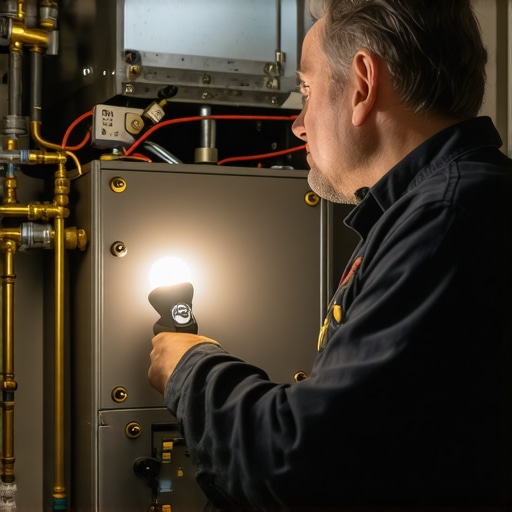
My old mentor, a man who spent more time in crawlspaces than in his own living room, used to scream at me, “You can’t heat what you can’t touch!” This was his way of reminding me that HVAC isn’t about magic; it’s about physics. Most people think a furnace is just a big metal box that magically generates warmth, but I see it as a complex thermodynamic engine. If the airflow isn’t perfect, the system is just an expensive paperweight. When I walk up to a unit for a 10-minute checkup, I’m not looking at the brand name or the shiny paint. I’m listening for the screech of a bearing, smelling for the acidic bite of a compressor burnout, and looking for the tell-tale soot of poor combustion. This isn’t a sales call; it’s a forensic diagnosis. If you’ve been told you need a $15,000 replacement after a five-minute look, you’ve met a ‘Sales Tech.’ I’m here to tell you what actually happens during a real inspection.
The Narrative of the Blue Flame: More Than Just Aesthetics
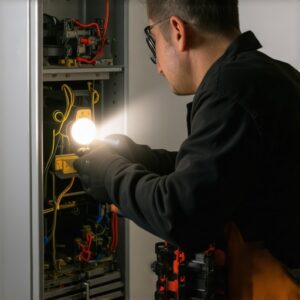
When I pop the cabinet door, the first thing I’m eyeing is the burner assembly. I want to see a crisp, stable blue flame. If I see orange flickers or a ‘lazy’ flame that dances around, my internal alarm bells go off. That’s usually a sign of dirt or, worse, a cracked heat exchanger. You see, a furnace is a heat transfer machine. The heat exchanger is the ‘lungs’ of the system. It keeps the toxic combustion gases like carbon monoxide separated from the air you breathe. If those lungs have a hole, you’re in trouble. This is why how to identify when furnace repair is urgent is the most critical knowledge a homeowner can have. We use specialized cameras to inspect every weld and curve of that metal because a hairline fracture can turn a cozy night into a 24/7 heating emergency response scenario.
“The most expensive equipment in the world cannot overcome a bad duct system.” – Industry Axiom
The Induction and Ignition Sequence: A Mechanical Choreography
The checkup starts before the fire even begins. First, the inducer motor kicks on. This little motor clears out the residual gases from the previous cycle and proves that the vent is clear. If that motor is pulling too many amps, it’s a ‘dead man walking.’ Then comes the igniter. Whether it’s a spark or a hot surface igniter, it has a finite lifespan. I check the ohms to see if it’s nearing the end of its road. Once the gas valve opens and the ‘gas’ (or juice, as some of the old-timers call it) flows, the flame sensor takes over. This tiny rod is the unsung hero of the furnace. It senses the micro-amps of the flame. If it’s coated in carbon, it won’t see the fire, and the system will shut down in seconds to prevent a gas buildup. Often, what a Sales Tech calls a ‘total system failure’ is just a dirty $2 flame sensor that needs a bit of cleaning. This is a core part of preventative hvac repair tips that save thousands.
Thermodynamic Zooming: The Physics of Heat Exchange
In cold northern climates, we deal with sensible heat and the danger of the ‘Polar Vortex’ effect. When a furnace runs, we aren’t just ‘adding heat’; we are facilitating a thermodynamic transfer. The heat exchanger gets scorching hot, and the blower fan pushes house air over it. Here’s where the physics gets tricky: Static Pressure. If your ducts are too small or your filter is a ‘high-MERV’ slab of cardboard that doesn’t breathe, the heat can’t escape the exchanger. The internal temperature of the furnace sky-rockets, causing the metal to expand and contract violently. This ‘oil-canning’ is what eventually cracks the heat exchanger. This is why airflow is king. A Tin Knocker (duct specialist) can tell you that a poorly designed return air drop is the number one killer of high-efficiency furnaces. We check the ‘Delta T’—the temperature difference between the air going in and the air coming out. If it’s too high, the system is suffocating.
“Carbon monoxide is the silent byproduct of incomplete combustion, often a result of insufficient primary or secondary air.” – NFPA 54 (National Fuel Gas Code)
The 2025 Transition: Low-GWP and Dual Fuel Reality
We are currently facing a massive shift in the industry with low-GWP refrigerant retrofits and the phase-out of R-410A in favor of A2L refrigerants like R-454B. While this mainly affects AC and heat pumps, it influences how we look at dual fuel heat pump systems. These hybrids use an electric heat pump for mild days and a gas furnace for the ‘deep freeze.’ During a 10-minute checkup, I have to ensure the ‘brain’ (the thermostat and control board) knows exactly when to switch between the two. If the wiring is botched, you might be burning gas when the heat pump could do the job for pennies. I’ve seen wiring repair for heating systems that looked like a bird’s nest, causing the aux heat to run constantly. Correcting this is a staple of heating service hacks for 2025.
Industrial Scale and Unique Installations
Not every system is a standard residential split. We often handle industrial heater services and even complex church heating systems where the sheer volume of air is staggering. In these environments, we aren’t just looking at a furnace; we are looking at massive air handlers and boiler interfaces. We also see a rise in wood burning stove installation as a backup, which requires us to check for proper draft and air purification integration to handle the particulates. In humid zones, we integrate dehumidification services to prevent the ‘cold swamp’ feel during the shoulder seasons. Every system is a different beast, but the physics of combustion and airflow remains the same. Whether it’s a $20 capacitor or a full ac installation, the goal is always longevity over a quick sale.
The Final Verdict: When to Repair or Replace
If your furnace is 15 years old and the heat exchanger is showing rust or stress fractures, I’m going to tell you it’s time. But if the ‘bones’ are good and only the ‘organs’ (the blower motor, the capacitor, the igniter) are failing, a repair is often the smarter financial move. I hate seeing homeowners get scammed by ‘Sales Techs’ who push for a full replacement when a preventative maintenance contract would have caught the issue years ago. If you want the truth about your system, look for the guy who carries a manometer and a combustion analyzer, not a glossy sales brochure. Understanding choosing the right hvac fixes is about trusting the physics, not the pitch. We make sure the ‘Pookie’ (mastic) is sealed tight and the ‘Sparky’ (electrician) has the voltage right. Because at the end of the day, comfort isn’t a luxury—it’s engineering.