The Lie of the Single-Stage Burner
If you think a furnace is just a box in the basement that makes fire, you’ve already been sold a bill of goods by a ‘Sales Tech’ in a clean uniform who hasn’t seen the inside of a plenum in a decade. My old mentor used to scream, ‘You can’t cool what you can’t touch, and you can’t heat what you can’t move!’ This is why airflow matters more than horsepower. In thirty years of crawling through fiberglass-filled attics and dodging ‘Sparky’s’ questionable wiring, I’ve seen one recurring tragedy in large homes: the oversized, single-stage furnace. It’s the equivalent of a light switch that only has ‘Off’ and ‘Nuclear.’ In a 3,500-square-foot house, that single-stage unit hits the thermostat setpoint in five minutes, shuts down, and leaves the upstairs bedrooms feeling like a meat locker while the living room is a sauna. This is where we talk about the thermodynamic reality of the two-stage furnace. It isn’t a luxury; it’s a physics-based necessity for anyone who doesn’t want to wear a parka in their own hallway.
“The most expensive equipment in the world cannot overcome a bad duct system.” – Industry Axiom
The Physics of the ‘Cold Swamp’ in Winter
In the North, where the polar vortex likes to park itself every February, heat exchangers aren’t just components; they are the heart of your home’s survival. When we talk about urgent furnace repair, we’re often dealing with the consequences of short-cycling. A single-stage furnace fires at 100% capacity every time. This sounds great until you realize that on a 35°F day, you don’t need 100,000 BTUs. You need about 40,000. The result? The unit kicks on, blasts the rooms closest to the blower, and shuts off before the far-reaching ducts in a large floor plan even get warm. This is the ‘Cold Room Syndrome.’ By the time the air reaches that back bedroom, the cycle is over. We aren’t just moving air; we are managing mass. A two-stage furnace operates at roughly 65% capacity for the majority of the time. This longer, slower run time allows the heat to actually permeate the thermal mass of the home. It’s the difference between a quick flash-fry and a slow-roasted brisket. One is burnt on the outside and raw in the middle; the other is perfect throughout.
[image_placeholder_1]
Thermodynamic Zooming: The Blower Motor and Static Pressure
Let’s talk about ‘Pookie’ and the ‘Tin Knockers.’ If your ductwork was sized by a guy who thought ‘bigger is always better,’ your static pressure is probably a mess. Most large homes suffer from restrictive return air. When you drop a two-stage furnace into this mix, you’re often getting a variable-speed ECM blower. This motor is the brain of the operation. Unlike the old PSC motors that were either on or off, the ECM adjusts its torque to maintain a constant CFM (Cubic Feet per Minute). If your filter is slightly dirty, the motor ramps up. If you’re running in low-stage, it sips electricity like a fine scotch. This constant, low-speed airflow is what solves the comfort gap. It also allows your IAQ improvement services to actually work. You can’t filter air that isn’t moving. A two-stage system keeps the air passing through your HEPA filters and steam humidifiers more consistently, preventing that dry, scratchy-throat feeling that comes with traditional forced-air systems. For those with even more specialized needs, such as warehouse heating solutions or massive estates, we often look toward hydronic heating systems or radiant floor heating installation, but for the standard American large-build, the two-stage gas furnace is the king of the hill.
“Design heating and cooling loads shall be determined in accordance with ACCA Manual J.” – ANSI/ACCA 2 Manual J – 2016
The 2025 Regulatory Cliff and Efficiency Hacks
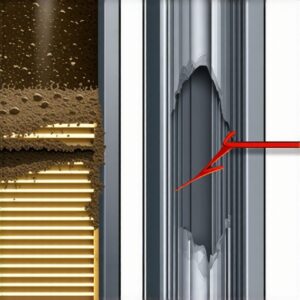
We are heading into a massive transition in the industry. Whether it’s the shift in refrigerants or the push for higher AFUE (Annual Fuel Utilization Efficiency) ratings, the old ways are dying. I’ve seen homeowners get sucked into furnace repair myths that suggest a single-stage is ‘simpler’ and therefore ‘more reliable.’ That’s garbage. A two-stage valve is a proven technology that reduces the mechanical stress of constant startups. Every time a furnace starts, the heat exchanger undergoes a massive thermal expansion. Constant ‘banging’ on and off leads to cracks. By running in low-stage for longer periods, you reduce the number of expansion/contraction cycles, theoretically extending the life of the metal. If you’re looking for heating service hacks for 2025, start with a HVAC maintenance plan. We check the flame sensors, clear the condensate lines, and ensure that ‘gas furnace repair’ isn’t something you’re screaming for at midnight on New Year’s Eve. We also look at the periphery—things like snow melt systems installation and boiler repair services—to ensure the whole thermal envelope of the property is secure.
When to Pull the Plug: Repair vs. Replace
I’ve walked into mechanical rooms where the ‘Juice’ was leaking and the inducer motor sounded like a coffee grinder full of marbles. If your system is over 12 years old and you’re facing a $1,200 repair on a single-stage unit, you’re throwing good money after bad. You’re paying for a repair on a system that will never provide the comfort of a modern two-stage. We often see clients who have spent thousands on pellet stove repair or space heaters trying to fix a ‘cold room’ that could have been solved by a proper installation of a multi-stage system. The math is simple: lower utility bills, fewer repairs due to reduced cycling, and a house that actually feels like a home. Don’t let a ‘Sales Tech’ push you into a ‘base model’ just because they want to close the deal and get back to the office. Demand the physics that your large home requires. Whether it’s gas furnace repair or a full system overhaul, remember that airflow is the only thing that stands between you and a miserable winter. Comfort isn’t a setting on a thermostat; it’s the result of proper thermodynamic engineering.