The most chilling sound in the North isn’t the wind howling across a frozen lake—it’s the absolute silence of a furnace that decided to quit at 3 AM when the mercury is sitting at minus ten. That silence is the sound of a homeowner about to get fleeced by a ‘Sales Tech’ because they didn’t have a logic-based priority scheduling plan. I’ve spent thirty years crawling through crawlspaces and balancing on ice-slicked roofs, and I’ll tell you right now: most maintenance plans are a joke. They are designed to sell you parts you don’t need, rather than ensuring your system can actually survive the thermodynamic war of a Northern winter.
The Physics Lesson: Heat is a Thief
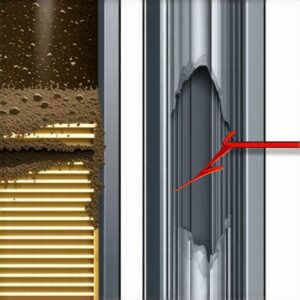
My old mentor, a grizzly veteran who could diagnose a bad inducer motor by the vibration in the floorboards, used to scream at me, ‘You can’t heat what you can’t touch!’ This is why airflow measurement services are the backbone of any real maintenance logic. Most guys just look at the flame and walk away. But if your static pressure is too high because some tin knocker 20 years ago undersized your return air, your heat exchanger is basically a ticking time bomb. Heat isn’t something we ‘make’ and leave alone; it’s energy we move. If you don’t have the CFM (Cubic Feet per Minute) to pull that heat off the metal, the metal fatigues, cracks, and then you’re looking at furnace repair services that involve a red tag and a heavy bill.
“Properly sizing and maintaining the distribution system is as critical to performance as the heating or cooling equipment itself.” – ACCA Manual J Standards
The Anatomy of a Forensic Diagnosis
When I walk up to a system, I’m looking at it like a surgeon. I start with control board diagnostics. Modern boards are sensitive; a small voltage spike or a loose ground in the wiring repair for heating systems can cause intermittent ‘ghost’ codes that drive homeowners crazy. I’ve seen guys replace entire blowers when all they had was a loose molex connector. That’s the difference between a technician and a part-changer. We look at the heart (the compressor or burner), the brain (the control board), and the lungs (the ductwork). If your bypass humidifier repair isn’t handled correctly, you’re adding moisture to the return air that can corrode your sensors before the season even peaks.
In the North, we deal with sensible heat and the brutal reality of the ‘Polar Vortex’ effect. When it’s -20°F outside, your heat pump is basically a paperweight, and your furnace or boiler has to do the heavy lifting. This is why we prioritize radiator replacement and wall furnace installation for older homes in the shoulder seasons. You don’t want to find out your radiator has a hairline fracture when you’re trying to pressurize the system in December. We also integrate snow melt systems installation into the priority schedule. If your driveway heaters fail because of a bad sensor, you’re shoveling five tons of white gold just to get your car out to go buy a space heater.
The Math: Repair vs. Replace
The ‘Sales Tech’ will tell you that a ten-year-old unit is ancient. That’s garbage. A well-maintained unit with clean ‘juice’ (refrigerant) and tight electrical connections can last twenty-five years if the airflow is right. However, if I see a cracked heat exchanger or a grounded compressor, that’s when we talk about choosing the right HVAC fixes. Buying the cheapest unit on the market is a fool’s errand. You’re just buying a lower-grade heat exchanger that will fail faster under high static pressure. I always tell folks to look at the ‘Pookie’ (mastic) on the joints. If the installer didn’t bother to seal the plenum with real mastic, they probably didn’t bother to size the gas line correctly either.
“Failure to maintain minimum airflow across the indoor coil or heat exchanger will result in premature component failure and loss of rated efficiency.” – ASHRAE Standard 62.2
The 2025 Regulatory Cliff and Modern Control
We are entering a new era. With the phase-out of traditional refrigerants and the push toward higher AFUE ratings, the complexity of furnace repair services is skyrocketing. We are now seeing geofencing temperature control as a standard requirement, not a luxury. But here is the trap: if your geofencing is telling your furnace to ramp up from 55 to 70 degrees in twenty minutes during a blizzard, you are thermal-shocking your equipment. This is where heating service innovations come into play. We program the logic to ramp up slowly, protecting the metal from rapid expansion and contraction.
For those with specialized setups, like fireplace insert services used as secondary heat, the maintenance plan must include flue inspections. A blocked flue is a one-way ticket to carbon monoxide poisoning. It’s not just about comfort; it’s about not waking up in the hospital. This is why we follow a strict HVAC repair strategy that prioritizes safety sensors and airflow before we ever look at the thermostat settings. If you’re wondering if your system is at risk, you need to know how to identify when furnace repair is urgent before the frost starts creeping across the inside of your windows.
The Airflow Manifesto
If you have one room that’s a sauna and another that’s a meat locker, your problem isn’t the furnace; it’s the physics of the ducting. We use airflow measurement services to find the ‘dead zones.’ Sometimes it’s a crushed flex duct, other times it’s a ‘tin knocker’ who forgot to open a damper. Don’t let a tech tell you that you need a bigger unit. An oversized unit is actually worse—it ‘short cycles,’ meaning it turns on and off so fast that it never reaches steady-state efficiency and wears out the wiring repair for heating systems and the contactors. It’s like drag racing your car from every stoplight; you’re going to blow the engine. Proper preventative HVAC repair focuses on balance, not just raw power. If you want a system that actually works when the world turns white outside, stop looking for a ‘tune-up’ and start looking for a thermodynamic audit.